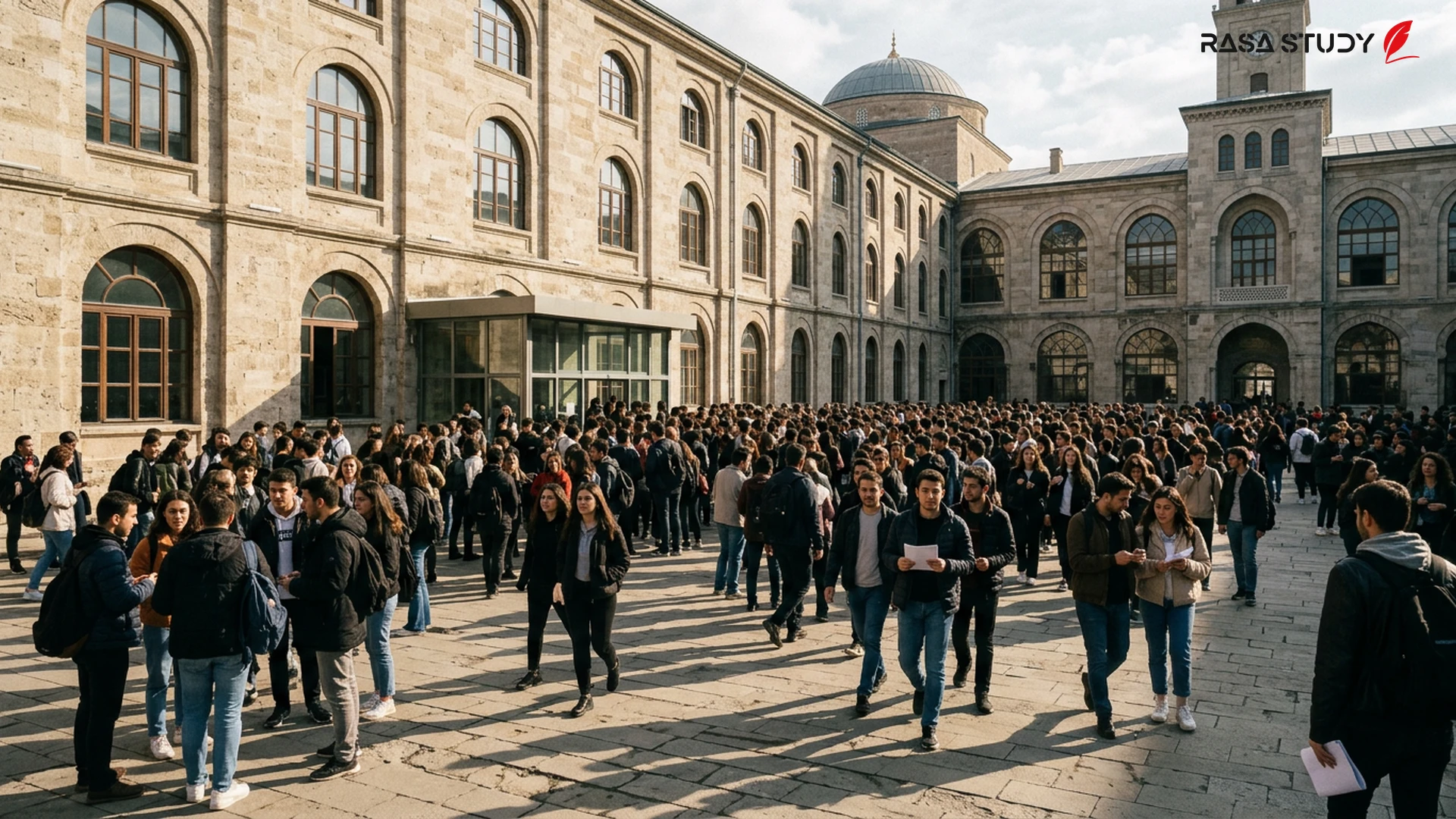
With reports emerging from sources such as "Karabük Gündem," the reduction of admission capacities in Turkish universities for 2026 has become a primary concern for candidates. These changes are part of a macro strategy to align education with the labor market.
Extensive Changes in 2026 Capacities As the period for field selection in July 2026 approaches, candidates for the Turkish Higher Education Institutions Exam (YKS) face a new landscape. According to official announcements from the Council of Higher Education (YÖK), the capacity reduction policy, which previously began in state universities, has been extensively extended to private (foundation) universities starting in 2026 [1]. Erol Özvar, the President of YÖK, emphasized that this decision was made to prevent the waste of human and financial resources in fields where the labor market has reached saturation [2].
Which Fields Face Quota Reductions? Based on published data, capacity reductions are not mechanical or uniform but are determined by the employment rates of graduates in each field. Popular fields such as Law, Psychology, Pharmacy, Dentistry, and Architecture top the list for quota reductions [3]. For instance, the capacity for Law has faced a reduction of approximately 36% in recent years, and this trend will be pursued more intensely for private universities in 2026 [1]. In contrast, the capacity for Medicine has been maintained due to the urgent needs of the health system [2].
YÖK's Goal: Quality Over Quantity Turkey's new higher education strategy focuses on "quality-orientation." Reports show that between 2023 and 2025, total university capacities decreased from approximately 1.09 million to 843,000 seats, representing a 23% drop [1]. This reduction has created significant sensitivity in regions like Karabük, where thousands of candidates compete [4]. Educational authorities believe that insisting on high capacities in fields where graduates remain unemployed only creates false expectations among the youth [2].
New Opportunities in the World of Technology Despite the reduction of quotas in traditional fields, YÖK has opened new paths for candidates. Admission capacities for emerging fields such as Artificial Intelligence, Cybersecurity Engineering, and Data Mining have increased [1]. This shift indicates the Turkish educational system's pivot toward the needs of the digital age. 2026 candidates must be aware of these changes and carefully review the selection guide, adjusting their priorities not only based on interest but also by looking at new capacity statistics and the future labor market [3].
New changes in Turkish university admission capacities are steering 2026 candidates toward technology-oriented fields.
linkSources
- YÖK Başkanı Özvar: Vakıf üniversitelerinde de kontenjanlar düşürülecek — Yükseköğretim Kurulu (YÖK) (2026-02-16)
- Quota cuts to continue with new limits on popular programs — Türkiye Today (2026-02-17)
- 2026 YKS Kontenjanları Değişti | Kontenjanı Artan ve Azalan Bölümler — Eleman.net (2026-06-19)
- Karabük'te YKS Heyecanı: Yaklaşık 2 Bin 200 Mezun Üniversite Hayali İçin Ter Dökecek — Bölgenin Sesi Gazetesi (2026-06-19)


