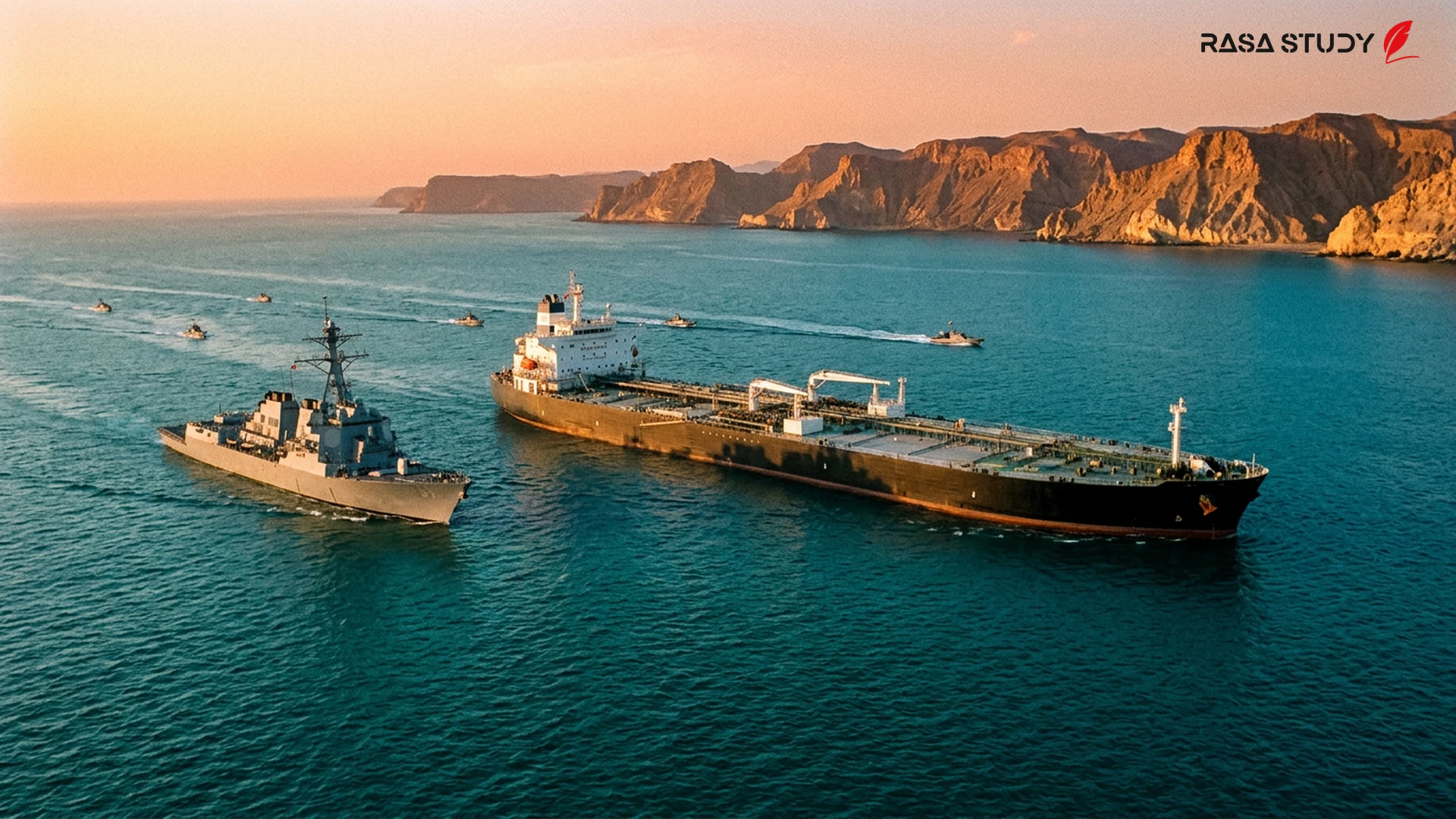
Following Iran's announcement of new shipping routes in the Strait of Hormuz and its insistence on vessels passing through its territorial waters, military tensions between Tehran and Washington reached their highest level in June 2026.
Roots of the Conflict: What is the New Route? In recent days, Iranian maritime authorities announced that due to environmental and security considerations, traditional shipping routes in the Strait of Hormuz have been altered, and commercial vessels must now pass through new corridors closer to the Iranian coast [2]. This decision, described by outlets like "Seven Hours" as a turning point, was immediately met with fierce opposition from the United States. Washington claims this move is a violation of international maritime law and an attempt to exert illegal control over one of the world's most vital waterways [1].
US Military Response The US Navy's 5th Fleet, based in Bahrain, stated in a release that it would challenge any attempt to forcibly divert commercial vessels from international routes [3]. Field reports indicate that US destroyers, accompanied by air escorts, are convoying large tankers along the old routes. This direct military presence has significantly increased the likelihood of a physical encounter between IRGC fast boats and American warships [1].
Economic Consequences and Energy Security The Strait of Hormuz is the lifeblood of global energy transport, and any disruption directly impacts global markets. Following the news of the "new route," Brent crude oil prices rose by 4% in this morning's trading [2]. Marine insurance companies have also increased premium rates for vessels transiting the Persian Gulf due to the "high risk of military collision." Analysts warn that a continued stalemate could lead to an energy shock in Asian and European markets [3].
Diplomatic Deadlock and the Future of the Crisis While Iran emphasizes its sovereign rights over territorial waters, the United Nations Security Council has called for restraint from both sides. However, there are no signs of retreat in either side's position. Tehran has warned that any US intervention in enforcing the new maritime laws will be met with a decisive response [2]. Conversely, the Pentagon has emphasized that "freedom of navigation" is a non-negotiable red line for the United States and its regional allies [1].
Military tensions in the Strait of Hormuz have peaked following Iran's change in maritime regulations.
linkSources
- Tensions escalate in Strait of Hormuz over maritime boundary claims — Reuters (2026-06-27)
- Iran implements new shipping regulations in Hormuz — Al Jazeera (2026-06-28)
- US Fifth Fleet issues warning over Strait of Hormuz transit — Associated Press (2026-06-26)


