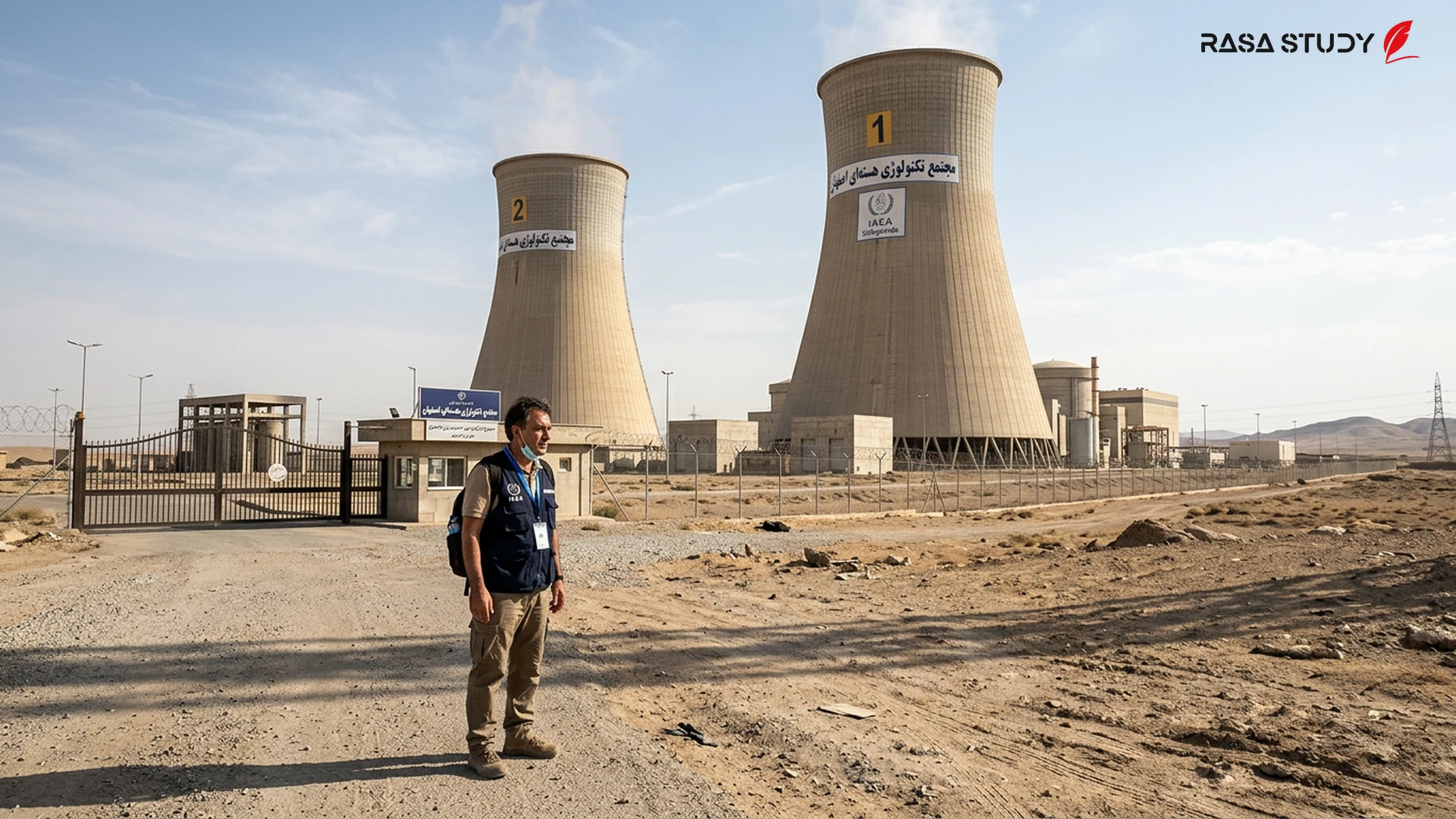
On June 23, 2026, a deep rift has emerged between the statements of senior United States and Iranian officials regarding nuclear monitoring; an issue that could jeopardize the future of the fragile ceasefire and recent agreements in Switzerland.
Today, June 23, 2026, the diplomatic atmosphere between Tehran and Washington has once again been roiled by a wave of contradictory statements regarding nuclear inspections. These tensions peaked just as JD Vance, the Vice President of the United States, claimed that Iran agreed to the return of International Atomic Energy Agency (IAEA) inspectors during recent negotiations in Switzerland [2]. However, Iranian officials immediately rejected these claims, insisting on their sovereign positions.
Washington's Claim and White House Optimism In a statement released on Monday, JD Vance described the alleged agreement for the return of inspectors as a "major milestone." He emphasized that this move is the first step toward permanently ending Iran's potential weapons programs [1]. US President Donald Trump also announced on social media that Iran has agreed "fully and comprehensively" to the highest level of nuclear inspections to prove its "nuclear integrity" in the long term [3]. These remarks came as Washington issued a 60-day waiver for Iranian oil exports as part of the recent memorandum of understanding.
Tehran's Explicit Response and Rejection of Alleged Agreements In contrast, Esmaeil Baghaei, the spokesperson for the Iranian Ministry of Foreign Affairs, called all claims by US officials baseless during a press conference on Tuesday (June 23). He stated that there are no plans for IAEA inspectors to visit nuclear facilities damaged during last year's conflicts [4]. Baghaei emphasized that Iran had no official meeting with Rafael Grossi, the Director General of the IAEA, in Switzerland, and no new protocol has been drafted for inspecting bombed sites [1]. This clear contradiction indicates a serious deadlock in the interpretation of the "Islamabad" memorandum signed between the parties last week.
Forbes Turkey Analysis of Economic Consequences Reports published by sources such as "Forbes Turkey" indicate that this diplomatic uncertainty has directly affected global energy markets. Analysts believe that if the inspection issue is not resolved within the next 60 days, the oil waivers issued by the US Treasury will not be renewed [3]. This could once again cause oil prices to spike in global markets. Forbes notes that investors view the stability of the current ceasefire with skepticism, as nuclear transparency has always been Washington's red line for the permanent lifting of sanctions.
The Future of the Agreement in the 60-Day Window While technical groups continue their consultations in Switzerland, the fate of this agreement is tied to Tehran's acceptance of intrusive monitoring. The IAEA estimates that Iran possesses significant quantities of uranium enriched to 60% concentration, access to which is vital for inspectors [2]. If Tehran continues to refuse access to strategic sites such as Isfahan, the possibility of the return of comprehensive sanctions and even an escalation of military tensions in the region will not be far-fetched.
A view of the negotiation venue in Switzerland; where the fate of Iran's nuclear inspections remains in limbo.
linkSources
- Iran denies plans for nuclear inspection of sites damaged in war — CBS News (2026-06-23)
- Iran has agreed to allow UN nuclear inspectors back into the country, says US — The Guardian (2026-06-22)
- Iran Agreed To Resume IAEA Inspections, Trump Claims, Though Iran Denies Making New Commitments — Forbes (2026-06-22)
- No Plan for IAEA Inspection of Iran's Damaged Nuclear Sites: Spokesman — Tasnim News Agency (2026-06-23)


