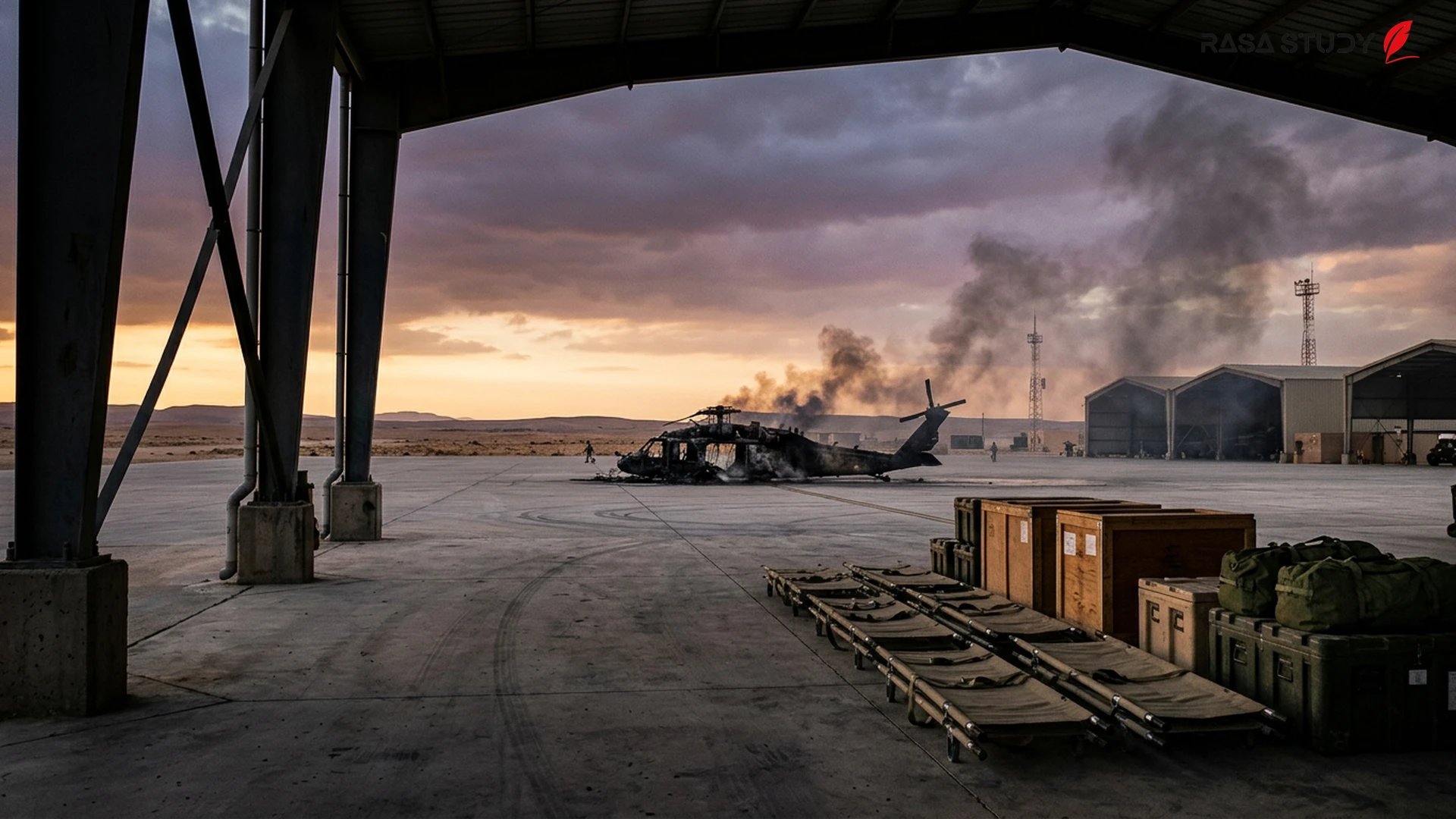
US Central Command (CENTCOM) announced the first combat use of suicide naval drones to attack Iranian ship and submarine maintenance facilities at the Bandar Abbas naval base, marking a new phase of military tensions.
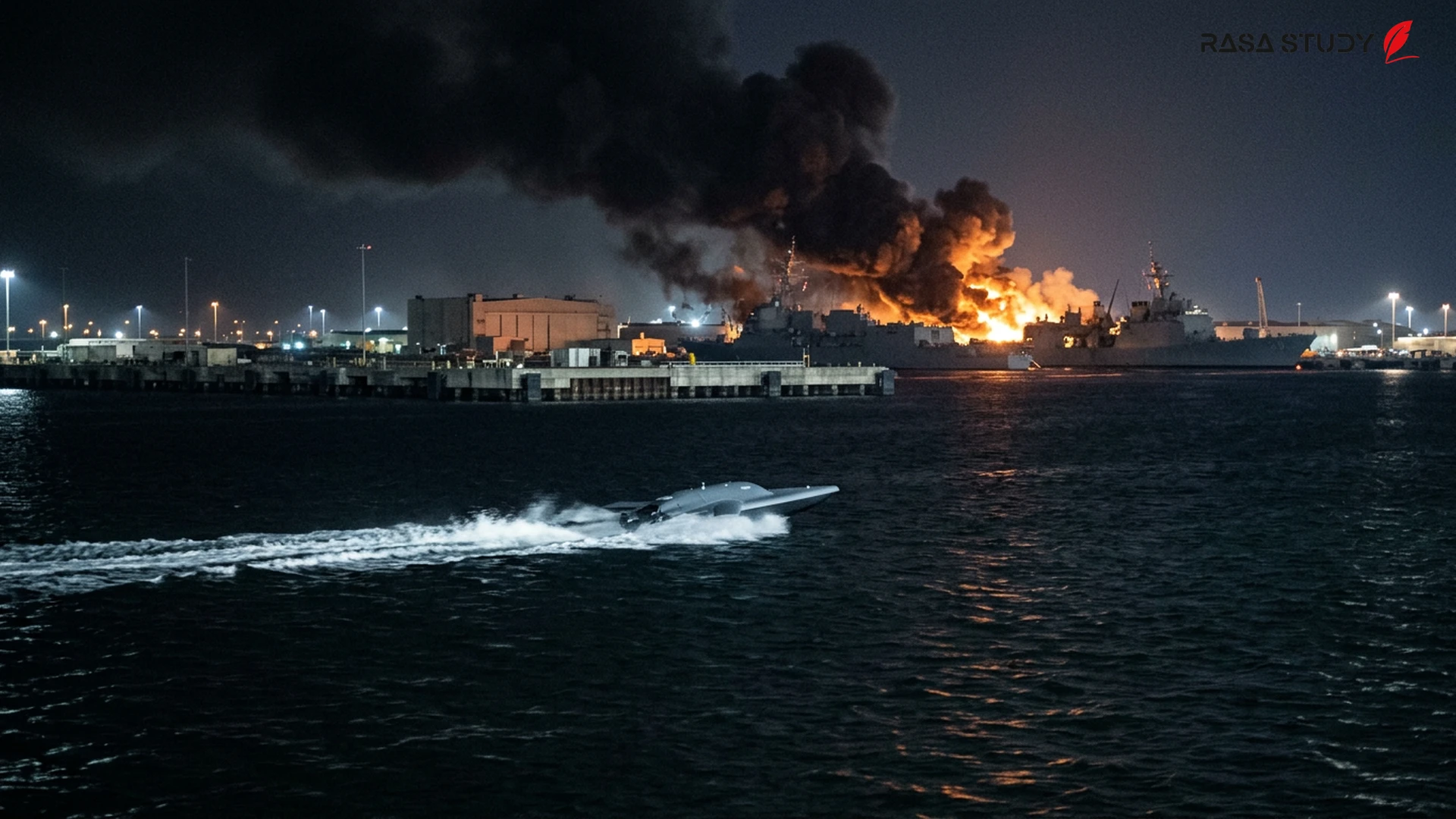
Details of the Attack on Bandar Abbas Naval Base In the late hours of Sunday, July 12, 2026, the United States Central Command (CENTCOM) carried out an unprecedented operation against Iranian military facilities in Bandar Abbas. According to an official CENTCOM statement, three suicide Unmanned Surface Vehicles (USVs) were used in this attack, directly targeting the maintenance center for Iranian submarines and warships [1]. Video footage released by the Pentagon shows these naval drones striking the target docks with high precision and causing large explosions, leading to serious damage to port infrastructure [5].
Entry of "Corsair" Drones into the Battlefield This operation marks the first combat use by the US military of naval drones known as "Corsair". These 24-foot vessels, manufactured by the Texas-based company "Saronic", have a range of over 1,000 nautical miles and a carrying capacity of 1,000 pounds of explosives [2]. Corsair travels at a speed of 35 knots and is equipped with advanced artificial intelligence systems for autonomous navigation in high-risk environments. Previously, these drones had only been used in rescue missions, including the rescue of Apache pilots in June, but the recent attack on Bandar Abbas officially confirmed this technology's entry into the offensive phase [4].
End of the Ceasefire and Washington's New Strategy These attacks occurred as US President Donald Trump officially announced the end of the fragile ceasefire between the two countries that had begun in April 2026 [3]. In a social media message, Trump stated that the United States would henceforth be the "Guardian of the Strait of Hormuz" and intends to impose a new naval blockade against Iranian ships. He also proposed receiving a 20% "security toll" from all commercial shipments passing through the strait to cover the operational costs of the US military presence in the region [3].
Regional Reactions and Iranian Retaliation In response to these attacks, reports indicate retaliatory actions by Iranian forces against US-linked bases in Kuwait, Bahrain, and Jordan [1]. Iranian military officials have stated that they will not allow US interference in the management of the Strait of Hormuz and will respond forcefully to any attempt at a naval blockade. Currently, traffic in the Strait of Hormuz has reached its lowest level in recent weeks, and global energy markets are anxiously following developments in this strategic region [4]. Experts believe that the use of low-cost but destructive naval drones could seriously change the balance of naval power in the Persian Gulf [2].
An image of the Corsair suicide naval drone used in the recent CENTCOM attack on the Bandar Abbas naval base.
linkSources
- In first, US uses sea drones in combat in Iran strikes: CENTCOM — Breaking Defense (2026-07-13)
- US Navy Sea Drones Clearing Mines, Rescuing Airmen, Now Attacking Iran — Business Insider (2026-07-13)
- Trump says US military to reimpose naval blockade on Iran — Iran International (2026-07-13)
- US forces strike Iranian naval base with sea drones for first time: CENTCOM — Middle East Monitor (2026-07-13)
- Video shows Corsair attack drones hitting Iranian naval base — Military Times (2026-07-13)