Iranian media reported today, July 17, 2026, that United States forces conducted an airstrike on the Bandar Abbas railway junction. The incident, which resulted in several injuries, is part of a new wave of regional conflicts.
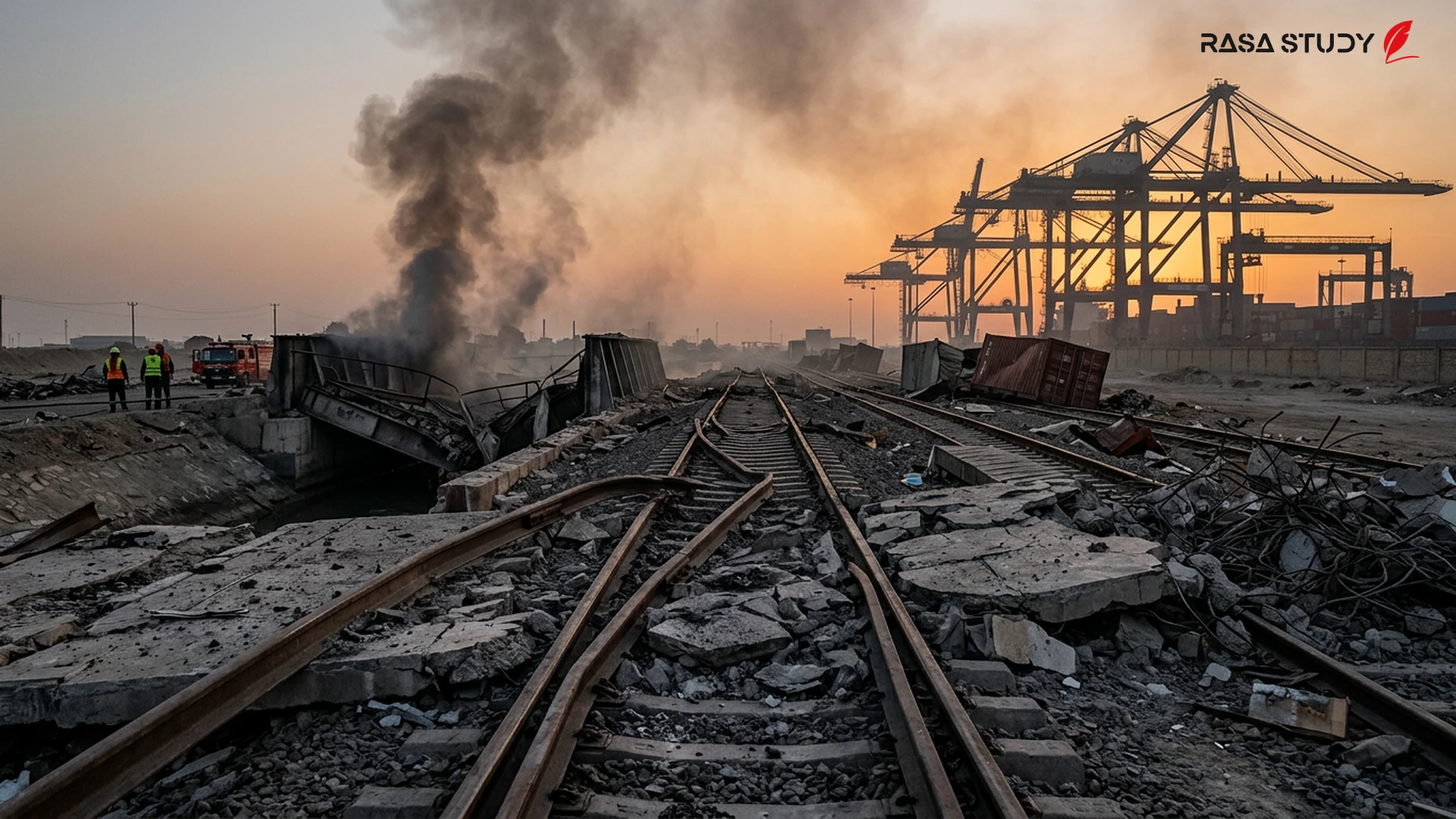
Details of the Attack on Bandar Abbas Railway Station Amid rising tensions between Tehran and Washington, Iranian news sources reported that the United States military targeted the Bandar Abbas railway junction in the early hours of Friday, July 17, 2026 [1]. According to domestic news agencies including Mehr and Tasnim, this missile attack resulted in the injury of at least two civilians and caused significant damage to the rail infrastructure of this strategic region [3]. As Iran's main maritime trade hub, Bandar Abbas plays a vital role in the country's transit network, and targeting its railway could cause serious disruption to the economic arteries of the south.
Expansion of Attacks to Civilian Infrastructure Additional reports indicate that the railway attack was only part of a broader operation by American forces. According to the Islamic Republic of Iran Broadcasting, in addition to the Bandar Abbas station, Iranshahr airport in the southeast of the country and two strategic bridges in Hormozgan province were also targeted by enemy projectiles [2]. These attacks, marking the sixth consecutive night of CENTCOM operations against Iranian targets, resulted in the destruction of several connecting bridges on the routes from Bandar Khamir to Bandar Abbas [5]. Local officials in Hormozgan have confirmed that these actions have halted traffic on several key transport axes.
Military Reactions and Human Casualty Statistics The Iranian Ministry of Health stated in a communiqué that since the start of the new wave of US attacks in July, the number of martyrs from these incidents has reached 38, with more than 400 people injured [4]. In response, Iran has reacted with drone and missile attacks on United States bases in Kuwait and Bahrain. US President Donald Trump, defending these operations, claimed that the goal of these attacks is to weaken Iran's military capabilities and respond to threats in the Strait of Hormuz [3].
Strategic Importance of the Conflict Zone Bandar Abbas and the Strait of Hormuz have now become the focal point of an all-out infrastructure war. With the re-establishment of a naval blockade by the US fleet, the targeting of railway stations and bridges indicates a new strategy to paralyze Iran's internal logistics [5]. Analysts believe that the continuation of this trend could jeopardize global energy security and sharply increase oil prices in global markets, as Iran has threatened to keep the Strait of Hormuz closed until the attacks stop.
The Bandar Abbas railway junction which was targeted by airstrikes on July 17, 2026.
linkSources
- İran basını: ABD Bender Abbas'ta demir yolu bağlantı istasyonunu hedef aldı — Bloomberght (2026-07-17)
- US strikes in Iran hit airport, bridges and railway station — ABS-CBN News (2026-07-17)
- Deadly US strikes overnight hit airport, railway station in Iran — CNA (2026-07-17)
- US strikes in Iran hit airport, bridges and railway station, killing 3 — The Express Tribune (2026-07-17)
- İran basını: ABD Bender Abbas'ta demir yolu bağlantı istasyonunu hedef aldı — Anadolu Agency (2026-07-17)