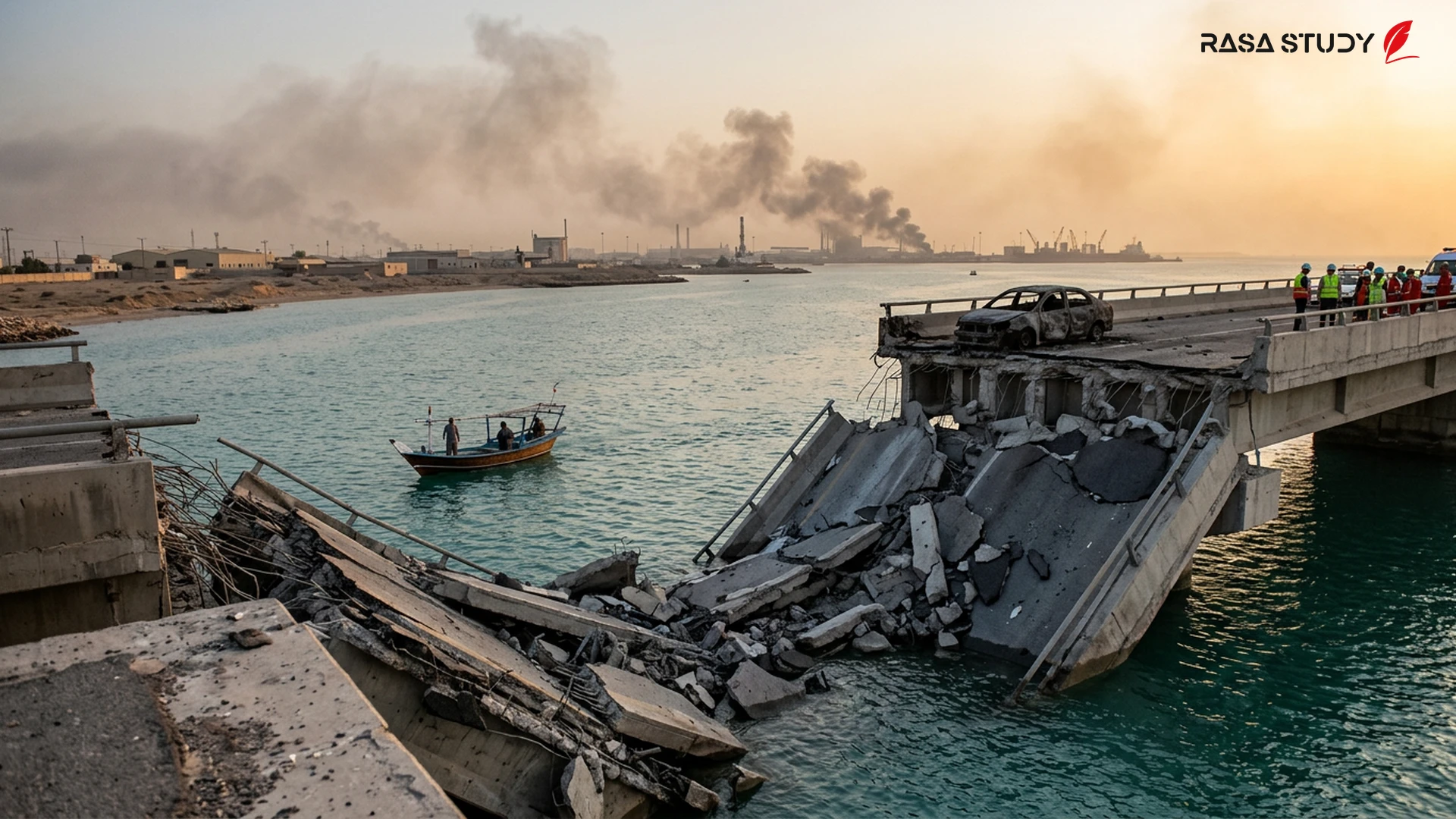
Following explicit threats from Donald Trump to destroy Iran's vital infrastructure, the US military targeted several strategic bridges in Hormozgan province with airstrikes, resulting in the death of a civilian driver.
Details of Airstrikes on Bridges in Southern Iran In the early hours of July 17, 2026, the United States military launched a new wave of airstrikes against targets in southern Iran. According to reports published by Iranian state media and international news agencies, the primary focus of these attacks was strategic bridges in the Bandar Khamir region located in Hormozgan province [1]. Reports indicate that during the bombing of one of these bridges, a civilian vehicle was hit, and its driver died instantly [4]. These attacks have been described as part of a broader CENTCOM operation that, in addition to bridges, targeted railway stations in Bandar Abbas and port facilities in Chabahar [2].
Trump's Ultimatum and Shift in War Strategy This military operation took place only days after a controversial interview by Donald Trump with Fox News. In this conversation, Trump warned that if Iran did not return to the negotiating table, the United States would begin targeting civilian infrastructure. He explicitly stated: "Next week it's power plants and bridges; we will disable all of their bridges unless they come to negotiate" [3]. Analysts believe this shift in strategy from targeting military centers to public infrastructure indicates a diplomatic deadlock and Washington's attempt to apply maximum pressure by paralyzing Iran's internal logistics [2].
Iran's Retaliatory Response in the Region Immediately following the US attacks, the Iranian armed forces announced the start of retaliatory operations. The Islamic Revolutionary Guard Corps declared that it had targeted US logistical bases and command centers in Kuwait, Jordan, and Bahrain with drone and missile strikes [1]. Reports mention the sound of massive explosions near the headquarters of the US Fifth Fleet in Bahrain. Iranian military officials have warned that if attacks on civilian infrastructure continue, all similar facilities in countries hosting US forces in the region will be targeted [4].
International and Human Rights Concerns The deliberate targeting of infrastructure essential for the survival of the civilian population has sparked a wave of international condemnation. International law experts warn that the destruction of bridges and power plants could constitute war crimes under the Geneva Convention [3]. With the destruction of connecting bridges in Hormozgan, main routes for transporting goods and fuel to central regions of Iran have been disrupted, which could exacerbate the humanitarian crisis in this country of 90 million people [2]. Meanwhile, global oil prices have risen by 10%, and concerns over a total closure of the Strait of Hormuz have reached a peak.
US airstrikes on connecting bridges in Hormozgan province have disrupted the logistics network in southern Iran.
linkSources
- US forces struck five bridges and multiple cities across southern and southeastern Iran — Anadolu Agency (2026-07-16)
- US strikes bridges and collapses a tower at a key port as its Iran campaign expands — Washington Post (2026-07-17)
- Trump threatens to strike Iran's bridges and power plants — Newsweek (2026-07-15)
- Trump'ın altyapıya saldırı tehdidinin ardından ABD ordusu İran'da köprüleri vurdu — Cumhuriyet (2026-07-16)


