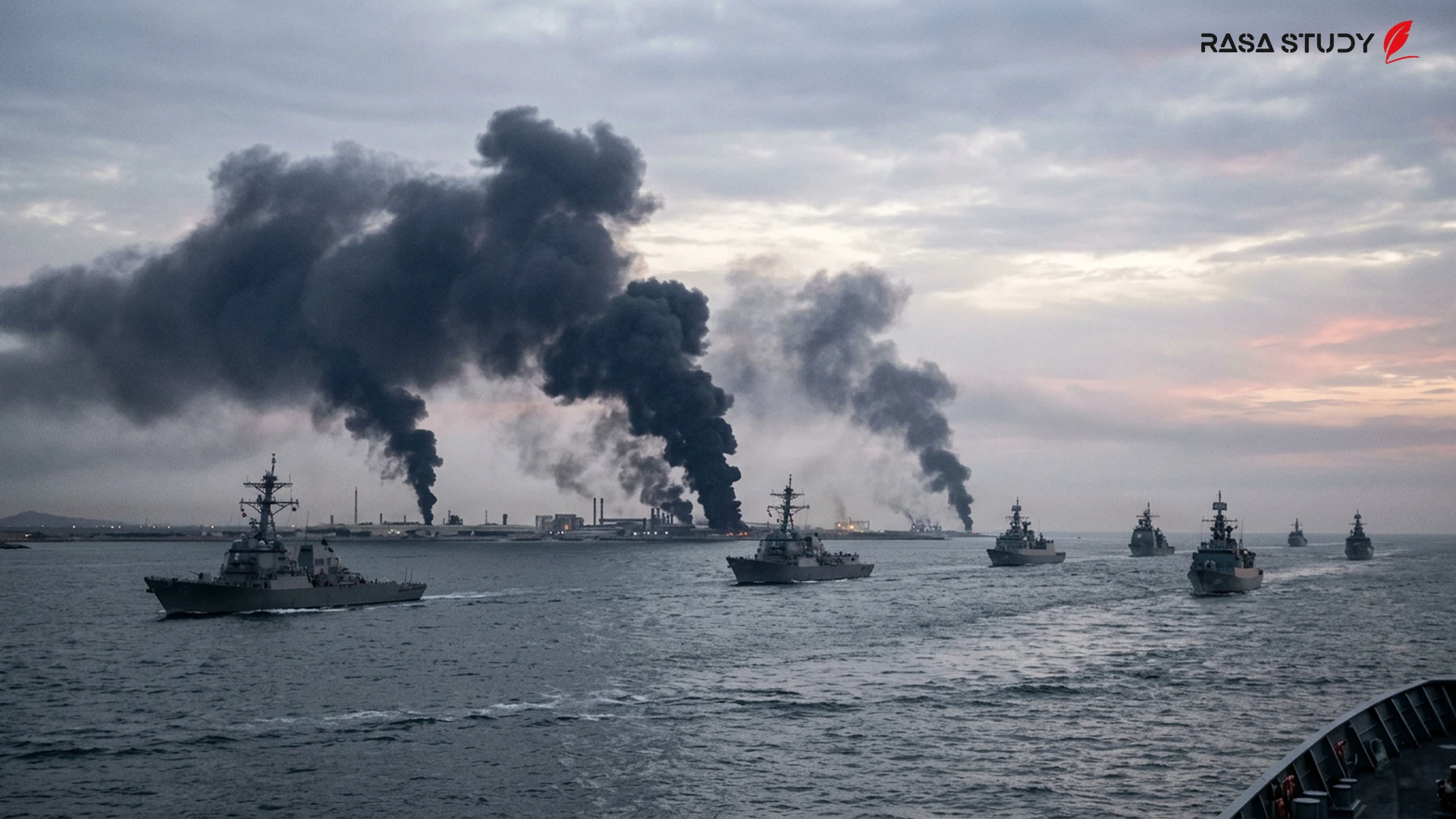
Following an unprecedented escalation of tensions in the Middle East, the United States military targeted strategic Iranian positions along the coasts of the Sea of Oman and the Strait of Hormuz in a heavy missile and air campaign dubbed "Operation Dawn."
Escalation of Conflicts in the Sea of Oman and the Strait of Hormuz In the early hours of this morning, July 15, 2026, the Middle East witnessed one of the heaviest military clashes in recent years. The United States Central Command (CENTCOM) officially announced that it has launched a new wave of airstrikes against military targets on Iranian soil [1]. This operation, carried out in the pre-dawn hours under the name "Operation Dawn," focused on destroying coastal defense infrastructure and drone centers along the Sea of Oman and the Strait of Hormuz [3].
Local reports and satellite imagery indicate massive explosions in port cities including Bandar Abbas, Jask, Chabahar, and Qeshm Island. According to Pentagon officials, these attacks were aimed at weakening Iran's ability to threaten commercial shipping and countering Tehran's recent actions in seizing tankers [2].
Return of the Naval Blockade by Order of Donald Trump Simultaneously with these airstrikes, US President Donald Trump issued an order for the official return of the naval blockade of Iranian ports. This blockade, which took effect at 23:30 last night Tehran time, places all maritime traffic to major Iranian ports, including Bandar Imam Khomeini and Bushehr, under the strict control of the US Fifth Fleet [3][5].
In a statement issued on the sidelines of recent diplomatic meetings, Trump declared that "the era of strategic patience is over" and that Washington is no longer committed to previous agreements. He emphasized that military and economic pressure will be maximized until Iran returns to the negotiating table and accepts new conditions [4].
Tehran's Reaction and Regional Security Status In response, officials of the Islamic Republic of Iran described these attacks as "blatant aggression against national sovereignty" and promised a regrettable response. Iranian domestic media reported that air defenses in several locations successfully intercepted hostile projectiles, but damage was inflicted on some port facilities [3].
These conflicts have had an immediate impact on global energy markets. Crude oil prices experienced a 10% jump in the early hours of trading today, and concerns over a complete closure of the Strait of Hormuz, the world's main energy artery, have increased sharply [5]. Regional countries, including Oman and Qatar, have begun diplomatic efforts to prevent an all-out war, but given the scale of last night's attacks, reaching an immediate ceasefire seems difficult [1].
Explosions near Iran's strategic ports; CENTCOM says it has targeted Tehran's offensive capabilities.
linkSources
- ABD Merkez Komutanlığı (CENTCOM), bugün sabah saatlerinde İran topraklarına yönelik yeni bir hava harekatı başlattığını duyurdu — Türkiye Gazetesi (2026-07-15)
- U.S. wraps up 4th consecutive night of strikes, CENTCOM says — CBS News (2026-07-15)
- سنتکام اعلام کرد که ارتش این کشور دور دیگر از تجاوز و حملات به خاک ایران را آغاز کرده است — IRNA (2026-07-14)
- The United States launched another wave of strikes on Iran for the third consecutive day early on Tuesday — Dawn (2026-07-14)
- موج جدید حملات آمریکا علیه ایران برای سومین شب متوالی — Entekhab News (2026-07-14)


