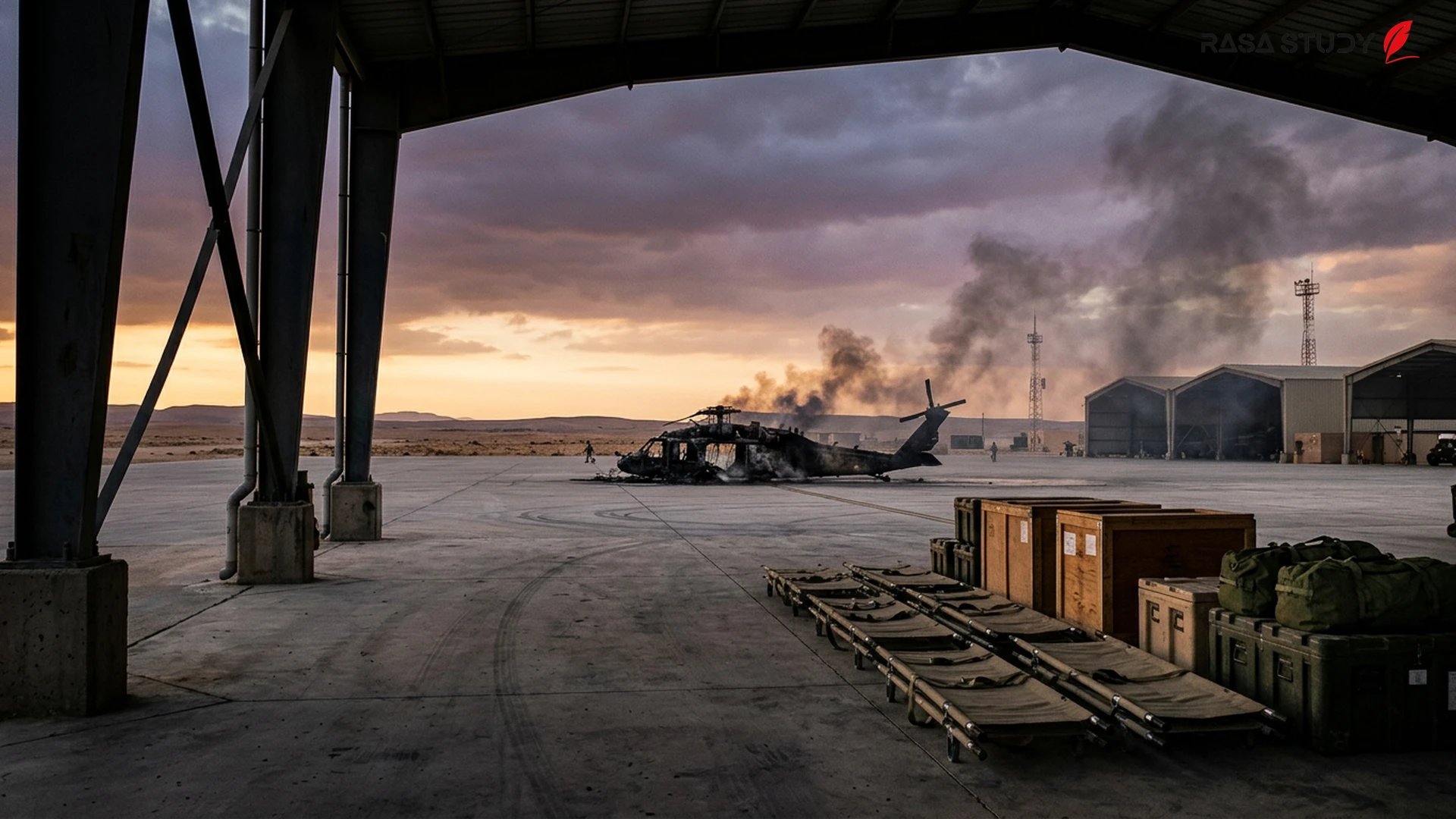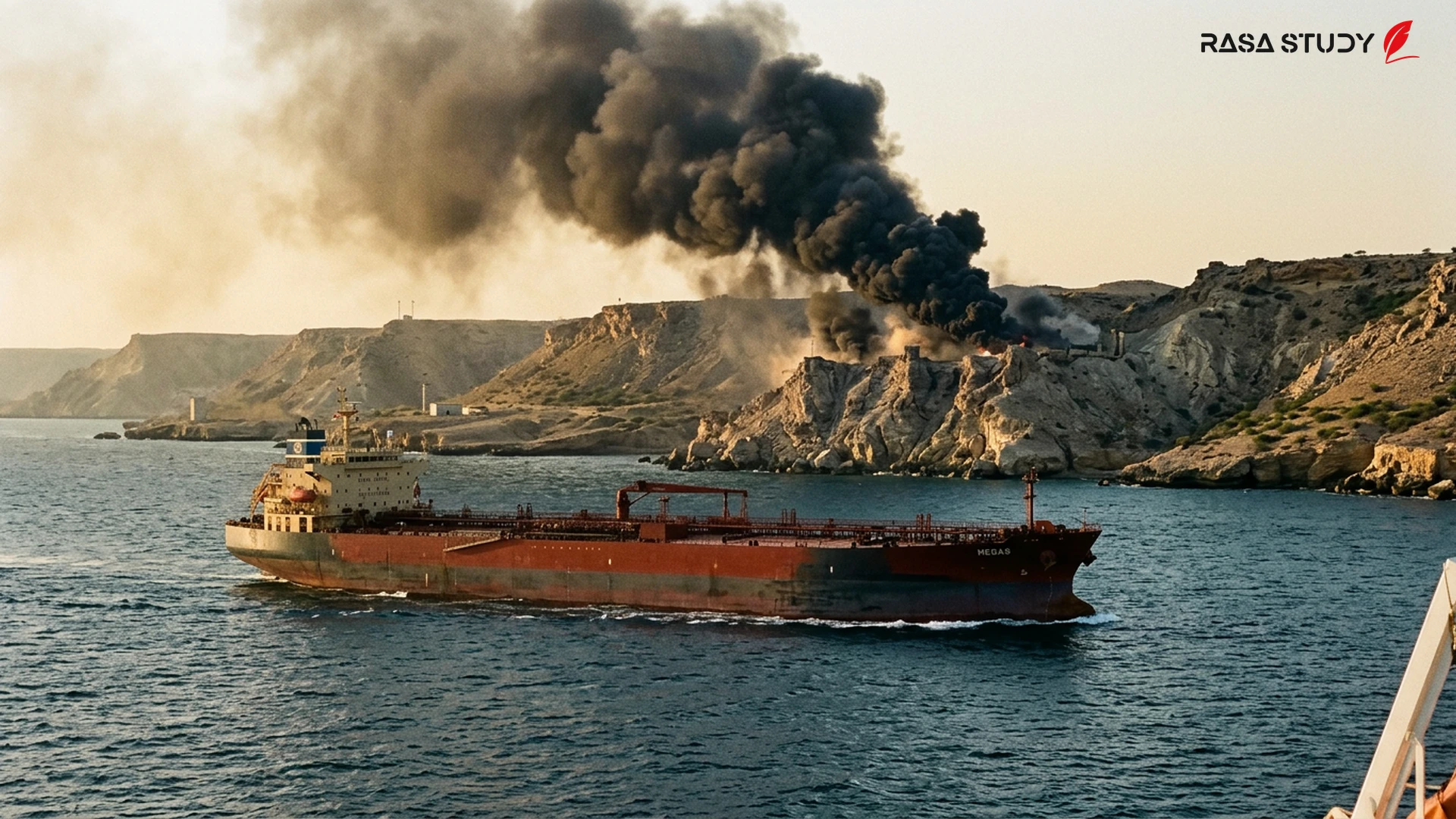
On June 28, 2026, the United States military targeted several Iranian military positions near the Strait of Hormuz in response to drone attacks on commercial vessels, leading to an unprecedented escalation of tensions in the region.
On June 28, 2026, tensions in one of the world's most vital waterways reached their peak. The United States Central Command (CENTCOM) confirmed that in response to repeated Iranian drone attacks on commercial vessels, it targeted several military objectives on Iranian soil [1]. These strikes, carried out near the Strait of Hormuz, have placed the ceasefire agreement known as the "Islamabad Memorandum," signed only a few weeks ago, on the brink of total collapse [2].
Details of the United States Airstrikes According to official statements, American fighter jets targeted Iranian drone storage facilities, radar sites, and surveillance infrastructure in areas such as Qeshm Island and Sirik [4]. CENTCOM stated that this operation was a direct response to the drone attack on the Panama-flagged tanker "M/T Kiku" and the Singapore-flagged container ship "M/V Ever Lovely" [1][5]. U.S. President Donald Trump described these Iranian actions as a "foolish violation of the ceasefire" and warned that Washington would not allow international maritime security to be jeopardized [3].
Tehran's Sharp Reaction and Retaliatory Strikes In response, the Islamic Revolutionary Guard Corps (IRGC) rejected accusations regarding the attacks on the ships and called the U.S. strikes an aggression against Iran's national sovereignty [2]. Only hours after the CENTCOM strikes, Iranian state media reported that the IRGC Aerospace Forces, in a joint missile and drone operation, targeted eight United States military centers in Kuwait and Bahrain [3]. The "Ali Al Salem" Air Base in Kuwait and the U.S. Fifth Fleet headquarters in Bahrain's Port Salman were among the targets Iran claimed to have destroyed [5].
Crisis in the Islamabad Memorandum These conflicts occur as the two countries had recently agreed on a 60-day roadmap to reduce tensions. U.S. Vice President J.D. Vance emphasized that "violence will be met with violence" and urged Tehran to return to its commitments [2]. However, Iranian officials believe that by attacking Iranian territory, the United States has effectively nullified the agreement [4]. Experts warn that the continuation of this trend could sharply increase oil prices in global markets and push the region toward a full-scale war [5].
Current Situation in the Strait of Hormuz Despite the exchange of fire, CENTCOM claims that commercial ship traffic in the Strait of Hormuz continues, although U.S. forces have been placed on the highest level of alert [1]. On the other hand, reports from southern Iran indicate the deployment of new air defense systems along the Persian Gulf coast, signaling Tehran's readiness for potential future confrontations [3].
The Strait of Hormuz has once again become the center of military conflict between Iran and the United States.
linkSources
- US forces conducted strikes on Iranian targets after tanker attack near Strait of Hormuz — Anadolu Agency (2026-06-28)
- İran'ın gemilere ateş açmasının ardından ABD, boğaz yakınlarındaki İran hedeflerine saldırdı — Evrensel (2026-06-27)
- US says it struck targets in Iran over 'continued aggression' against shipping — The Guardian (2026-06-28)
- U.S. conducts more strikes on Iranian targets, CENTCOM says — CBS News (2026-06-28)
- Iran Guards say strikes against Kuwait, Bahrain in retaliation for US attack — Gulf News (2026-06-28)