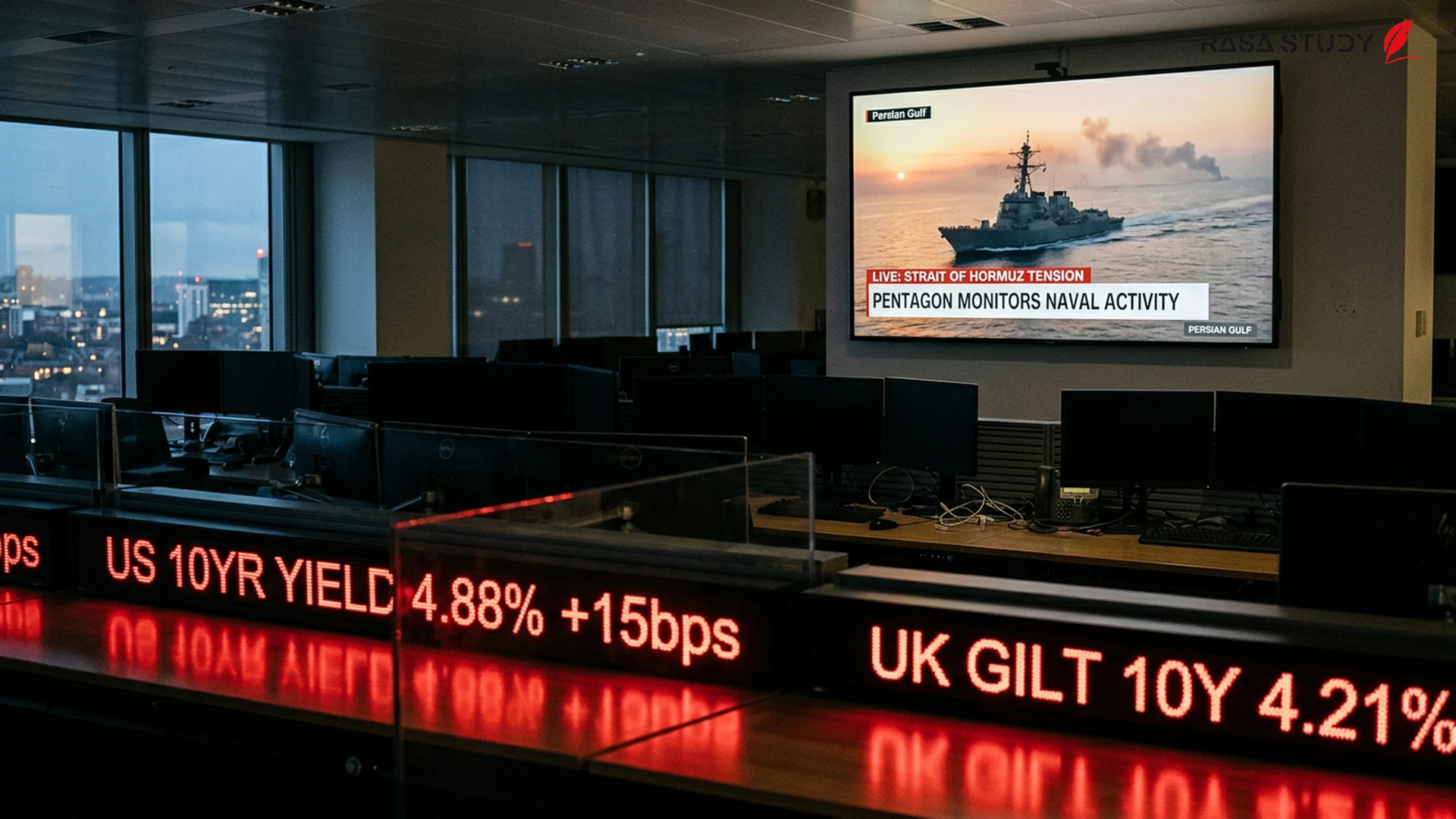
US Treasury bond prices dropped sharply and yields climbed under the weight of inflation concerns following the collapse of a fragile ceasefire between Washington and Tehran and the outbreak of military clashes in the Persian Gulf.
End of Ceasefire and Return of Market Uncertainty Global financial markets have faced a new wave of volatility in recent days. After US President Donald Trump announced during a NATO summit in Ankara that the June memorandum and the fragile ceasefire with Iran are effectively "over," a wave of selling began in the bond market [3]. These remarks were made after the military forces of both countries experienced a heavy exchange of fire in the Persian Gulf region. Reports indicate that the United States struck targets on the Iranian coast, while US military facilities in Bahrain and Kuwait were targeted by missile and drone attacks [1].
Sharp Reaction of Bond Yields to Geopolitical Tensions The fall in US Treasury bond prices has led to a jump in their yields. The 10-year Treasury yield, a key benchmark for global borrowing costs, rose by 3 basis points to 4.569%, marking its highest level in seven weeks [1]. Additionally, the 2-year yield, which is highly sensitive to changes in Federal Reserve monetary policy, increased to 4.212% [1]. This inverse movement of price and yield indicates investors exiting long-term fixed-income assets due to fears of inflation [3].
$78 Oil and Global Inflation Fears A primary driver of the bond market slump is the sudden spike in energy prices. Brent crude oil prices rose by 5% to approximately $78 per barrel [4]. Analysts believe that threats to shipping security in the Strait of Hormuz, through which one-fifth of the world's oil passes, could disrupt energy supply chains and reignite inflationary pressures that had recently subsided [2]. Tanker tracking data shows that daily traffic in this strategic waterway has slowed significantly due to the escalation of conflict [1].
Uncertain Financial Market Outlook Amid Conflict While stock markets in Wall Street and Europe have faced declines, investors are now closely monitoring the Federal Reserve's next moves. The FedWatch tool shows that the probability of an interest rate hike at the upcoming meeting has increased from 25% to over 33% due to concerns over oil-driven inflation [4]. Experts warn that if the conflict escalates into a full-scale war, the traditional role of bonds as a "safe haven" may be undermined by intense inflationary pressures, placing financial markets in an unprecedented situation [3].
Escalating military conflicts in the Persian Gulf have caused capital flight from the bond market and increased inflation concerns.
linkSources
- US Treasury bonds fall as Iran tensions raise inflation concerns — Investing.com (2026-07-10)
- Euro zone bond yields ease after Iran fears spark sharp selloff — Modern Diplomacy (2026-07-09)
- Midday Need To Know: U.S.-Iran escalation, bond-yield spike and more — Seeking Alpha (2026-07-08)
- Oil and gas prices jumped, stock markets slid and government bond yields rose — The Guardian (2026-07-08)


