The White House has officially requested a supplemental budget of $87.6 billion from the U.S. Congress to cover the costs of the recent war with Iran and several domestic and international projects, a move that has met with fierce opposition from Democrats.
As military tensions between the United States and Iran enter a new phase of diplomacy, the Donald Trump administration has submitted a request to Congress seeking urgent funding for the heavy costs of the military operation known as "Operation Epic Fury." This $87.6 billion request, presented to the Speaker of the House by Russell Vought, Director of the Office of Management and Budget, goes beyond a simple war budget and includes diverse line items ranging from agricultural aid to combating infectious diseases [1][3].
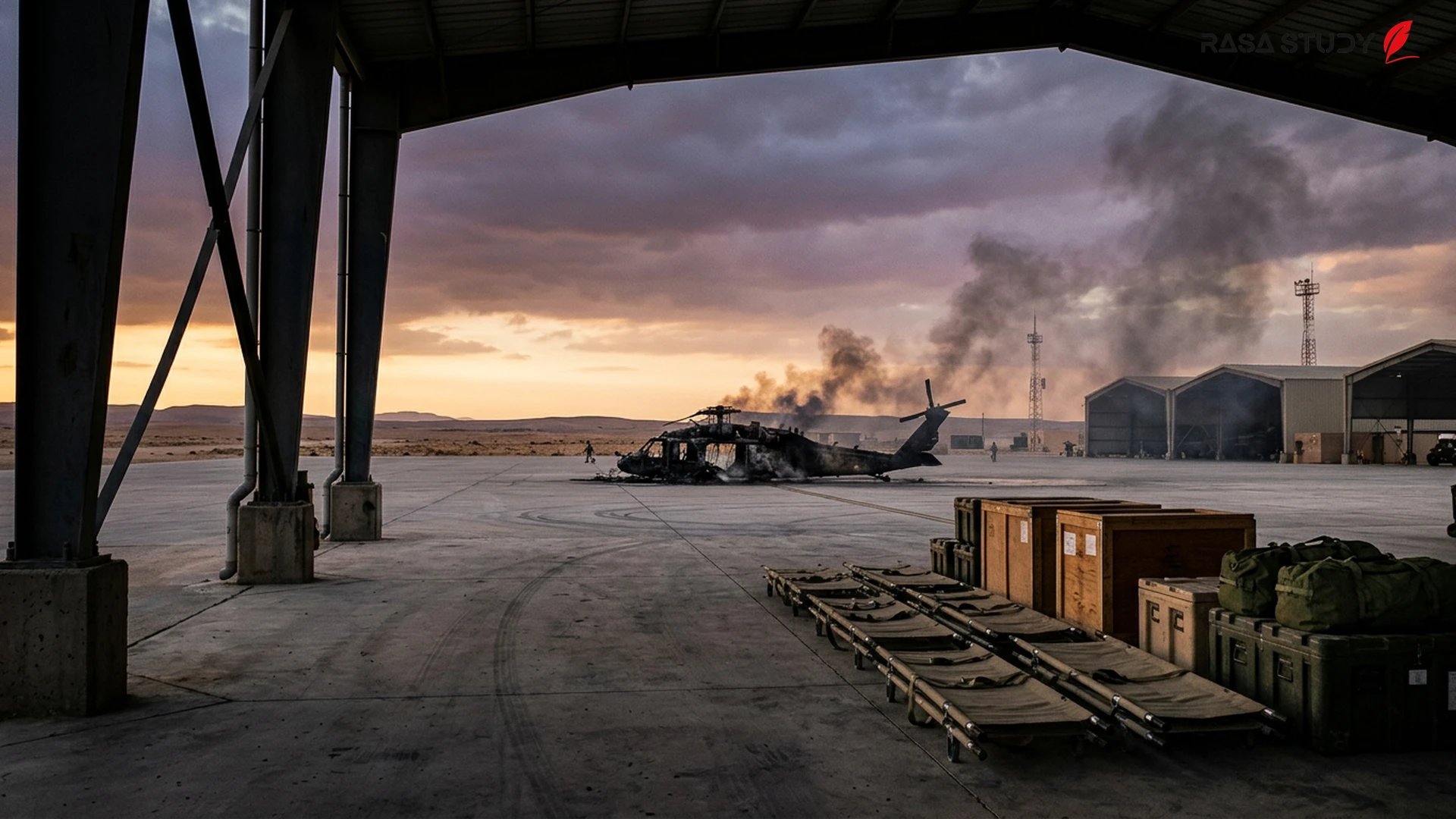
Details of Military Costs and Operation Epic Fury The largest portion of this budget, approximately $67.1 billion, is allocated to the Department of Defense to cover the operational costs of the war that began on February 28, 2026 [4]. Of this amount, $21 billion is designated for the procurement of munitions and the strengthening of the U.S. defense industrial base. Additionally, $17.3 billion has been requested for direct operational costs and $12.1 billion for classified military programs [2]. Pentagon officials have stated that these funds are vital for replenishing weapon stockpiles depleted during extensive strikes on Iranian military infrastructure [1].
Non-Military Projects: From Agriculture to Urban Infrastructure A notable aspect of this budget bill is the inclusion of non-military financial lines to garner support from representatives of various states. The White House has requested $11.1 billion in aid for American farmers who have been under pressure over the past year due to trade policies and war-related fluctuations [3]. Furthermore, $1.4 billion is earmarked to combat the Ebola virus outbreak in Central Africa and prevent its entry into U.S. territory. In the infrastructure sector, $500 million is proposed for reconstruction projects in Washington, D.C., and $1 billion for the modernization of Penn Station in New York [2][1].
Political Standoff in Congress and Democratic Opposition This budget request comes at a time when the U.S. Senate recently passed a War Powers Resolution to limit Trump's military actions against Iran [5]. Senior Democrats, including Chuck Schumer and Patty Murray, have strongly opposed the bill, calling it an attempt to force taxpayers to pay for a "reckless war" [2]. Opponents argue that while peace negotiations are underway in Switzerland and a temporary ceasefire is in place, requesting such massive sums for a war started without explicit Congressional authorization is unacceptable [4][5].
Economic Consequences and Future Outlook The approval or rejection of this budget could have a direct impact on global energy markets and the U.S. federal deficit. While the administration claims these costs were necessary to ensure national security and prevent Iran from obtaining nuclear weapons, critics worry about rising inflation and the pressure on American families [2]. With the 2026 midterm elections approaching, the battle over this $87.6 billion has become one of the hottest political issues in Washington [1].
The White House sent an $87.6 billion budget bill to Congress to cover war costs and infrastructure.
linkSources
- Beyaz Saray İran savaşı için Kongre’den 87,6 milyar dolar istiyor — Investing.com (2026-06-25)
- White House asks Congress for $87.6 billion, mostly for Iran war — Military Times (2026-06-24)
- Beyaz Saray’dan İran savaşı ve çeşitli projeler için 87,6 milyar dolarlık ek bütçe talebi — Kars Manşet (2026-06-25)
- 2026 Iran war: Conflict details and timeline — Britannica (2026-06-25)
- High-level U.S.-Iran talks conclude with a road map for peace — Washington Post (2026-06-22)