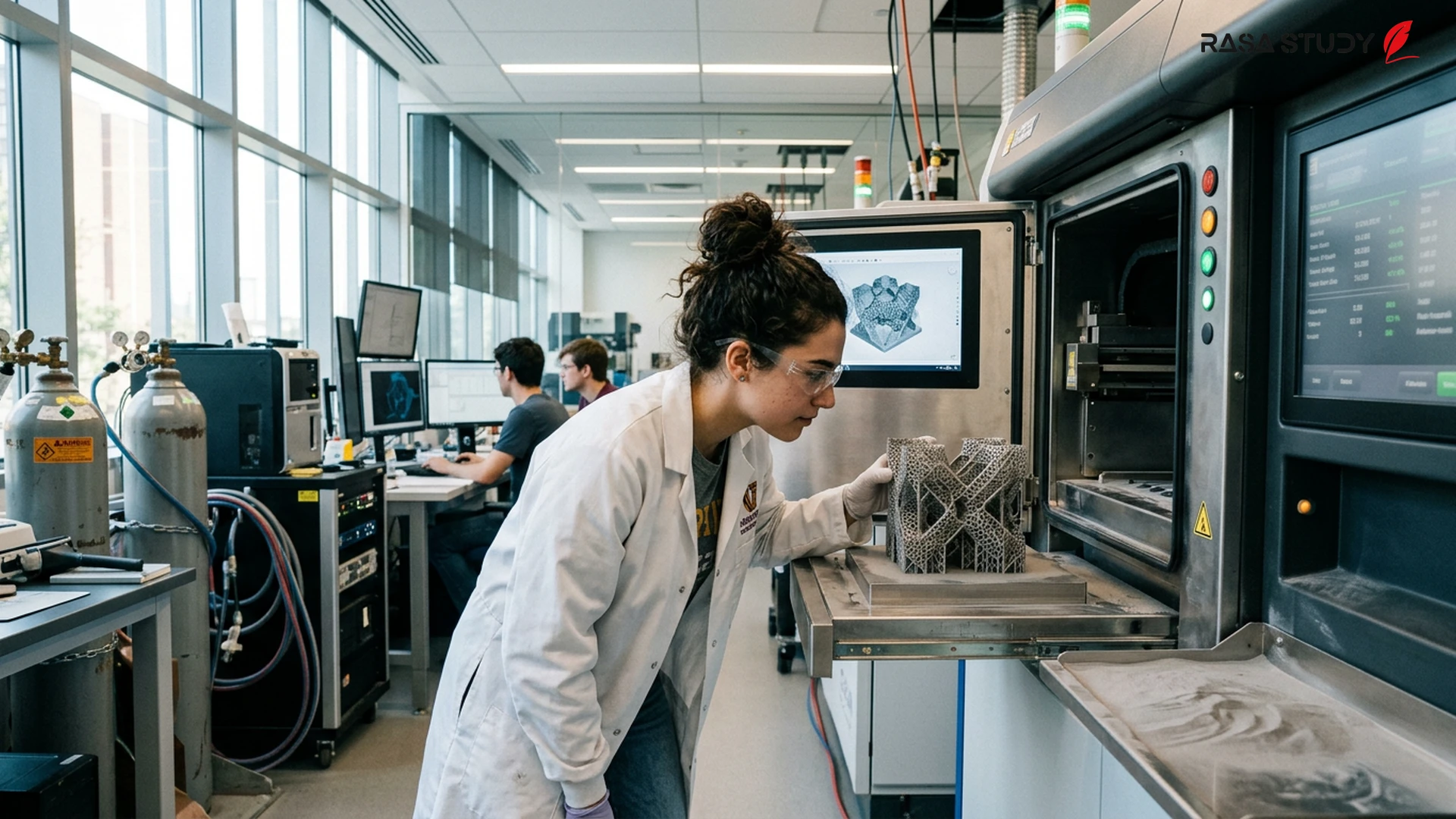
As the university major selection season begins, analytical reports indicate that 3D printing technology has become one of the most promising fields for students, reshaping the global job market in aerospace, medicine, and energy.
While university candidates in the summer of 2026 look to choose their fields of study, new economic data signals the emergence of an industrial superpower. According to a report by Analiz Gazetesi, 3D printing technology, or "additive manufacturing," has now evolved beyond a simple prototyping tool to become a core pillar of production in advanced industries [1]. This transformation is redefining not only manufacturing methods but also the nature of future jobs.
Stunning Growth in Education and Industry Markets Market forecasts in June 2026 show that the value of the 3D printing market in the education sector will rise from $2.1 billion in 2025 to approximately $9.8 billion by 2034 [2]. This 18.5% annual growth reflects heavy investment by universities in engineering, materials science, and digital design. Currently, higher education holds more than 27% of the market share for this technology, and universities are launching specialized centers to research biocompatible implants and advanced drug delivery systems [2].
Leading Industries and Career Opportunities In 2026, the additive manufacturing industry is no longer limited to plastics. The aerospace, automotive, and energy sectors are aggressively seeking engineers who can manage metal printing processes on an industrial scale [3]. Recruitment reports show that demand for "Design for Additive Manufacturing" (DfAM) specialists and materials scientists has surged. Major companies like Applied Materials are now paying interns in this field between $31 and $41 per hour, reflecting the high value of these skills in the current job market [3].
From 3D Printing to the 4D Revolution and Artificial Intelligence Innovations in 2026 are not limited to physical dimensions. The integration of Artificial Intelligence in design optimization and defect detection has brought precision to unprecedented levels. Furthermore, the emergence of "4D Printing," where printed objects can change shape in response to environmental stimuli such as temperature or pH, has revolutionized the medical sector [4]. These technologies provide unique opportunities for students seeking to combine artistic creativity with engineering precision.
Upcoming Exhibitions and the Future Path For young people looking to enter this field, events like the Expo3D Istanbul exhibition, scheduled for September 2026, provide a vital opportunity to learn about the latest industrial achievements and network with professionals [1]. Experts recommend that candidates focus on digital literacy and environmental sustainability in addition to technical skills, as additive manufacturing is considered one of the primary keys to achieving net-zero carbon goals in heavy industries.
3D printing technology in 2026 has become a main pillar of engineering and medical education.
linkSources
- Üniversite adayları için yükselen sektör: 3d baskı teknolojileri — Analiz Gazetesi (2026-07-17)
- 3D Printing in Education Market Outlook 2025-2034 — MarketIntelo (2026-06-11)
- 2026 Additive Manufacturing trends and what this means for hiring — Kensington360 (2026-01-08)
- Nanomaterials in 2026: Commercial Adoption in Medicine, Aerospace, and 3D Printing — AZoNano (2026-03-24)