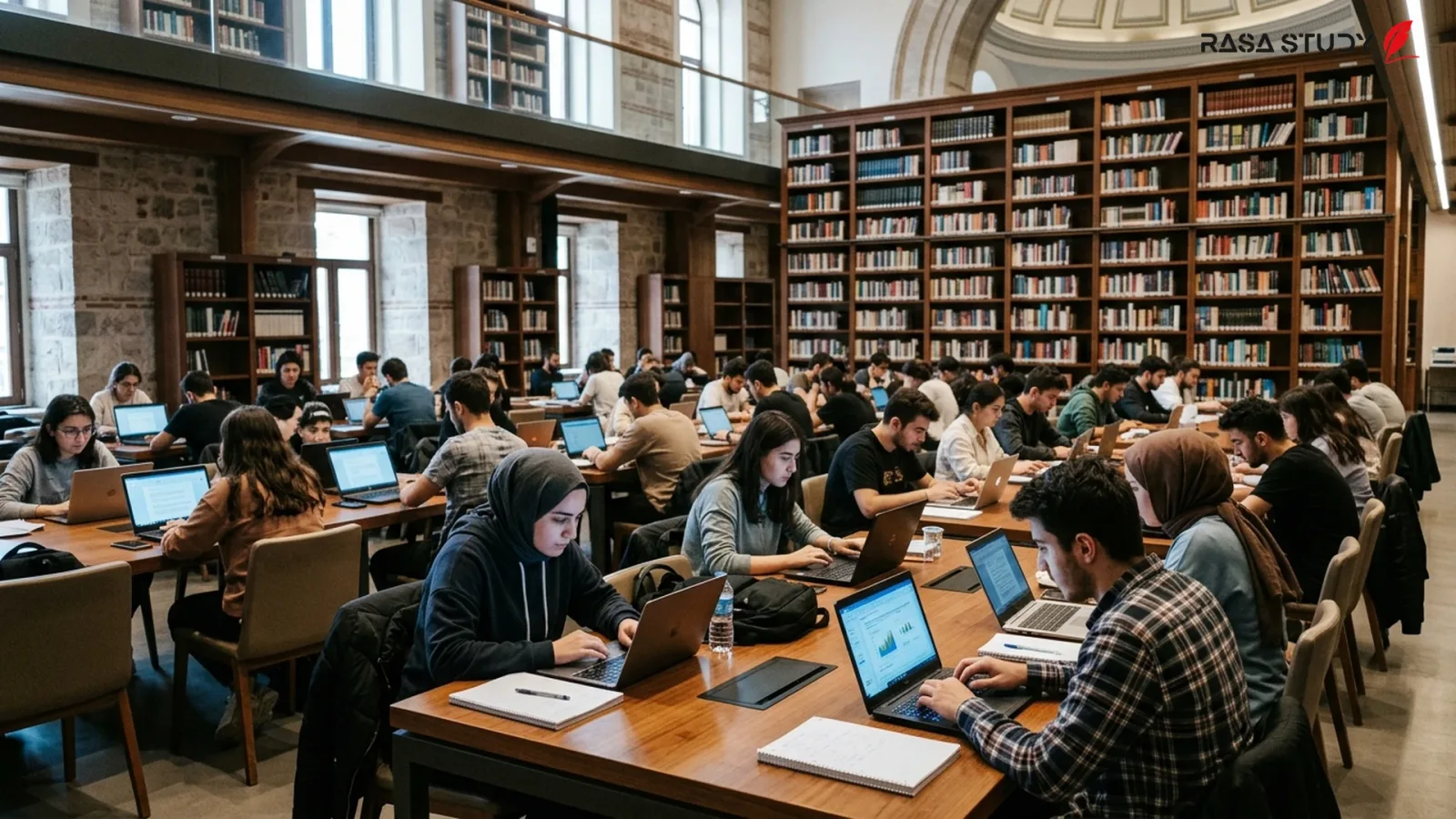
As of June 2026, new reports from Turkish educational institutions indicate a stunning leap in the use of e-books in universities; a phenomenon described by the media outlet Bursa Saati as a digital explosion in the educational system.
In recent years, the educational landscape in Turkey has undergone fundamental changes. According to a recent report by the media outlet Bursa Saati, universities across the country are witnessing a significant and unprecedented increase in the number and usage of e-books [1]. This trend, which began at the start of this decade, has now reached its peak in June 2026, completely transforming how students access knowledge.
Key Reasons for the Leap Toward Digital Resources Several key factors have contributed to this digital "explosion." First, the high costs of printing and distributing physical books have led universities to move toward digital licenses to reduce student expenses. According to statistics released by Anadolu Agency, more than 85% of Turkey's public and private universities have now strengthened their dedicated digital library platforms [2].
In addition to economic issues, the interactive capabilities of modern e-books in 2026—including cloud-based note-taking, rapid text searching, and integration with artificial intelligence tools for content summarization—have doubled the appeal of these resources for the new generation of students. Reports show that the borrowing rate of physical books in university libraries has decreased by 30% compared to last year, while access to digital versions has experienced a 50% increase [1].
The Role of Modern Infrastructure and Macro Policies The Council of Higher Education (YÖK) has paved the way for this major shift by implementing the "Digital Transformation in Higher Education" project. This plan, which includes inter-university resource sharing, allows students to access vast repositories of international articles and books [3]. Daily Sabah noted in its recent analysis that the collaboration of Turkish universities with major international publishers to provide low-cost digital versions has been one of the most successful educational strategies this year.
Challenges and Future Outlook Despite these successes, challenges such as the "digital divide" in less developed regions and copyright issues remain. However, experts predict that by the end of 2026, e-books will become the primary and dominant source at all levels of postgraduate education [1]. This transformation not only helps preserve the environment and reduce paper consumption but also significantly increases the speed of updating scientific resources in academic environments.
Ultimately, what we are witnessing today in Turkish universities is not just a simple format change, but a redefinition of the concept of study and research in the digital age, which is being closely monitored and reported by media such as Bursa Saati [1][3].
50% growth in access to digital resources in Turkish universities in 2026
linkSources
- Üniversitelerde e-kitap patlaması: Bursa Saati Raporu — Bursa Saati (2026-06-11)
- Türkiye'de Yükseköğretimde Dijital Dönüşüm ve E-Kütüphane Trendleri — Anadolu Ajansı (2026-05-20)
- Digital Library Statistics 2026: Global and Regional Trends — Daily Sabah (2026-06-10)