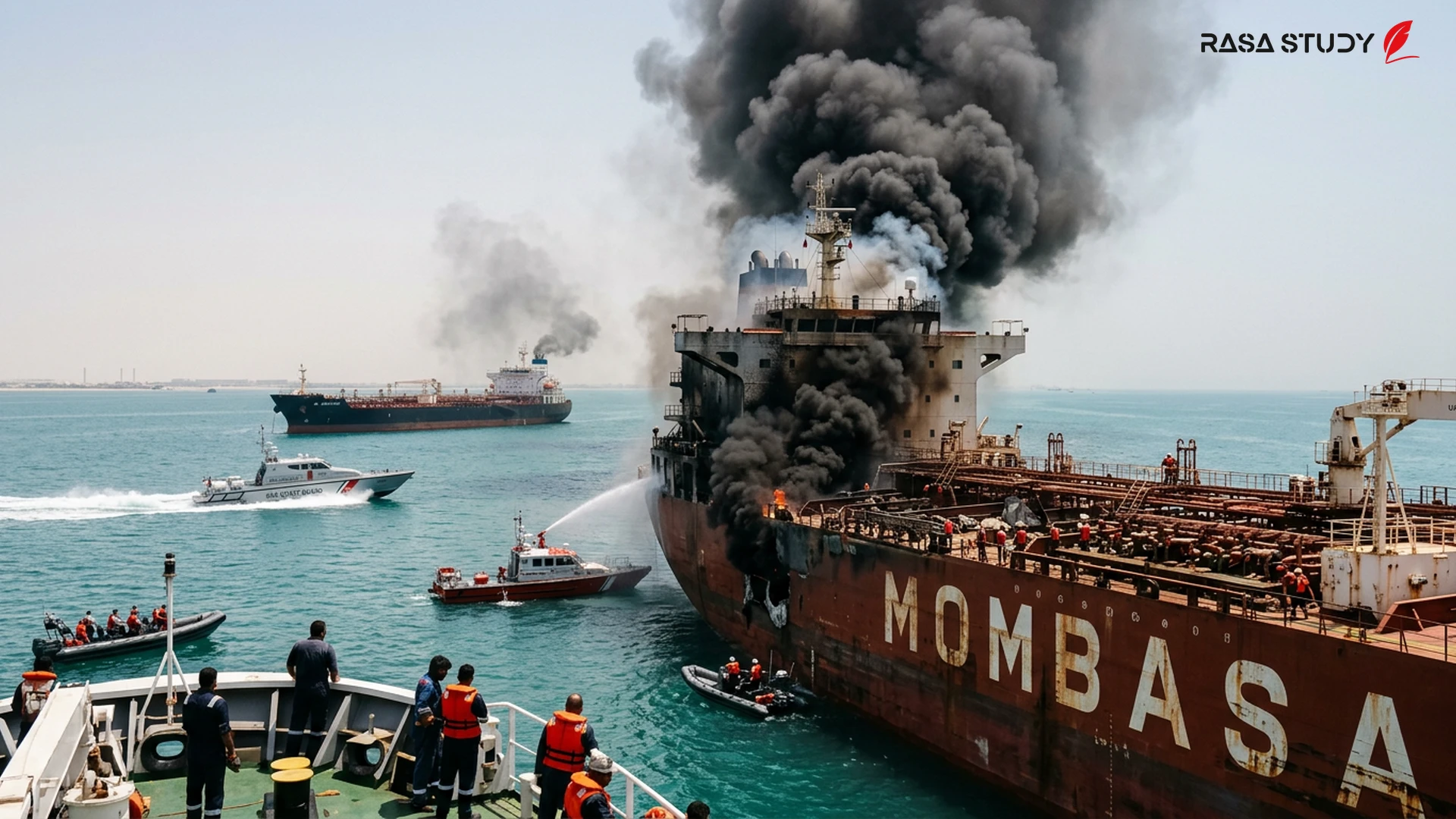
On July 15, 2026, regional tensions reached a peak as two cruise missiles launched from Iran struck UAE oil tankers in the Strait of Hormuz, resulting in the death of one crew member and injuries to eight others.
Today, July 15, 2026, international and regional news sources reported a serious security incident in the strategic waters of the Persian Gulf. According to the UAE Ministry of Defense, two oil tankers belonging to the country, named "Mombasa" and "Al Bahiyah," were targeted by cruise missiles fired from Iranian territory [1]. These attacks occur as military tensions between Iran and the United States have intensified sharply in recent days.
Incident Details and Casualties Official reports indicate that the two tankers were traveling in the southern route of the Strait of Hormuz within Omani territorial waters when they were hit. During the attack, one crew member of Indian nationality lost his life, and eight others were injured, with four reported to be in critical condition [2]. The injured include six Indian nationals and two Ukrainian nationals. The missile strikes caused fires in the engine rooms and hulls of the ships, which were brought under control by emergency forces, though both vessels sustained heavy material damage [4].
IRGC Reaction and Claims of Violation The Public Relations of the Islamic Revolutionary Guard Corps (IRGC) issued a statement claiming responsibility for targeting the vessels. The statement claimed that these two "violating supertankers" ignored repeated warnings from the Strait of Hormuz Security Control Center and intended to pass through illegal and mined routes by turning off their navigation systems [3]. The IRGC asserts that this action was taken to protect the rights of the Iranian nation and counter provocations by the US military in the region.
Political Context and Counterattacks This incident occurred only hours after US President Donald Trump spoke of the return of a naval blockade on Iran and a plan to collect tolls for ships passing through the Strait of Hormuz. In response to these threats, the United States also carried out attacks against Iranian naval facilities in Bandar Abbas and Jask, which were met with Iranian missile and drone responses against US bases in Kuwait and Bahrain [4].
Economic Consequences and Energy Market Immediately following the news of the attack on the tankers, global oil prices experienced a sudden jump. Brent crude prices rose significantly to over $87 per barrel [4]. Analysts warn that the continuation of these conflicts in the world's energy chokehold could lead to a disruption in the supply of more than 15 million barrels of oil per day, posing a serious challenge to global economic stability.
The missile attack on the Mombasa and Al Bahiyah tankers near the Strait of Hormuz has created a new security crisis.
linkSources
- İran’dan ateşlenen iki füze yakıt tankerine isabet etti — Haberton (2026-07-14)
- One Indian sailor killed, six wounded as Iranian missiles strike oil tankers in Strait of Hormuz — The Hindu (2026-07-14)
- سپاه: 2 فروند سوپر نفتکش متخلف فریب خورده، مورد اصابت واقع شدند — Al Alam (2026-07-14)
- حمله موشکی به یک نفتکش در نزدیکی عمان، موتورخانه آن را به آتش کشید — Iran International (2026-07-14)


