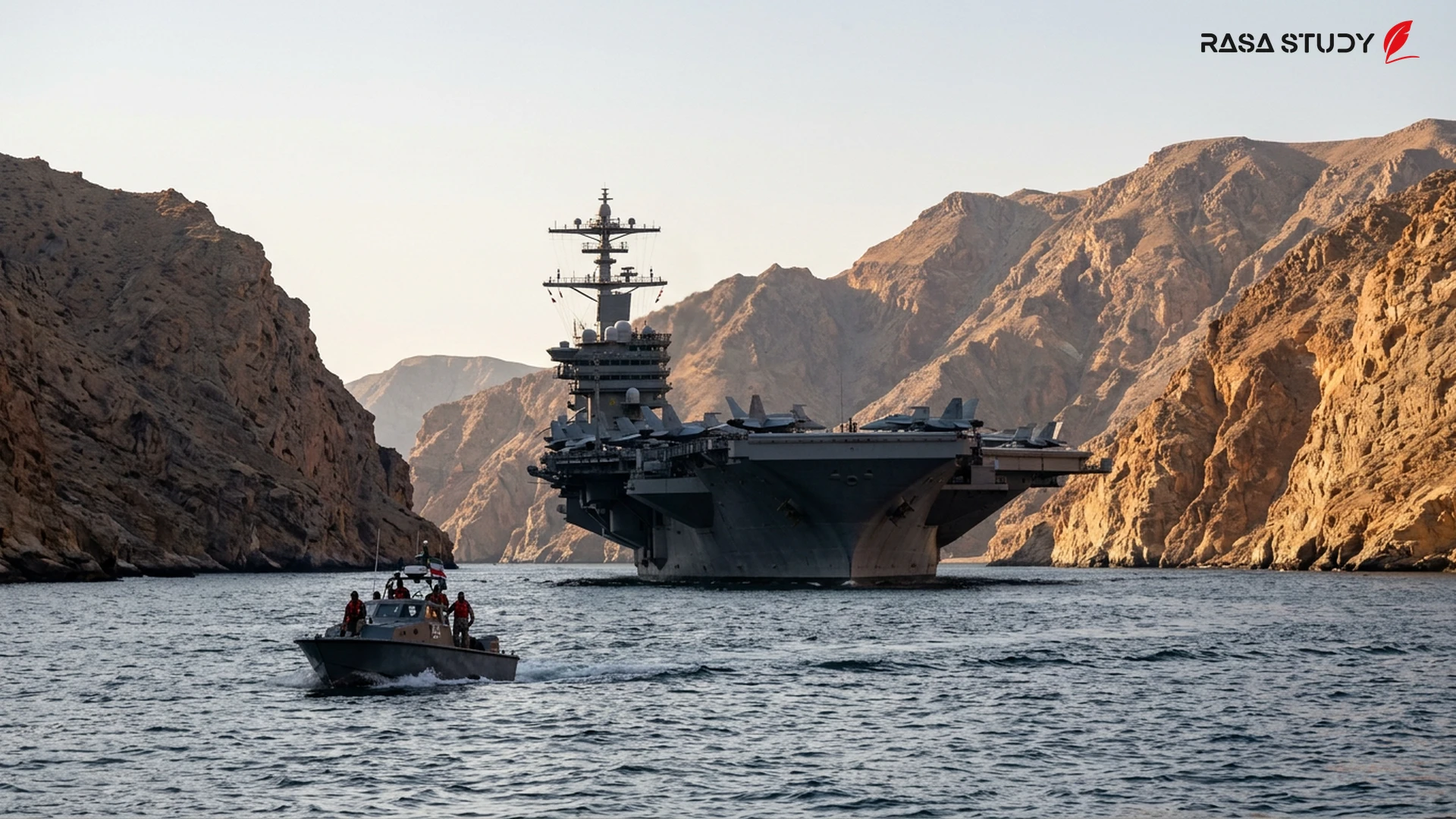
As tensions in the Strait of Hormuz reach their peak, the disclosure of details regarding 'Article 5' from the recent memorandum between Tehran and Washington has sparked heated debates about the paralysis of US naval power in this vital waterway.
Today, June 29, 2026, the Persian Gulf region is witnessing one of the most complex military and diplomatic crises of recent decades. Reports published by sources such as 'Türkiye Gazetesi' indicate that a legal clause in the recent agreement between Iran and the United States has effectively placed the US Fifth Fleet in the Strait of Hormuz in a state akin to captivity [1]. This clause, now known as 'Article 5', is recognized as the Pentagon's primary challenge in managing the 2026 crisis.
Article 5: The Agreement That Became a Trap According to leaked details of the 14-article memorandum signed on June 17, 2026, in Versailles by the presidents of both countries, Iran committed to guaranteeing the safety of commercial vessel passage for a period of 60 days. However, Article 5 of this agreement specifies that Iran has 30 days to clear 'technical and military obstacles' as well as sea mines from the main routes [2].
Tehran's interpretation of this article, particularly statements by Iranian Foreign Minister Abbas Araghchi, suggests that Iran views this 30-day period as granting it complete and exclusive control over the movement of all vessels, including warships. This has caused billion-dollar US fleets to face severe legal and operational restrictions in the region, described in the media as the 'melting of the billion-dollar fleet's prestige' [1][3].
Billion-Dollar Fleets vs. Low-Cost Drones Military reports show that $13 billion US aircraft carriers in the shallow and narrow waters of the Strait of Hormuz have become highly vulnerable to Iran's arsenal of suicide drones and smart mines. Iran's use of asymmetric warfare tactics, combined with the restrictions imposed by Article 5, has reduced the maneuvering power of these naval giants to a minimum [1].
In recent days (June 27 and 28), sporadic clashes occurred during which CENTCOM forces attacked Iranian coastal positions, while the Revolutionary Guard targeted US bases in Kuwait and Bahrain with ballistic missiles and drones [2]. This exchange of fire indicates that the ceasefire agreement is more fragile than ever.
Diplomatic Deadlock and Mutual Threats US President Donald Trump has warned in response to these developments that if Iran continues to violate security provisions, it will face a full-scale military reaction. On the other hand, technical negotiations that were supposed to be held in Switzerland have been moved to Doha, Qatar, due to the escalation of conflict [3].
Experts believe 'Article 5' has allowed Iran to use legal leverage to ground the US fleet in many instances without firing a direct shot. The world now looks anxiously toward the Doha negotiations to see if this legal-military deadlock will escalate into a widespread war or if a solution to exit this 'strategic trap' will be found [2][3].
The Strait of Hormuz in June 2026; the center of new tensions between Iran and the United States over the interpretation of Article 5 of the peace agreement.
linkSources
- Milyar dolarlık filoları eriten İran kozu! Mutabakatın 5. maddesi ABD donanmasını Hürmüz'de nasıl esir aldı? — Türkiye Gazetesi (2026-06-29)
- Iran and US trade attacks as Strait of Hormuz ceasefire falters — Al Jazeera (2026-06-28)
- ABD-İran mutabakatında düğüm noktası: Hürmüz Boğazı için 5. madde ne anlama geliyor? — İzmir'de Son Dakika (2026-06-29)


