The Iranian government has issued an official statement warning the United States that any military or security intervention in the Strait of Hormuz will be met with a decisive and regrettable response from the armed forces of the Islamic Republic.
Following the increase in United States military movements in the Persian Gulf region, officials of the Islamic Republic of Iran have once again emphasized their red line regarding the security of the Strait of Hormuz. According to reports published on July 2, 2026, Iran has announced that it is fully prepared to stand firmly against any attempt to disrupt maritime order or intervene in regional affairs [1].
Tehran's Explicit Warning to Washington Iranian military and diplomatic officials, in a statement echoed by regional media, declared that the presence of extra-regional forces not only fails to contribute to security but is the primary cause of instability in one of the world's most vital waterways. Iran emphasized that the responsibility for ensuring the security of the Strait of Hormuz lies with the countries of the region, and any provocative action by the US Navy will be met with a counter-response [1]. This stance comes as tensions over the seizure of oil tankers and the presence of American destroyers have repeatedly brought the region to the brink of conflict in recent years [2].
Strategic Importance of the Strait of Hormuz As a vital artery for global energy transfer, the Strait of Hormuz has always been a focus of global powers. Approximately one-fifth of the world's oil consumption passes through this waterway, and any disruption in the flow of ships could have devastating effects on global energy markets. Relying on its geographical position, Iran has always used this strait as a strategic deterrent tool. The naval forces of the Islamic Revolutionary Guard Corps and the Iranian Army have demonstrated their readiness for full control over this region by holding numerous exercises near the three islands [3].
History of Maritime Confrontations The confrontation between Iran and the United States in the Persian Gulf has a long history. From the tanker war in the 1980s to recent incidents involving drones and the seizure of violating ships, this region has always witnessed direct and indirect encounters. The United States claims its presence is necessary to ensure "freedom of navigation," but Tehran considers this presence an instance of intervention in its sovereign affairs [2]. Iran's new statement indicates that despite the passage of time, Tehran's positions regarding the US military presence have not changed and have even become stricter.
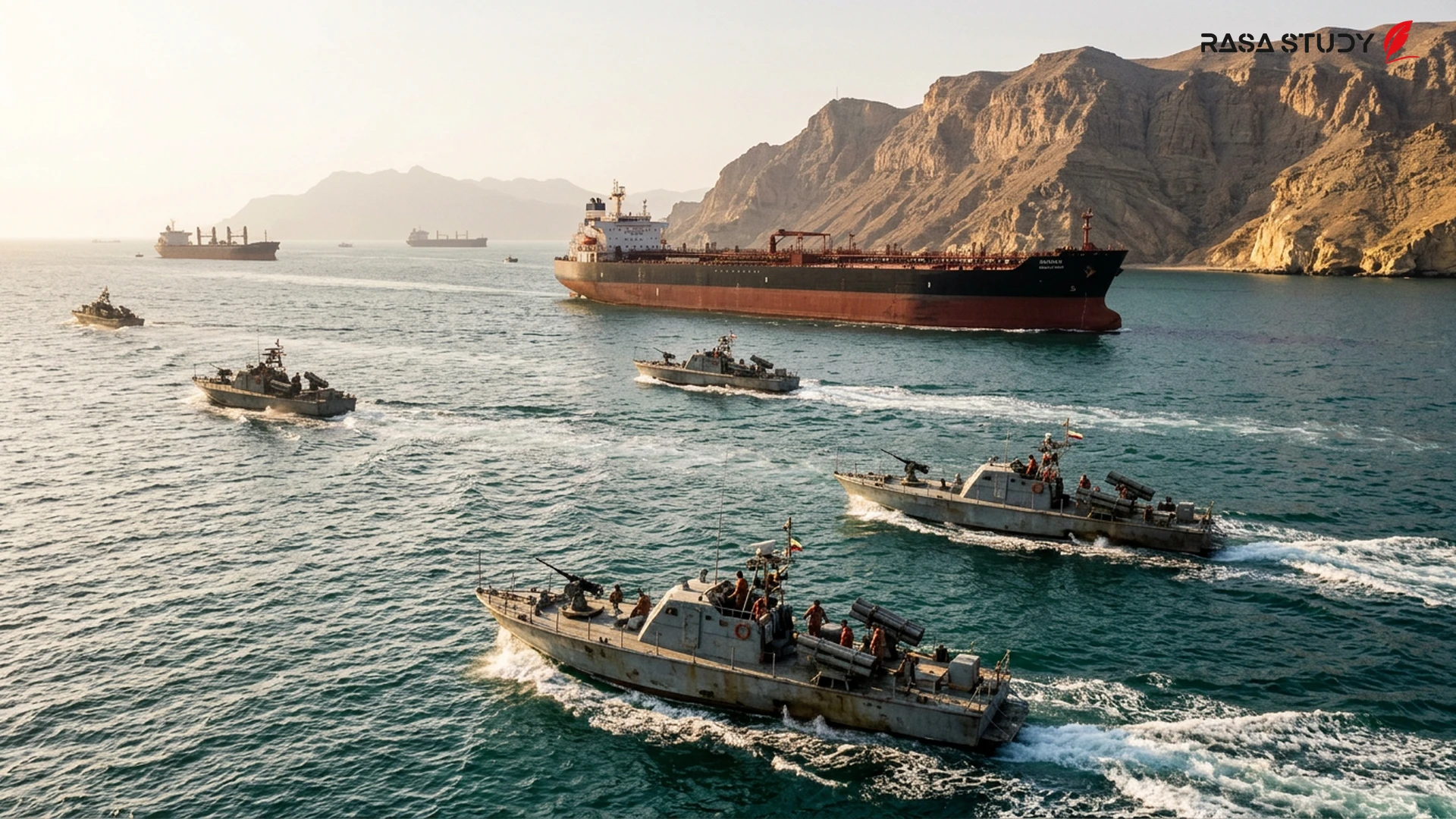
Readiness for Various Scenarios Experts believe that the sharp tone of the recent statement indicates an increase in Iran's level of defensive readiness. The use of shore-to-sea missile systems, speedboats, and reconnaissance-combat drones in the Persian Gulf region is part of Iran's defensive strategy to counter potential threats. Iran has repeatedly stated that it does not seek war, but will not hesitate to defend its national interests in territorial and international waters [1][3].
Strait of Hormuz; the center of strategic tensions between Iran and the United States in 2026
linkSources
- İran: ABD'nin Hürmüz'deki müdahalesine kararlılıkla karşılık veririz — CGTN Türk (2026-07-02)
- US Navy to bolster presence in Strait of Hormuz after Iran tanker seizures — Reuters (2023-05-12)
- Iran’s IRGC starts drills near disputed islands as US presence grows — Al Jazeera (2023-08-02)