As the June 14, 2026, deadline for signing the peace agreement between Iran and the United States approaches, political fronts in both countries have mobilized against the terms of this treaty that would end the war.
Today, Sunday, June 14, 2026, as U.S. President Donald Trump announces the possibility of the final signing of a peace agreement between Washington and Tehran, the political atmosphere in the Middle East is intensely inflamed. This agreement, drafted with the aim of ending the bloody conflicts of the past year and reopening the Strait of Hormuz, has faced serious opposition within both Iran and Israel [2].
The Islamabad Agreement; A Roadmap for Peace or Surrender? According to reports published by the Institute for the Study of War (ISW), this agreement, known as the "Islamabad Memorandum of Understanding," consists of two main phases. The first phase focuses on an immediate cessation of hostilities on all fronts, the reopening of the Strait of Hormuz, and the release of Iran's frozen assets. The second phase is intended to address more complex issues, including the nuclear program and missile capabilities [1]. However, critics argue that this separation of stages allows Iran to escape economic pressure without providing nuclear guarantees.
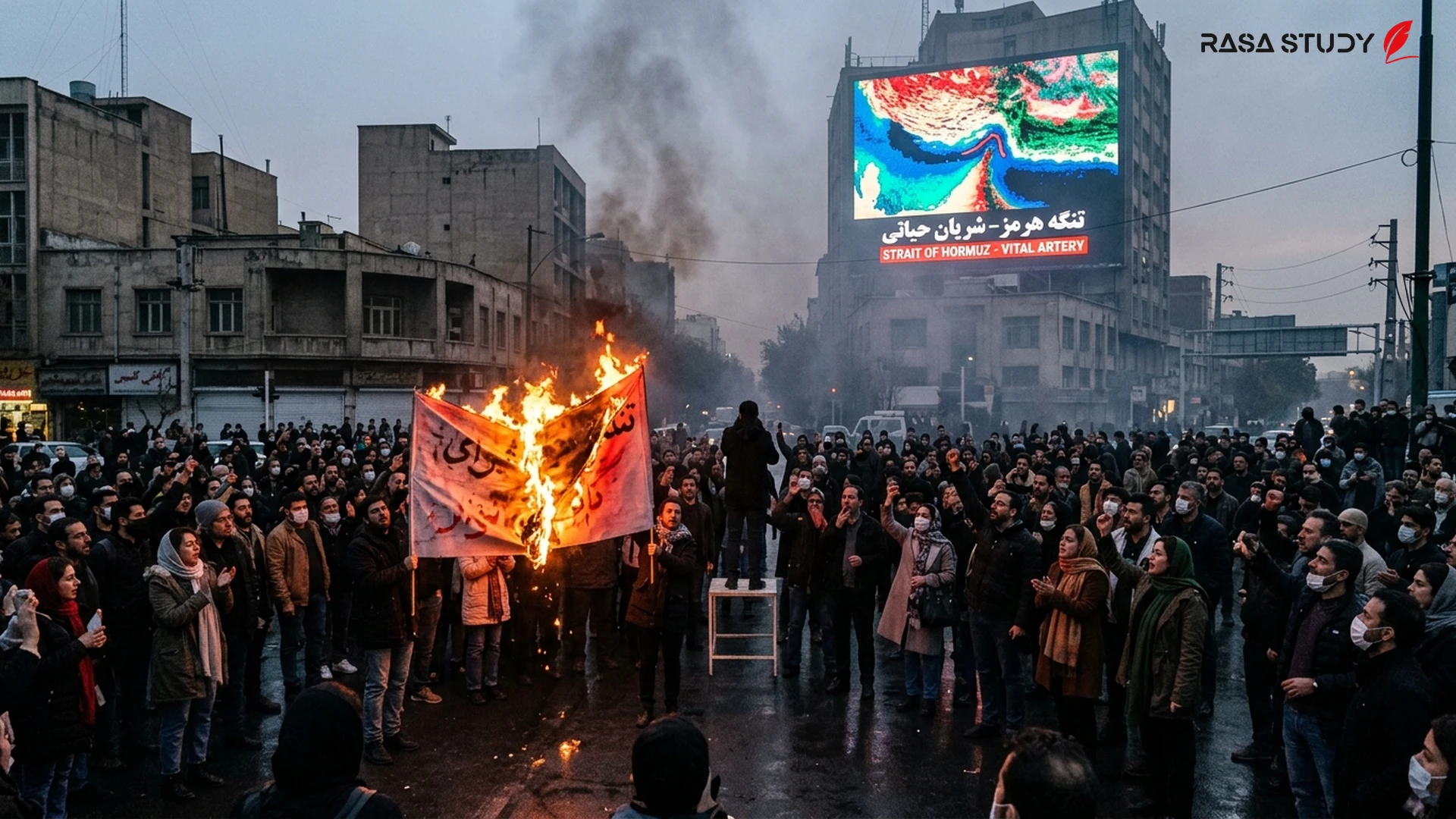
Protests in Iran; "Death to the Compromiser" In Tehran and several other Iranian cities, hardline factions and media outlets affiliated with the Revolutionary Guards have severely criticized Foreign Minister Abbas Araghchi. Yesterday, a protest rally was held in Mashhad where protesters, chanting slogans against the negotiating team, described the agreement as a "diplomatic infiltration" and a "betrayal of the ideals of the resistance" [3]. Opponents in Iran believe that relinquishing leverage in the Strait of Hormuz in exchange for a temporary lifting of sanctions endangers the country's national security [4].
Political Deadlock in Israel and Lapid's Warnings On the other side, Israeli opposition leader Yair Lapid has accused Benjamin Netanyahu of a complete failure in managing the Iran file. In a sharp statement, Lapid asserted that this agreement fulfills none of Israel's war goals and effectively leaves Iran alone with its nuclear and missile programs [5]. Security officials in Tel Aviv fear that this treaty will turn Israel into a "satellite state" that no longer has the authority to conduct independent military operations against regional threats.
Trump's Role and the Future of the Strait of Hormuz Donald Trump emphasized in his latest social media posts that this agreement is the "greatest deal of the century" for global stability and that immediately after signing, energy arteries in the Strait of Hormuz will be opened to the entire world [2]. However, the Iranian Foreign Ministry spokesperson stated that although the agreement is very close, details remain to be finalized which may delay the timing of the signing [4].
Political tensions in Tehran and Tel Aviv as the signing of the peace agreement approaches.
linkSources
- Iran Update Special Report, June 13, 2026 | ISW — Institute for the Study of War (2026-06-13)
- Trump says Iran peace deal could be signed by Sunday — The Guardian (2026-06-13)
- West Asia war LIVE: Trump says U.S.-Iran deal to be signed today — The Hindu (2026-06-14)
- Trump, İran Dışişleri Bakanı'nın mesajını paylaştı — Anadolu Agency (2026-06-14)
- Emerging US-Iran deal fails to meet any of Israel's war goals — Anadolu Agency (2026-06-14)