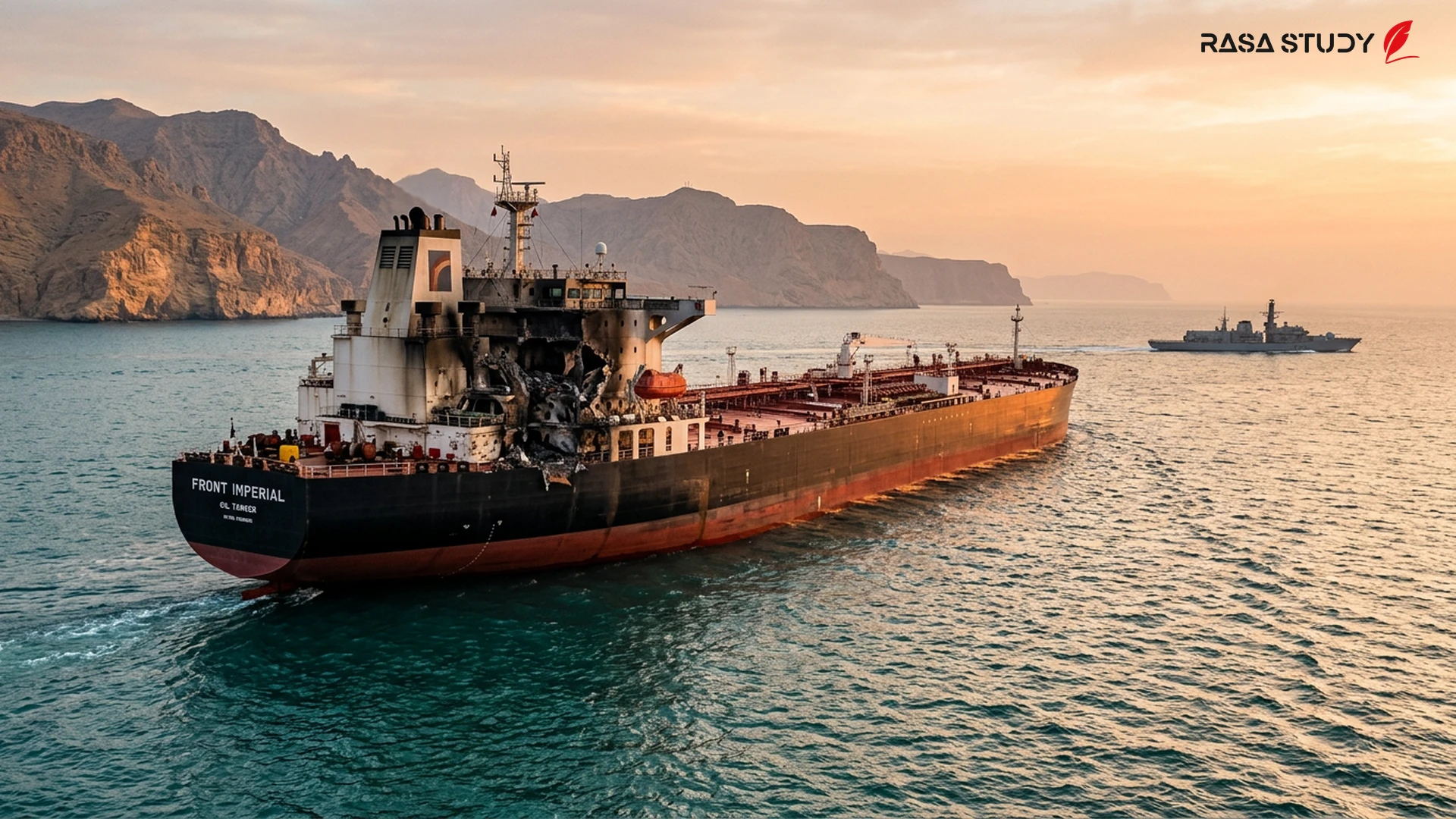
On June 27, 2026, a tanker transiting the Strait of Hormuz was struck by an unknown projectile. This incident, occurring amidst rising tensions between Iran and the United States, has once again jeopardized maritime security in one of the world's most vital waterways.
Incident Details in the Heart of the Strait of Hormuz According to the United Kingdom Maritime Trade Operations (UKMTO), a commercial tanker was targeted near Oman's Musandam Peninsula at 08:00 GMT on Saturday, June 27, 2026 [1]. The ship's captain reported that an "unknown projectile" struck the hull, causing damage to the bridge area [3].
Fortunately, despite the severity of the impact, all crew members are safe, and no official reports of oil leaks or environmental damage have been released so far [2]. Some security sources have identified the vessel as a Panama-flagged tanker named "KIKU," which was conducting a routine commercial mission [3].
Escalation of Geopolitical Tensions and Ceasefire Violations The attack occurred just hours after the United States targeted Iranian missile positions and radar sites in response to previous drone attacks on a container ship [4]. Reports from regional news agencies, including IRNA, indicate that Iranian military forces have increased their combat readiness in the Persian Gulf in response to recent US movements [4].
This chain of events has seriously threatened a fragile ceasefire agreement recently established between the parties. US Vice President JD Vance, reacting to these developments, stated that Washington remains committed to its obligations but will meet any violence against free shipping with a reciprocal response [1].
Impact on Maritime Security and Energy Markets Following the attack, the Joint Maritime Information Centre (JMIC) raised the security threat level for commercial vessels in the Strait of Hormuz to "Substantial" [1]. Transiting ships have been advised to proceed with extreme caution and immediately report any suspicious activity [3].
As the world's primary energy artery, the Strait of Hormuz is the transit point for approximately one-fifth of the world's crude oil consumption [4]. Any insecurity in this region directly affects global fuel prices. Energy market analysts warn that continued attacks could lead to a spike in oil prices, similar to what was observed in previous months during the peak of regional conflicts [5].
Background of Conflicts in the Region The Persian Gulf and the Strait of Hormuz have witnessed numerous incidents in recent months. Previously, on June 18, 2026, efforts were made to reduce threat levels and safely reopen shipping routes [5]. However, disputes over the control of alternative routes near Omani waters and allegations of maritime boundary violations have once again ignited the conflict [4]. Bahraini officials also reported today that they were targeted by drone attacks, indicating the expansion of the conflict's dimensions beyond maritime routes [1].
The Strait of Hormuz has once again become a focal point of maritime tensions between regional and extra-regional powers.
linkSources
- Tanker struck by 'unidentified projectile' in Strait of Hormuz, crew safe, UKMTO says — Anadolu Agency (2026-06-27)
- Oil Tanker Hit By 'Unidentified Projectile' In Strait Of Hormuz: Maritime Agency — ETV Bharat (2026-06-27)
- UKMTO Warning: Attack 076-26 — UKMTO (2026-06-27)
- Iran fires drones at Bahrain, oil tanker hit in Hormuz as clashes test deal — The Times of Israel (2026-06-27)
- Strait of Hormuz Security Update — Joint Maritime Information Center (2026-06-18)