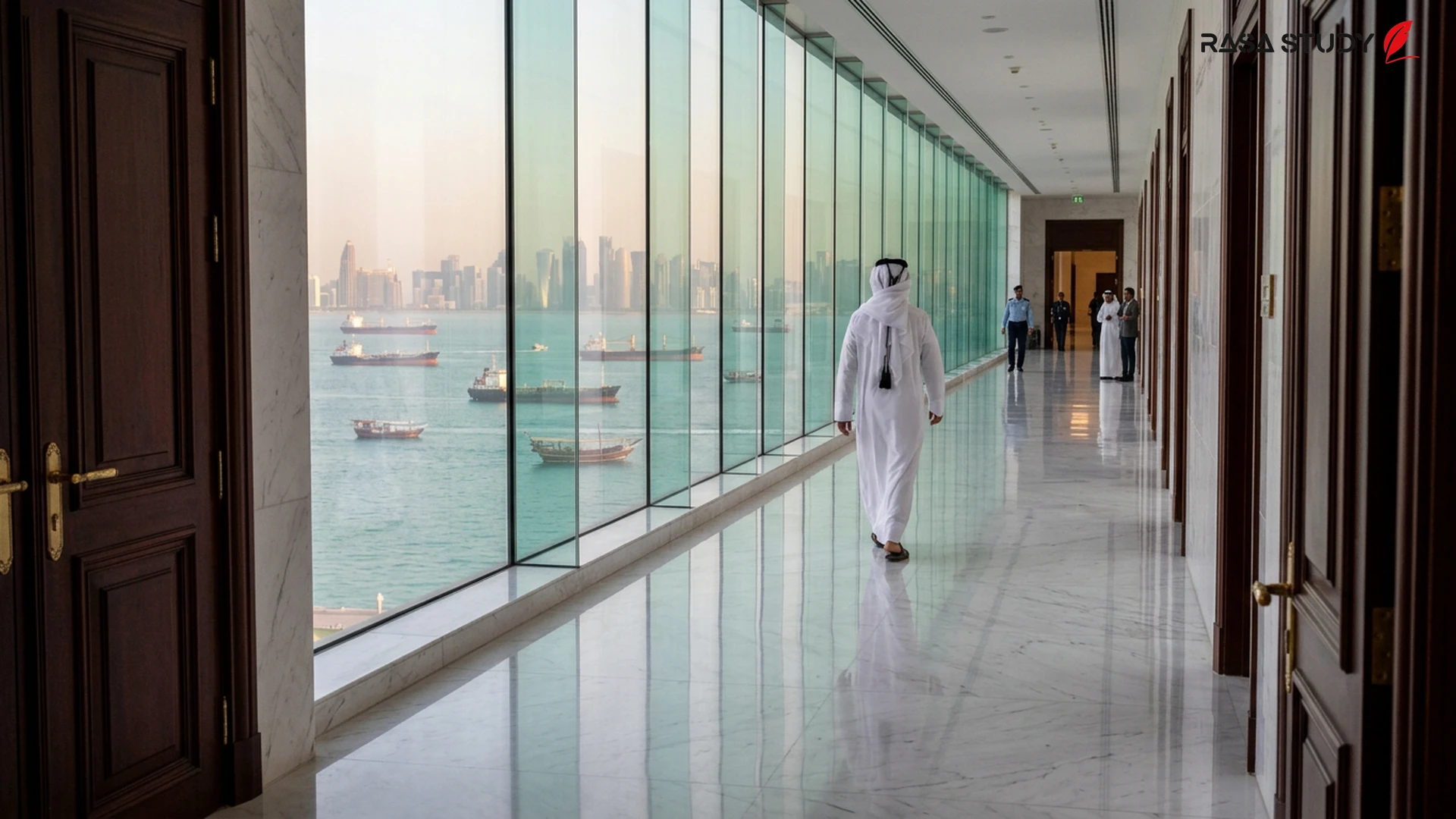
The Qatari Ministry of Foreign Affairs confirmed tangible progress in indirect talks between Tehran and Washington, stating that both countries remain committed to the path of diplomacy and presence at the negotiating table despite complex challenges.
Diplomacy Continues in Doha; Progress Based on Previous Agreements
Majed Al-Ansari, spokesperson for the Qatari Ministry of Foreign Affairs, announced in an official statement that Qatari and Pakistani mediators have concluded separate meetings with the United States and Iranian negotiating delegations in Doha. According to him, these talks, built on the results of the "Lake Lucerne Summit" in Switzerland, have led to positive progress regarding the provisions of the "Islamabad Memorandum of Understanding" [1][3]. This memorandum includes a framework for a 60-day ceasefire, the reopening of the Strait of Hormuz, and the determination of a timeline for a final agreement on the nuclear program and ending recent conflicts [2].
Why Iran and the US Are Not Leaving the Negotiating Table?
Reports published by media outlets such as "Türkiye Gazetesi" indicate that despite military tensions in recent months, neither Washington nor Tehran wishes for the collapse of diplomatic channels [1]. US President Donald Trump, evaluating the progress of the talks positively, emphasized his commitment to the path of diplomacy to prevent a return to full-scale war [2]. On the other hand, Kazem Gharibabadi, Iran's Deputy Foreign Minister, confirmed that an Iranian technical team is present in Doha to follow up on the implementation of the memorandum and the release of frozen assets, although he emphasized that no direct meetings have taken place between the Iranian and American delegations [4].
Main Pillars of the Talks: From Frozen Assets to Regional Stability
One of the key points of the recent negotiations has been the discussion over the release of a portion of $6 billion in frozen Iranian assets for the purchase of essential goods. According to reports, agreements have been reached to establish an official communication channel to record and report violations of the initial memorandum [4]. Additionally, the issue of reducing tension in southern Lebanon and ensuring commitment to a ceasefire in that region has been another sensitive axis of the talks between US envoys (Steve Witkoff and Jared Kushner) and Qatari mediators [3].
Future Outlook; Negotiations After the Funeral Ceremony in Tehran
Given the internal conditions in Iran and the holding of the funeral ceremony for the country's late leader, the parties have agreed to hold the next round of negotiations as soon as possible after the conclusion of these ceremonies [2][4]. Qatar and Pakistan, as the main mediators, believe that maintaining the current momentum in the talks can lead to sustainable stability in the region and prevent a re-escalation of conflicts. Currently, the agreement to focus on the step-by-step implementation of the Islamabad Memorandum of Understanding is the primary sign that hopes for a diplomatic solution remain alive [1][3].
Doha, the capital of Qatar, has once again become the center of gravity for diplomacy between Iran and the United States.
linkSources
- Katar 'ilerleme var' deyip son durumu açıkladı: ABD ve İran masadan kalkmıyor — Türkiye Gazetesi (2026-07-01)
- Positive progress in US-Iran indirect talks in Doha: Qatar spokesman — Arab News (2026-07-02)
- Qatar reports 'positive progress' in indirect US-Iran talks in Doha — Anadolu Agency (2026-07-02)
- US-Iran talks to continue after Iran supreme leader's funeral — The New Indian Express (2026-07-02)


