Following the conclusion of sensitive technical negotiations between Iran and the United States in Switzerland, senior Russian and Iranian security officials held a strategic meeting to examine the dimensions of these talks and coordinate their positions regarding the new regional order.
Tehran-Moscow Coordination in the Shadow of Swiss Negotiations On June 24, 2026, Sergei Shoigu, Secretary of the Russian Security Council, held a substantive meeting with security representatives of the Islamic Republic of Iran on the sidelines of the meeting of high-ranking security officials of BRICS member countries in New Delhi. The main axis of these talks was the review of the latest developments regarding the recent Iran-US negotiations in Switzerland [1]. Shoigu emphasized that these consultations allow the two countries to exchange sensitive information in complex international conditions and consider each other's interests in formulating foreign policy.
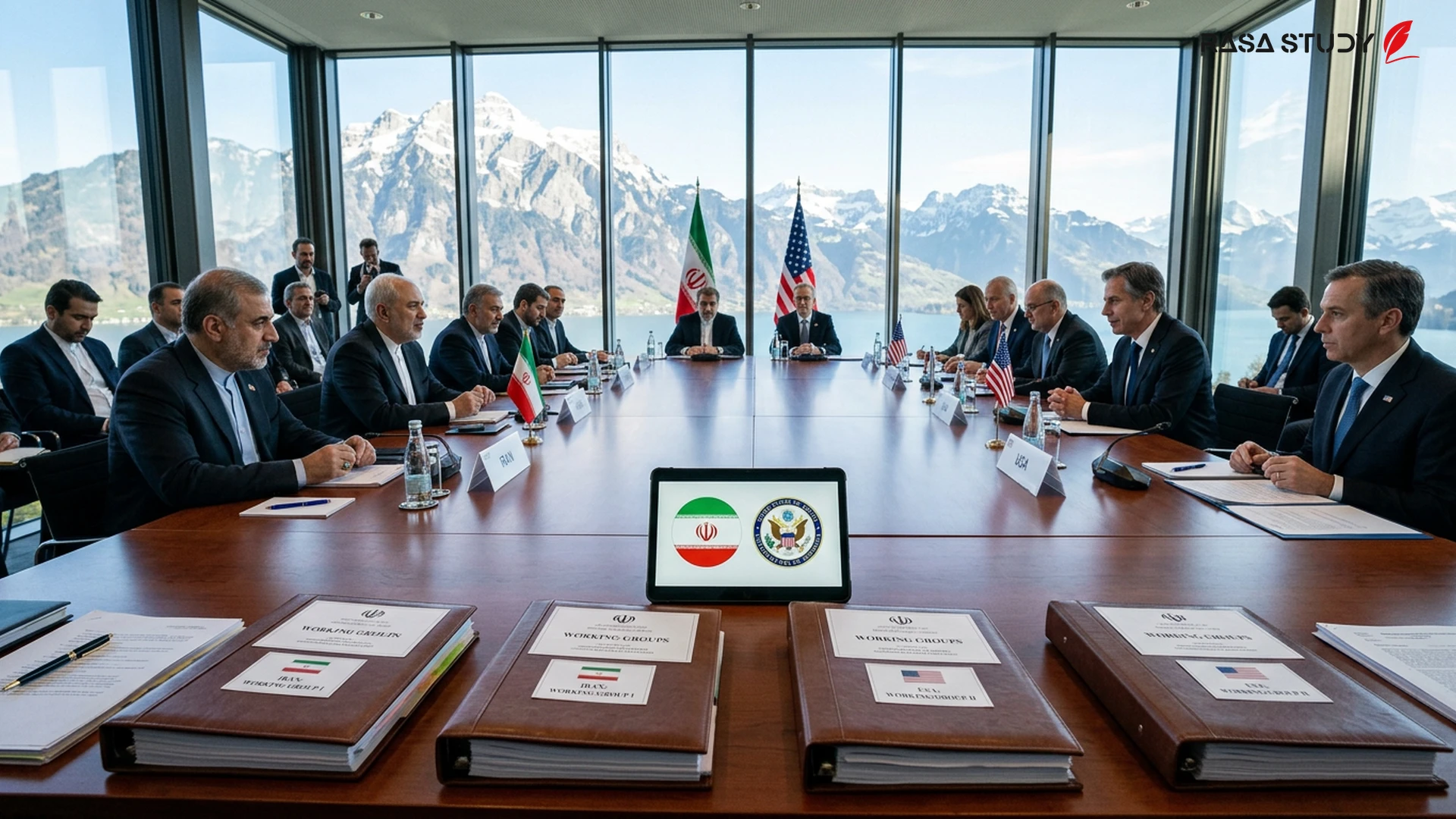
Formation of Four Working Groups: A Step Toward a Final Agreement? Reports from diplomatic sources indicate that technical negotiations between Iran and the US at the Bürgenstock resort in Switzerland ended on June 23. According to Kazem Gharibabadi, Iran's Deputy Foreign Minister, the two sides have agreed on the formation of four specialized working groups: "Lifting of Sanctions," "Nuclear Affairs," "Economic Reconstruction and Development," and "Monitoring and Implementation" [2][4]. These working groups are tasked with finalizing the operational details of the memorandum of understanding that was digitally signed on June 18 by the presidents of the two countries, Masoud Pezeshkian and Donald Trump [3].
Remaining Challenges: From the Strait of Hormuz to the Lebanon Crisis Russia is closely monitoring the progress of these negotiations, as any agreement between Tehran and Washington could shift the balance of power in Eurasia. One of the challenging points in these talks is the status of the Strait of Hormuz. Mohammad Bagher Ghalibaf, Iran's chief negotiator, emphasized that the management of this strategic waterway will remain under full Iranian sovereignty and will not return to pre-war conditions [2]. Additionally, the issue of a ceasefire in Lebanon and the cessation of Israeli attacks on Hezbollah have been cited as Iran's main preconditions for progress in the nuclear file [4].
The Role of BRICS and Regional Alliances Shoigu's meeting with Iranian officials in New Delhi demonstrates the strategic depth of the two countries' relations within the framework of new power blocs like BRICS. The Secretary of the Russian Security Council noted that Moscow and Tehran, as strategic partners, are coordinating to counter unconventional security challenges and cyber threats [1]. These collaborations are being strengthened while the West, led by the US, attempts to manage part of the Middle East tensions through the Switzerland negotiations, but Iran and Russia emphasize the necessity of maintaining the region's political and security independence.
Ultimately, recent consultations showed that despite diplomatic openings between Tehran and Washington, the security bond between Iran and Russia continues to act as a counterbalance in the foreign policy of both countries. Moscow wishes to ensure that any agreement in Switzerland will not come at the cost of weakening Tehran-Moscow strategic cooperation.
Sergei Shoigu and Iranian security officials discussed the Switzerland negotiations on the sidelines of the BRICS summit.
linkSources
- رایزنی مقامات بلندپایه امنیتی روسیه و ایران درباره مذاکرات سوئیس — Tasnim News (2026-06-24)
- Iran, US Conclude Technical Talks in Switzerland, Establish Four Working Groups — Kurdistan24 (2026-06-23)
- Technical talks between Iran and the United States in Switzerland have concluded — The Hindu (2026-06-24)
- پایان مذاکرات فنی ایران و آمریکا در سوئیس؛ تشکیل چهار کارگروه تخصصی — IRNA (2026-06-23)