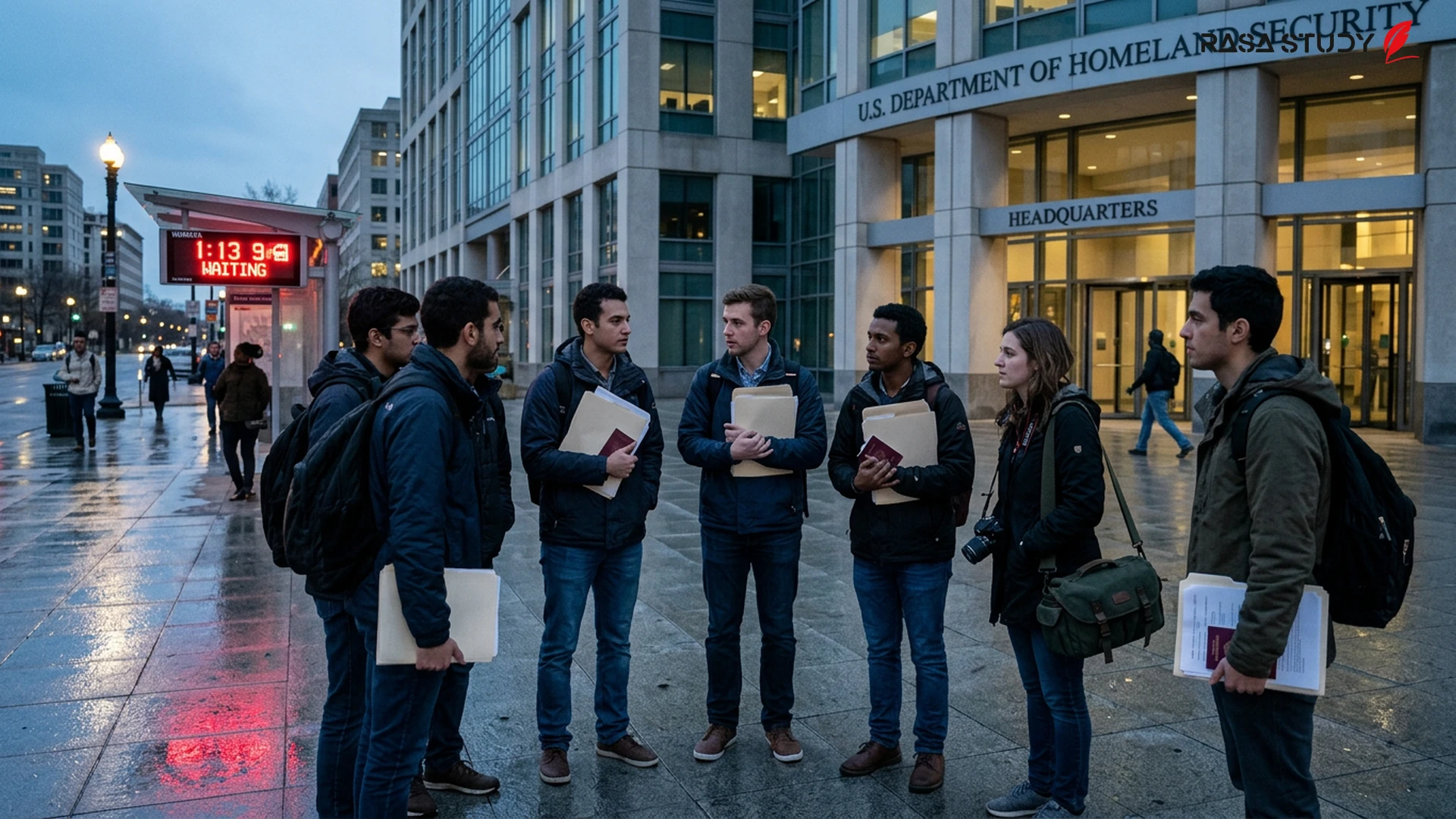
The US Department of Homeland Security, in a controversial move, has abolished the indefinite stay rule for student and media visa holders. This decision, effective from September 2026, will create major challenges for education and professional activities in the United States.
The Donald Trump administration, continuing its strict immigration policies, published the final regulation today, July 16, 2026, ending decades of the 'Duration of Status' (D/S) rule. Under this new law, international students, exchange program participants, and foreign journalists can no longer stay in the US indefinitely until the end of their activities [1].
End of the Indefinite Stay Era (D/S) Previously, holders of F-1 (student), J-1 (exchange visitor), and I (journalist) visas were allowed to remain in the United States as long as they were active in their educational or professional programs. However, according to new rules announced by the Department of Homeland Security (DHS), this system will be replaced by 'fixed periods of admission' [3]. This move is part of a broader immigration crackdown that began in January 2025 with Trump's return to the White House [2].
Details of Student and Exchange Restrictions Under the new regulations, most international students (F-1) and exchange visitors (J-1) will be authorized to stay only for the duration of their program, up to a maximum of four years [1]. Students whose course of study takes more than four years, such as PhD or medical students, will be required to submit an Extension of Stay (EOS) application to the US Citizenship and Immigration Services (USCIS) [3]. Additionally, the grace period to leave the country after graduation for F-1 students has been reduced from 60 days to 30 days [1].
Increased Pressure on Media and Foreign Journalists The strictest part of this law is directed at foreign journalists. Type I visas, which were previously valid for years, will now be issued only for 240-day periods (approximately 8 months) [2]. Journalists must apply for an extension every 8 months to continue their work. This restriction is even more severe for Chinese journalists, whose stay is limited to only 90 days [2]. Media outlets such as 'Halk TV' have reported that these changes could severely disrupt the professional activities of international media on US soil [4].
Reactions and Educational Consequences Fanta Aw, executive director of the Association of International Educators (NAFSA), called the move a 'misguided and unnecessary change' that injects fear and bureaucracy into a system that has worked well for years [3]. The Department of Homeland Security, defending the plan, pointed to an 11% increase in student arrivals in 2024 and claimed that monitoring more than 1.8 million visa holders is essential for national security [2]. This law is set to take effect 60 days after official publication, starting in mid-September 2026 [1].
New changes in US visa rules will affect more than one million international students and thousands of foreign journalists.
linkSources
- DHS Finalizes Rule Limiting F-1 Students to Four-Year Stays — Erickson Immigration Group (2026-07-16)
- Trump administration moves to change regulations for journalist and student visas — The Independent (2026-07-16)
- US to end 'duration of status' for F, J and I visa holders — The PIE News (2026-07-16)
- Trump yönetimi vize sürelerini kısaltıyor: Öğrenci ve gazeteciler etkilenecek — Halk TV (2026-07-16)