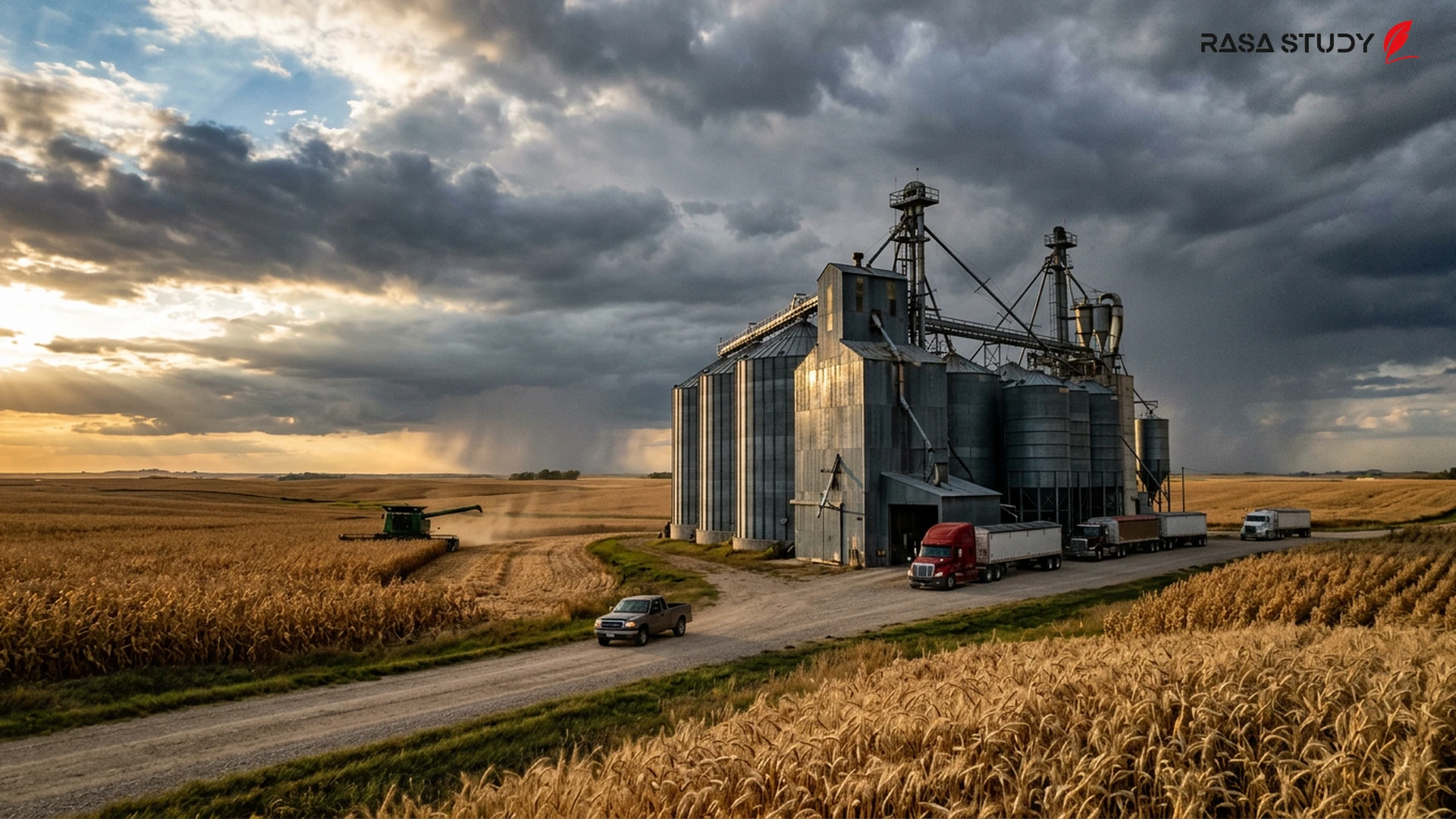
Donald Trump has once again emphasized that Iran's frozen assets will be spent on purchasing agricultural products from US producers, a move he described as opening a "new market" for United States farmers.
Details of Trump's Plan for Frozen Iranian Assets As diplomatic tensions between Tehran and Washington enter a new phase, US President Donald Trump announced in controversial remarks that his administration intends to use $12 billion of Iran's frozen assets to support the US agricultural sector [1]. In a recent speech at the White House, Trump described Iran as a "lovely new market" for American products and claimed that these financial resources would be spent on purchasing massive quantities of wheat, corn, and soybeans from domestic American farmers [3].
According to Trump, this process will begin soon, aiming to meet Iran's food needs through American production. JD Vance, the US Vice President, supported the plan, calling it a "classic Trump-style deal" that simultaneously makes American farmers wealthier while providing food for the Iranian people [2]. This proposal was presented as part of a new memorandum of understanding aimed at ending months of conflict in the Persian Gulf region.
Tehran's Sharp Reaction: "We Are the Final Decision-Makers" Officials of the Islamic Republic of Iran immediately reacted to Trump's claims, rejecting any obligation to purchase agricultural products from the United States. Mohammad Bagher Ghalibaf, the Speaker of the Iranian Parliament, called Trump's statements false in a sharp message on the X social network, emphasizing that the US has only exported "mistrust" over the past decades [1]. He wrote sarcastically that America's only real exports have been GMO products and empty promises.
Additionally, Abdolnaser Hemmati, the Governor of the Central Bank of Iran, clarified that based on the agreements reached, there are no restrictions on how these resources are spent, and Iran will decide where to spend the released assets based solely on national interests and product quality [3]. Iranian officials emphasize that the management of these resources must be entirely under Tehran's control, and Washington has no right to dictate purchase conditions.
Economic Dimensions and Legal Challenges of the Agreement This plan comes as global markets closely follow the progress of negotiations between Iran and the US. According to reports, approximately $12 billion of Iran's assets, which had been frozen in countries like Qatar, is the main focus of these discussions [2]. Trump claims that this money will remain in US-controlled accounts to be spent exclusively on purchasing humanitarian goods from American companies.
However, analysts believe that implementing such a plan faces serious legal and political obstacles. On one hand, pressure from hardliners inside Iran against any dependence on US agricultural products has increased, and on the other hand, some lawmakers within the United States have expressed concern regarding the release of these resources [1]. Despite these challenges, the Trump administration insists that this agreement can revive US agricultural exports, which have been damaged in recent years due to trade tensions [4].
Donald Trump claimed that released Iranian assets will create a new market for US agricultural products.
linkSources
- Trump says US will use Iranian funds to buy American wheat, soybeans and corn for Iran — Anadolu Agency (2026-06-26)
- Trump says US to soon buy farm goods with unfrozen Iranian funds — The Times of Israel (2026-06-26)
- Trump says released Iran funds to be spent on US crops — Middle East Eye (2026-06-26)
- Trump reasserts U.S. to spend Iranian assets on farm goods — Capital Press (2024-06-24)