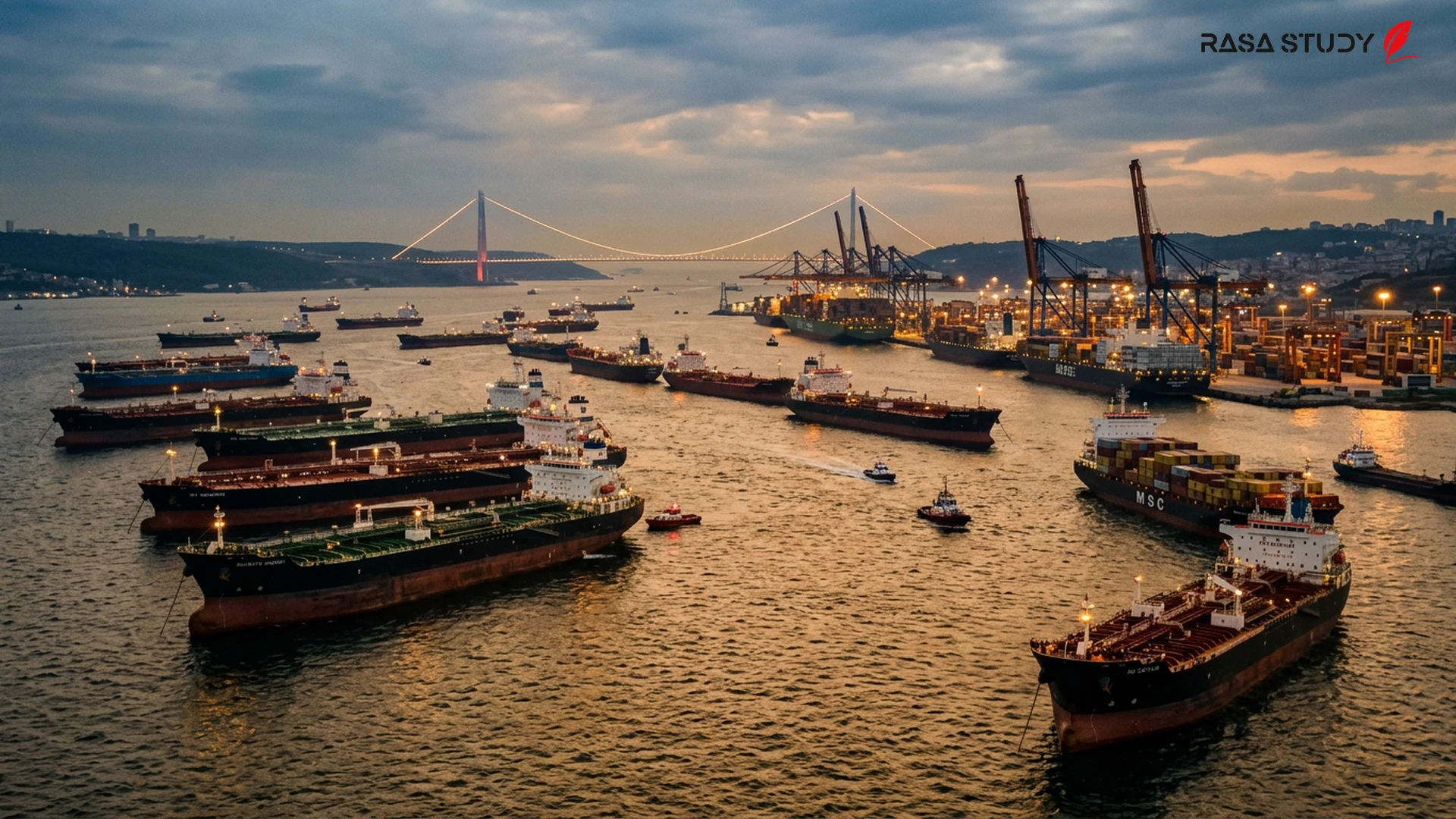
The Economist has analyzed Turkey’s ambitions to utilize its strategic location amidst regional conflicts to become a primary hub for energy and goods transit.
Ankara’s Strategy Amidst Global Crises
The prestigious publication The Economist, in its latest analysis, examines Turkey's growing role in global equations. According to this report, Turkey is in a tight race to become a strategic "hub" in the shadow of regional wars, including tensions in Ukraine and the Middle East [1]. Ankara is attempting to exploit the gaps created in global supply chains and energy routes to establish itself as an indispensable bridge between East and West.
The newspaper Sözcü also republished this analysis, noting that despite domestic economic challenges, Turkey has managed to use its geographical position as a powerful diplomatic and economic tool [2]. The country is now competing on several logistical and energy fronts to increase its share of global trade.
Turkey as an Energy Bridge Between East and West
One of the main pillars of this competition is becoming a natural gas hub. As Europe reduces its dependence on Russian gas, Turkey seeks to route alternative paths from Azerbaijan, Central Asia, and even potentially the Eastern Mediterranean through its territory [3]. The Economist believes that the "Gas Hub" project proposed in cooperation with Russia, though accompanied by political complexities, has the potential to redraw Europe's energy map.
In addition to energy, Turkey is investing heavily in transport infrastructure. The "Middle Corridor" project, which connects China to Europe via Central Asia and the Caspian Sea, is a cornerstone of this strategy. Compared to the northern routes passing through Russia, this path promises greater security and speed under the current conditions of the Ukraine war [1].
Challenges and Obstacles Ahead
However, the path to becoming a regional hub is not without obstacles. The Economist warns that the balance of power between NATO and Russia, as well as fluctuating relations with the European Union, could overshadow these ambitions [1]. On the other hand, competition from alternative southern routes, such as the India-Middle East-Europe Corridor (IMEC), has forced Turkey to accelerate its infrastructure projects, such as the "Development Road" in cooperation with Iraq [3].
Ultimately, Turkey's success in this "race in the shadow of war" depends on the country's ability to maintain political stability and attract foreign investment for large-scale infrastructure projects. Ankara hopes that by becoming a vital center, it will not only improve its economic standing but also solidify its geopolitical influence in the new century [2].
Leveraging its geographical location, Turkey seeks to play a key role in global supply chains and energy.
linkSources
- Turkey’s tightrope: The race to be a regional hub — The Economist (2026-06-28)
- The Economist yazdı: Türkiye savaşın gölgesinde merkez olma yarışında — Sözcü Gazetesi (2026-07-01)
- Turkey's energy hub project enters new phase amid regional shifts — Reuters (2026-06-30)


