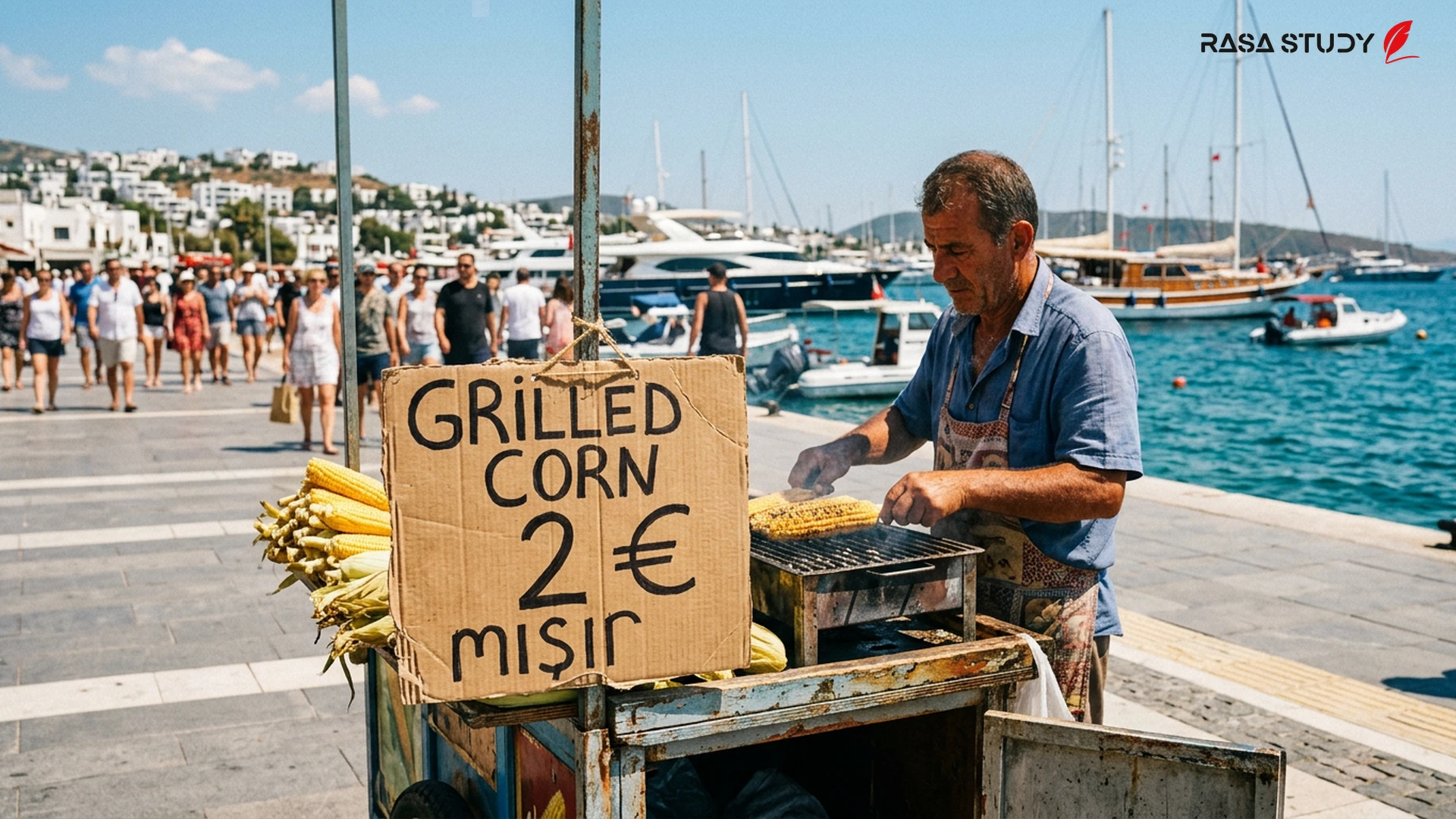
As the tourism season peaks in July 2026, reports from Turkish beaches indicate that many businesses are ignoring regulations by offering prices in Euro and applying unfair conversion rates.
Euro Dominance in Coastal Markets; From Transfers to Street Food While Turkey is recognized as one of the popular summer destinations in 2026, field reports from coastal cities such as Antalya and Muğla (Bodrum) show a widespread shift in the pricing system. Many businesses, from airport transfer companies to street vendors, are announcing their service prices in Euro instead of Lira [1]. According to observations, the cost of jet ski rentals on the beaches is set at around 50 Euro, beverage prices range between 3 to 8 Euro, and even the price of a simple corn cob in parks is set at 2 Euro [3]. Additionally, small souvenirs like fridge magnets are priced at 1 Euro and T-shirts at 20 Euro [1]. This situation has made domestic tourists feel as though they are in a European Union member country, while their income is in Lira and their purchasing power has significantly decreased. ## The Exchange Rate Trap; Profit Taken from the Tourist's Pocket One of the main reasons for tourist protests in July 2026 is the application of unrealistic conversion rates by vendors. While the official Euro rate in financial markets is reported at approximately 53.5 Lira [4], many restaurants and shops use a rate of 55 or 56 Lira as the basis when settling payments in Lira [1][3]. Furthermore, some businesses are forcing customers to pay in cash Euro or transfer funds via bank systems (IBAN) by limiting credit card acceptance to avoid tax oversight and currency fluctuations [1]. These arbitrary behaviors have unexpectedly increased travel costs for tourists and created a sense of "economic exploitation" among travelers. ## Reactions and Legal Consequences; Will the Lira Return to the Windows? According to Article 6502 of the Law on the Protection of Consumers in Turkey, listing prices in Lira on labels and menus is mandatory [1]. However, economic pressures and annual inflation, which reached approximately 32.1% in June 2026, have caused the private sector to seek refuge in foreign currencies to maintain profit margins [2]. Experts warn that this trend could destroy Turkey's appeal as an affordable destination. Currently, early bookings from European and Middle Eastern markets have faced a 20 to 25 percent decrease due to regional tensions and high flight costs [5]. Although the Ministry of Culture and Tourism seeks to improve service quality by updating hotel deposit costs [4], without strict supervision of illegal pricing at the city level, there is a risk of losing loyal tourists to competitors like Greece and Croatia.
Tourists in Antalya and Bodrum are protesting against the pricing of services in Euro and arbitrary exchange rates.
linkSources
- Turizm Bölgelerinde Euro ile Fiyatlandırma ve Yüksek Kur Uygulaması Tepki Çekiyor — Haber TR (2026-07-12)
- Türkiye remains one of Europe's most affordable destinations despite inflation — Türkiye Today (2026-07-12)
- Turizm bölgeleri AB'ye girdi! Fiyatlar euroya döndü — Sabah (2026-07-12)
- Euro Price in Turkey Reaches 53.55 Lira; Continued Pressure on National Currency — RasaStudy (2026-07-08)
- Tourism bookings to Turkey decline amid regional tensions — Turkish Minute (2026-04-08)