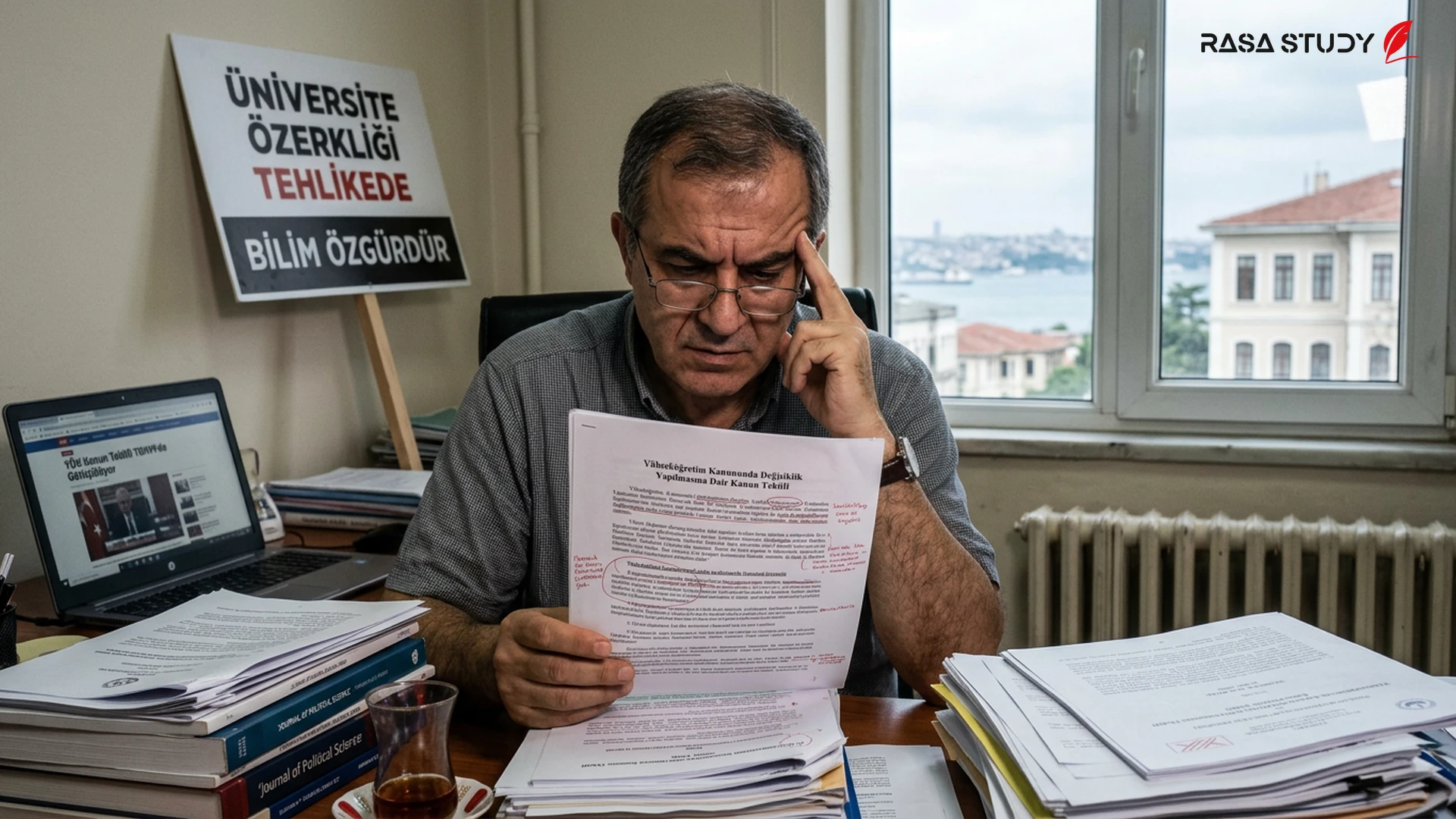
With the passage of the new higher education reform bill in the Turkish Parliament, concerns regarding the end of academic independence have reached a peak. This plan, presented under the guise of a 'student amnesty,' provides broad powers for political oversight of professors and internal university management.
New Bill and the Heavy Shadow of Politics on Science On July 17, 2026, the University Faculty Association of Turkey (ÜNİVDER) reacted with a sharp statement to the new 'Higher Education Law Amendment' bill currently under consideration in Parliament. The association believes that the proposed text not only fails to solve the root problems of universities but also paves the way for more direct intervention by political institutions in scientific affairs [1][3]. According to a report by the 'Gazete Kadıköy' newspaper, this bill consists of 28 articles affecting various aspects of university life, from student affairs to faculty recruitment.
Security Clearances; A Tool for Filtering Professors One of the most controversial parts of this bill is Article 26, which mandates 'security investigations and background checks' for all academic staff, from research assistants to full professors [2]. Critics argue that this move amounts to the 'political profiling' (Fişleme) of academics. These oversight measures, conducted based on vague security criteria, could lead to self-censorship among young researchers and severely limit freedom of expression in academic environments [3].
Concentration of Power in the Hands of 'YÖK' and the Presidency The new bill increases the powers of the Council of Higher Education (YÖK) and the Presidency in managing both state and private universities to an unprecedented degree. Under this plan, the President retains full authority to appoint university rectors and can even open university campuses abroad by direct decree [4]. Furthermore, oversight of financial and administrative transactions of foundation (private) universities will come under stricter government control, which experts say destroys the spirit of scientific competition and administrative independence [2][3].
Student Amnesty; A Mask for Structural Changes The Turkish government has introduced this bill to the public by focusing on a 'broad student amnesty.' This clause allows thousands of students who were dismissed for various reasons (excluding terrorism and criminal offenses) to return to their desks starting from the 2026-2027 academic year [4]. However, opposition parties and labor organizations such as 'TİP' warn that using the appeal of student amnesty is merely a cover for passing repressive clauses against faculty and the independent structure of universities [2].
Long-term Consequences for Turkey's Academic Ranking The academic community warns that turning universities into institutions under political control will lead to brain drain and a decline in the quality of scientific output. While the bill includes clauses to combat academic fraud and increase the retirement age for professors to 75, the lack of guarantees for 'academic freedom' and 'meritocracy' makes these reforms appear to critics as a step backward for democracy in Turkey [3][4].
The new higher education bill in Turkey has faced widespread criticism from scientific associations and university professors.
linkSources
- “Üniversiteler daha fazla siyasi denetime açılıyor” — Gazete Kadıköy (2026-07-17)
- TİP'ten Yükseköğretim Kanunu teklifi tepkisi: İptal edilmeli! — Yeni Ankara (2026-07-14)
- ÜNİVDER: Üniversiteler daha fazla siyasi denetime açılıyor — ÜNİVDER (2026-07-17)
- Approval of University Restructuring Plan in Turkey — Rasa Study (2026-07-15)