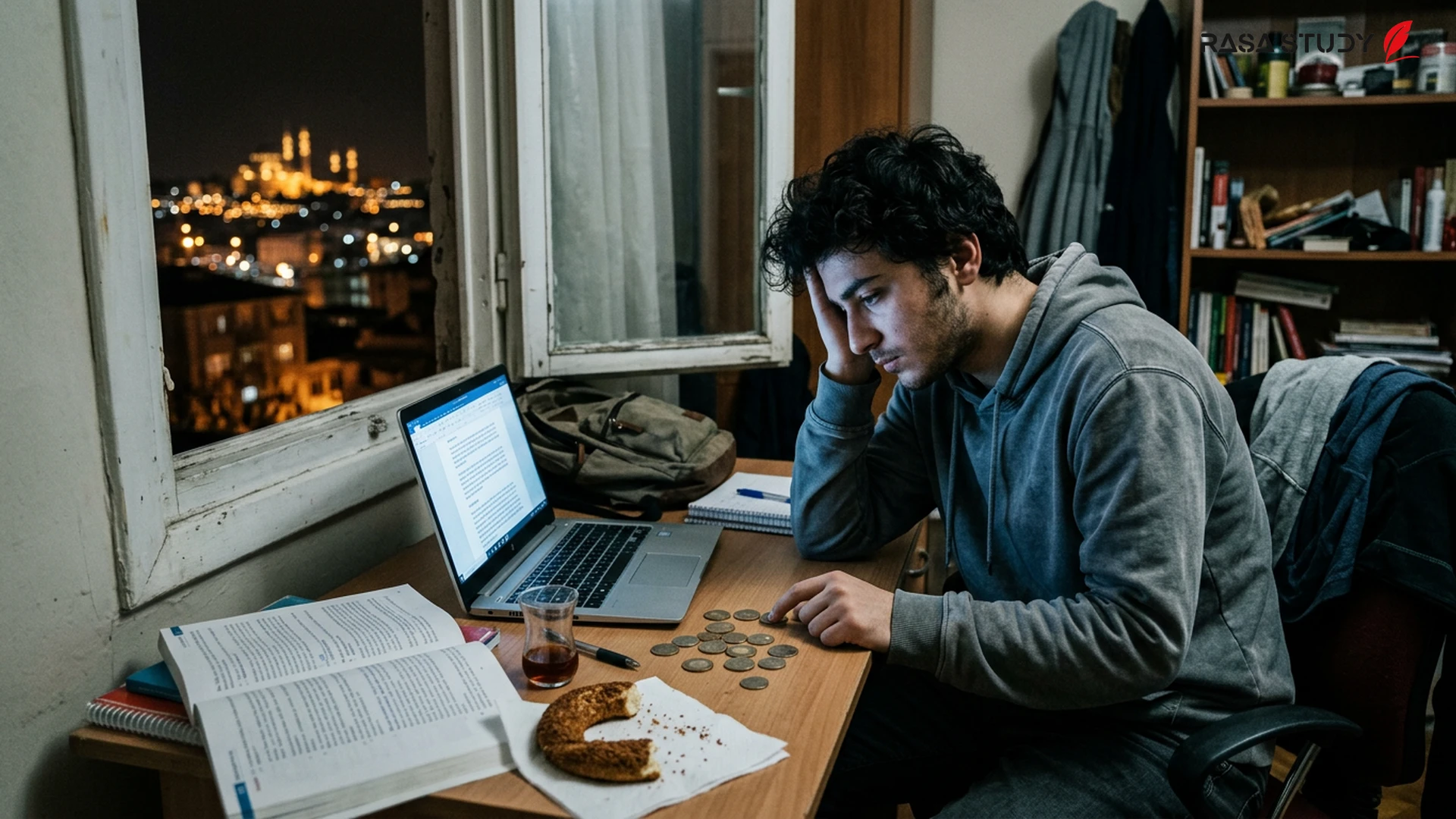
As the 2026 academic year nears its end, new reports from Turkey indicate unprecedented pressure weighing on students; a crisis targeting not only their livelihood but also their mental health and academic future.
Today, June 24, 2026, reports published in Turkish media, including the newspaper Yeni Mesaj, paint a disturbing picture of the situation of students in the country. According to new analyses, the young student generation in Turkey is caught between the two blades of the scissors of "economic crisis" and "social isolation" [1]. This situation, referred to as a "structural squeeze," has become a serious threat to the higher education system, moving beyond a simple financial problem.
Economic Pressure and the Nightmare of Family Dependency One of the greatest challenges students are grappling with in 2026 is the inability to cover basic living expenses. Despite the increase in government loans and scholarships (KYK) to 4,000 Lira per month, rampant inflation has meant these amounts do not even cover half of essential costs [5].
Abdülkadir Gündoğdu notes in his report that students suffer most from the feeling of being a "burden" to their families [1]. This psychological pressure has led many young people to turn to part-time jobs with harsh conditions instead of focusing on their studies or, in the worst case, dropping out. Official statistics show that in the five years leading up to 2026, more than 324,000 students dropped out of their education due to financial problems [4].
Housing Crisis: From Crowded Dormitories to "Student-Nannies" The housing situation in major cities like Istanbul and Ankara has reached a critical stage. Reports indicate that only one in five students can be placed in state dormitories [2]. This lack of space has driven students toward the private rental market, where prices are skyrocketing.
In a strange case recently widely reflected in the media, advertisements have been seen in Ankara where homeowners offer free rooms to students in exchange for childcare or domestic chores [5]. This phenomenon, known as the "student-nanny," demonstrates the depth of desperation students face in finding shelter.
Social Isolation and Mental Health The economic crisis has not only hit students' wallets but has also paralyzed their social lives. The high costs of cafes, cinemas, and even buying books have caused students to withdraw from cultural and social activities [1]. This isolation has led to a decrease in self-confidence and an increase in depression rates among the educated class. Many young people feel they cannot truly live their youth, with all their energy spent on daily survival [2].
Ultimately, experts warn that if structural solutions are not adopted to improve the livelihood and welfare of students, Turkey will face a new wave of brain drain and a decline in academic quality in universities [1][4].
Rising living and housing costs have confronted Turkish students with unprecedented challenges in 2026.
linkSources
- Üniversite gençliği ekonomik ve sosyal kıskaçta! — Yeni Mesaj (2026-06-24)
- Sorunlar ağırlaşıyor, üniversiteliler eğitimini yarıda bırakıyor! — Gıda Hattı (2026-02-25)
- Barınma sorunu büyüyor... Öğrenciler 'bakıcı' oldu — OdaTV (2026-03-25)


