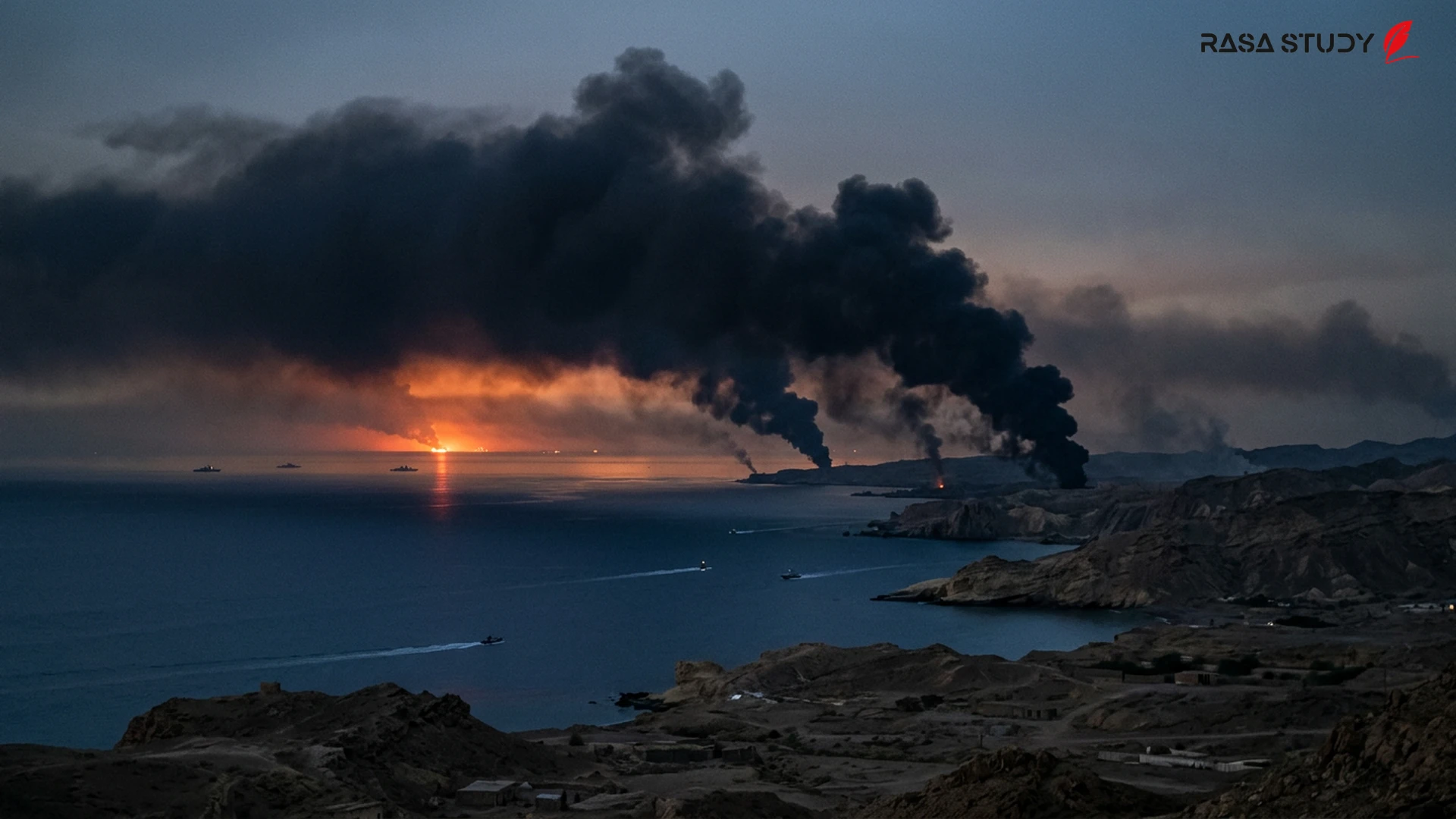
Following an unprecedented escalation of tensions in the Persian Gulf, the US military conducted its third round of massive air strikes on Iranian territory. This operation, accompanied by Iran's missile response to regional bases, led to the complete closure of the Strait of Hormuz.
Details of CENTCOM's "Heavy Response" Operation on Iranian Soil Early this morning, Sunday, July 12, 2026 (21 Tir 1405), the United States Central Command (CENTCOM) announced that it had successfully completed its third round of air strikes against military targets in Iran [1]. In this operation, described as the most extensive wave of attacks this week, approximately 140 targets in the provinces of Bushehr, Hormozgan, Khuzestan, and Kerman were hit. According to Pentagon officials, these strikes were carried out in response to the targeting of the Cyprus-flagged container ship "GFS Galaxy" in the Strait of Hormuz [3].
Reports indicate that US F-35 fighter jets, combat drones, and missile-launching ships targeted key infrastructure, including air defense sites, drone and missile warehouses, and coastal command centers [4]. CENTCOM claims that over three nights of operations, it has destroyed more than 300 military points to reduce Iran's offensive capabilities in international waters.
Iran's Missile Response and Attacks on US Bases in Jordan and the Persian Gulf Hours after the US attacks, the Public Relations of the Islamic Revolutionary Guard Corps (IRGC) announced a decisive response to "enemy aggressions." According to published reports, US logistical support centers and MQ-9 drone hangars at the "Prince Hassan" base in Jordan were targeted and destroyed by drone and missile attacks [2]. Simultaneously, reports of explosions at US military bases in Kuwait, Bahrain, and Qatar have been broadcast.
The IRGC Navy issued an official statement declaring that the Strait of Hormuz will be closed to all vessels until further notice and until the end of US military interventions in the region [5]. This action, which immediately caused a jump in global oil prices, has brought international concerns about energy security to a peak.
Collapse of the June Ceasefire and Diplomatic Deadlock These bloody conflicts occur just one month after the signing of a ceasefire memorandum between the Trump administration and Tehran in mid-June 2026. US President Donald Trump, declaring the end of the agreement's validity, claimed that Iran violated the ceasefire by attacking commercial ships [3]. In contrast, Iranian officials, including Speaker of the Parliament Mohammad Bagher Ghalibaf, emphasized that "the era of one-sided agreements is over" and Iran will make aggressors pay the price for any encroachment [2].
Economic Consequences and Iran's Internal Situation Recent attacks have also caused heavy damage to civilian infrastructure. The CEO of Tavanir reported damage to more than two thousand points in the country's electricity grid, estimating the losses at over 60 trillion Tomans [3]. Widespread power outages have been reported in many major cities, including Tehran. Meanwhile, the United Arab Emirates and Qatar have announced that their defense systems engaged projectiles fired from Iran, indicating the expansion of the war's dimensions to the entire region [5].
Military tensions in the Persian Gulf have reached their highest level in 2026.
linkSources
- آمریکا پایان دور سوم حملات خود به ایران را اعلام کرد — IRNA (2026-07-12)
- سنتکام صبح یکشنبه ۲۱ تیر اعلام کرد دور سوم حملات خود علیه جمهوری اسلامی را تکمیل کرده است — Iran International (2026-07-12)
- U.S. hits approximately 140 targets in third round of strikes on Iran — CBS News (2026-07-12)
- ABD İran'ı vurdu: 3 Gecede 300'den Fazla Nokta İmha Edildi — Son Kale İzmir (2026-07-12)
- Tehran attacks American base in Jordan, appears to also target Gulf states — The Times of Israel (2026-07-12)


