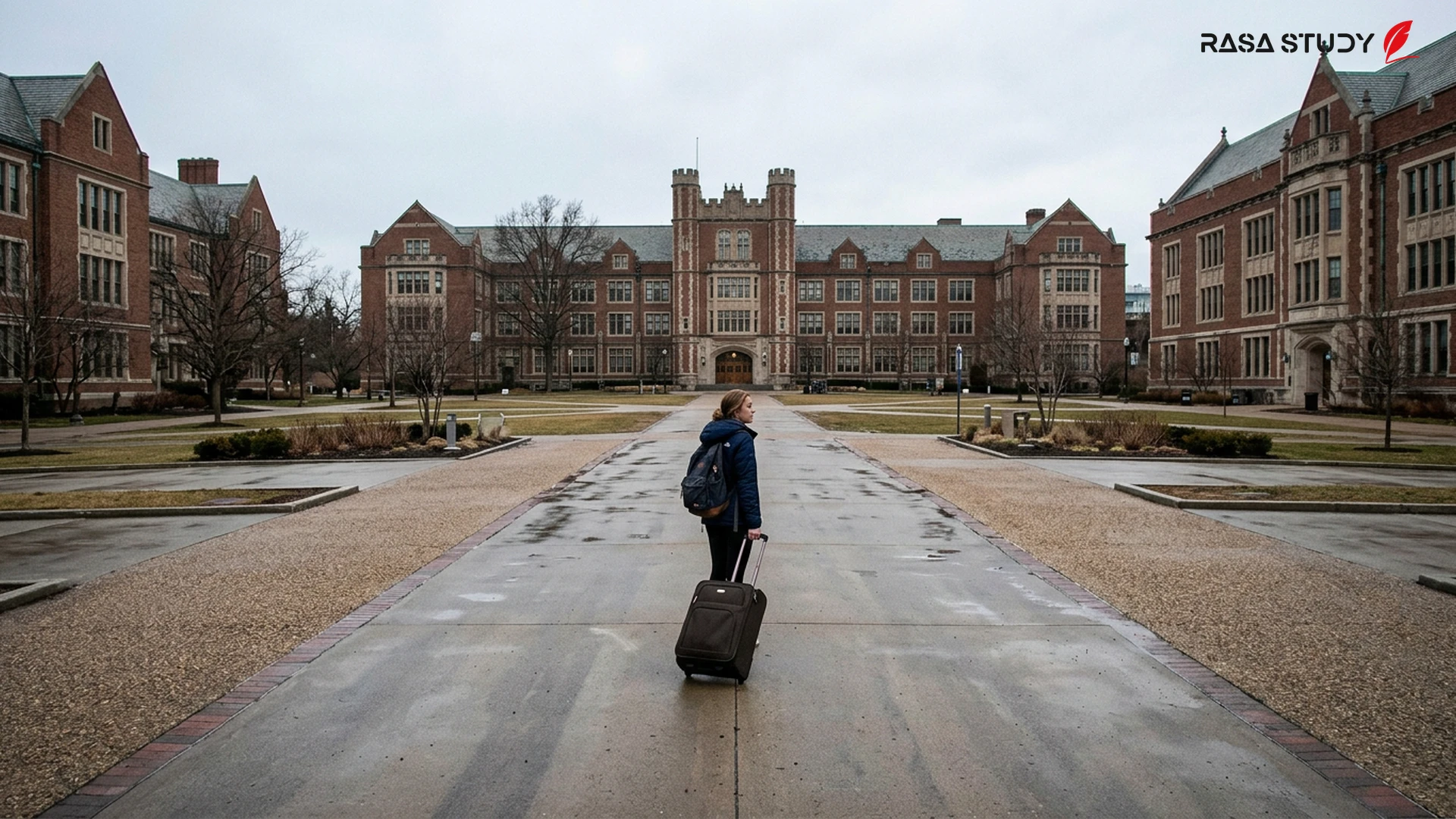
Reports published in July 2026 indicate that due to the implementation of contractionary immigration policies, the number of international students in the United States and Canada has faced an unprecedented drop, leaving many universities facing an enrollment crisis.
Transformation of the North American Educational Landscape
As the second half of 2026 begins, statistical data shows a major shift in the trend of educational migration toward North America. According to published reports, strict immigration policies in the United States and Canada have caused the number of international students entering these two countries to decrease significantly [1]. This trend has not only affected university budgets but has also seriously challenged the potential to attract top global talent.
United States: Visa Crisis and Declining Demand
In the United States, the "Spring 2026" report from the Institute of International Education (IIE) shows that 59% of the country's universities have faced a decrease in admission applications [2]. The shocking point is that the issuance of F-1 student visas decreased by 36% in the last calendar year, and this trend continues in 2026.
Several factors contribute to this drop, but 92% of educational institutions consider visa rejections and processing delays as the main obstacles [4]. Additionally, the implementation of mandatory social media inspections for applicants and the sudden cancellation of visas for hundreds of students have signaled a lack of welcome to the global community [3].
Canada and New Admission Caps
The situation in Canada is similar. The Ottawa government has reduced the cap for new student admissions to 155,000 for 2026, representing a 49% drop compared to 2025 targets [3]. Mark Carney, the Prime Minister of Canada, recently announced that the entry of international students into the country has decreased by 60%, indicating the direct impact of new restrictions on study permits.
The Canadian government aims to reduce the share of temporary residents to less than 5% of the total population by 2027, and international students are a large part of this adjustment plan [1]. This has caused visa approval rates to drop from 60% in 2023 to approximately 30% to 40% in 2026.
Economic Consequences and Shifting Study Destinations
This sharp decline has broad economic consequences for universities. Many educational institutions that relied on international student tuition are now facing budget deficits. In contrast, countries such as Germany, Ireland, and the United Arab Emirates are seeing an increase in student interest as alternative destinations [2]. Experts warn that if the United States and Canada do not reconsider their policies, they will lose their positions as the world's primary hubs for higher education.
New immigration policies in 2026 have made the path for international students to enter North America more difficult than ever.
linkSources
- Stricter immigration policies drastically reduce international students in US and Canada — Vietnam.vn (2026-07-09)
- 60% of US colleges report fall in international applications — The PIE News (2026-07-08)
- Canada, U.S. both roll back welcome mat for international students — National Post (2026-07-09)
- Nearly Two-Thirds Of U.S. Colleges Expect International Enrollment To Decline In 2026-27 — Forbes (2026-07-09)


