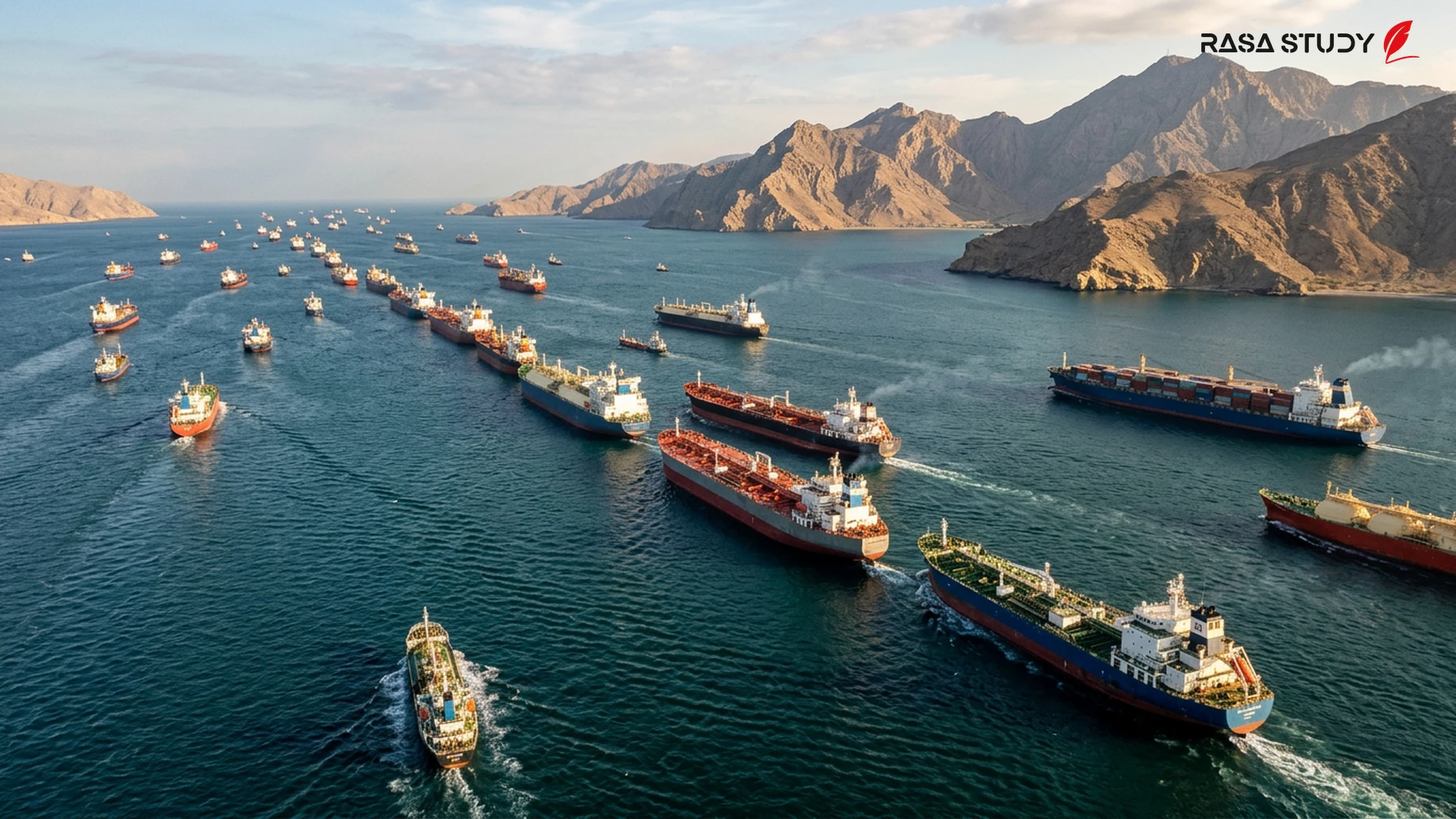
Reports received on July 1, 2026, indicate that following the recent agreement between Tehran and Washington, commercial ship traffic in the Strait of Hormuz has increased by more than 50% over the past week.
Life Returns to the World's Main Energy Artery
After months of tension and conflict that began in February 2026, serious signs of improvement are now visible in one of the world's most strategic waterways. According to data from the analytical firm Kpler, commercial ship traffic in the Strait of Hormuz in the week ending late June grew by approximately 54% compared to the previous week [1][2]. This sudden increase is directly related to the interim agreement signed on June 14, 2026, between the United States and Iran to reduce tensions and reopen trade routes.
Statistical Details of Ship Traffic
According to published statistics, in the week between June 15 and 21, only 223 commercial ships had passed through the strait, showing a daily average of 32 ships. However, in the following week (June 22 to 28), this figure increased to 343 ships, meaning a daily average of 49 ships [2][4]. The highest volume of traffic was reported on June 24, with 76 ships recorded in a single day, marking the busiest day for this waterway since the start of military conflicts on February 28, 2026 [1].
The June Agreement; A Shaky but Promising Step
The agreement, which officially took effect on June 18, includes clauses to guarantee the security of commercial shipping in the region. However, analysts warn that this peace is still very fragile. Although traffic has grown by 50%, it is still about 70% lower than pre-war levels [2]. During peacetime, an average of 130 commercial ships passed through the Strait of Hormuz daily, a figure that currently stands below 50 ships per day [4].
Impact on Global Markets and Regional Security
The majority of the vessels in transit consist of tankers carrying crude oil and petroleum products from Iran, Saudi Arabia, the United Arab Emirates, Iraq, and Kuwait [1]. The return of these ships to the main route has reduced upward pressure on global energy prices. However, many international shipping companies continue to act with caution, waiting for political conditions to stabilize. Reports indicate that a large portion of current traffic is still conducted by the "shadow fleet" and sanctioned ships using designated routes in Iranian territorial waters [2][3].
Future Outlook
As of today, July 1, 2026, eyes are turned toward the continuation of negotiations in Switzerland. The success of this agreement is vital not only for oil price stability but also for the safety of more than 20,000 seafarers affected by the recent crisis [3]. If the current trend continues, traffic capacity in the Strait of Hormuz is expected to return to more than 60% of pre-crisis levels by the end of August.
Commercial ship traffic in the Strait of Hormuz has seen a relative improvement following the June 2026 agreement.
linkSources
- ABD-İran mutabakatı: Hürmüz Boğazı'nda ticari gemi trafiği son haftada yüzde 50 oranında arttı — GZT (2026-06-30)
- Hürmüz Boğazı'nda ticari gemi trafiği son bir haftada yüzde 50'den fazla arttı — Anadolu Ajansı (2026-06-30)
- Shipping traffic through Strait of Hormuz rises after US-Iran deal — Free Malaysia Today (2026-06-19)
- Hürmüz Boğazı'nda trafik yüzde 54 arttı — Yeni Şafak (2026-07-01)