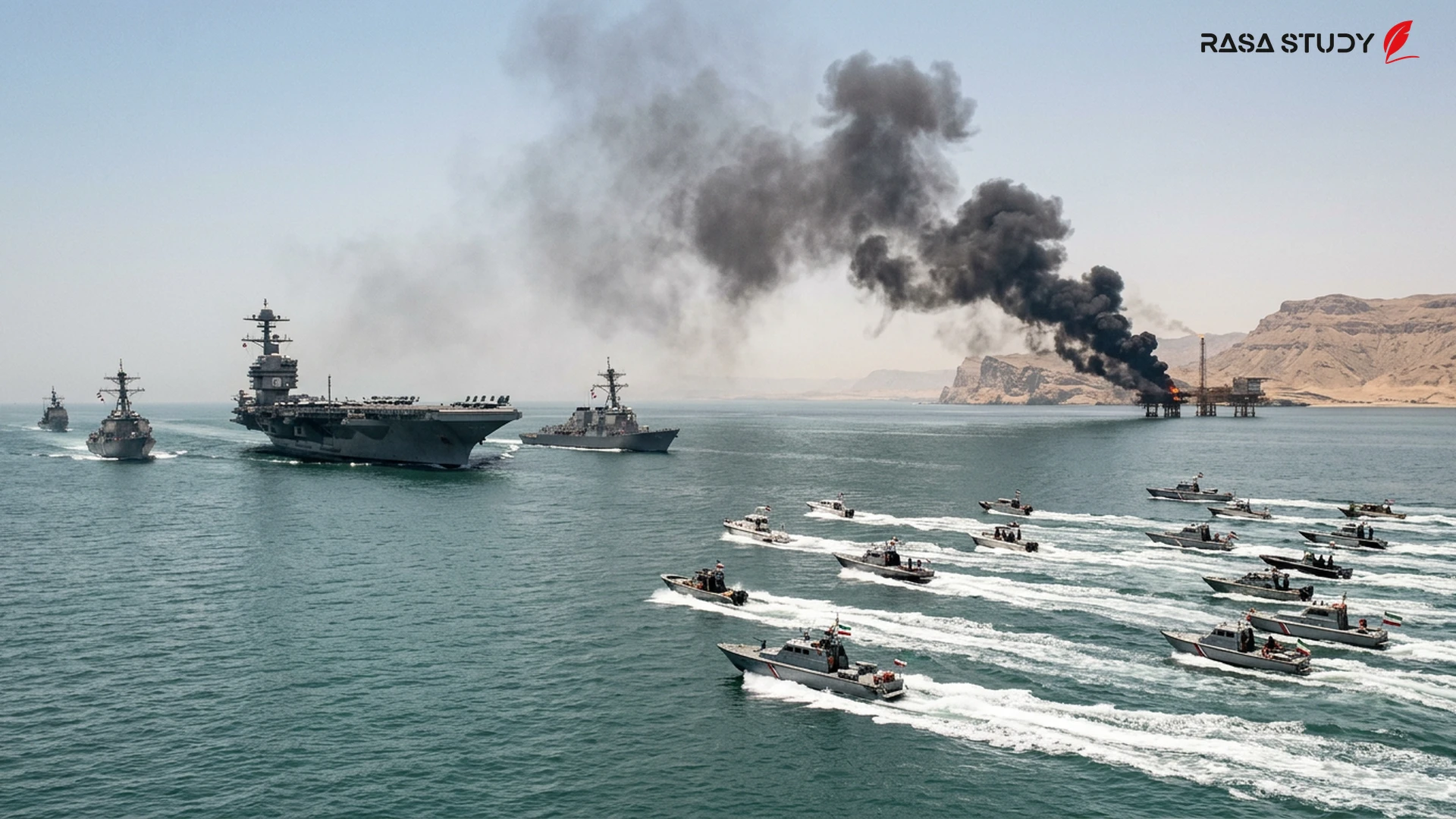
With the sudden collapse of the ceasefire between the United States and Iran in July 2026, the Middle East has once again become the center of a global crisis. The blockage of the Strait of Hormuz and reciprocal military strikes have placed financial markets in an emergency state.
The Ankara Declaration and the Start of a New Round of Military Conflicts
On July 8, 2026, US President Donald Trump officially announced during the NATO summit in Ankara that the fragile ceasefire with Iran had ended [3]. This announcement was immediately followed by extensive military operations by the US Central Command (CENTCOM) against Iranian radar and defense positions on the Persian Gulf coast. The aim of these attacks was stated as countering Iranian threats to free navigation in the region [1]. In response, Iranian forces targeted US-related facilities in the United Arab Emirates, Kuwait, and Bahrain with drone and missile strikes, leading to an unprecedented escalation of tensions in the region [1][5].
Energy Crisis in Europe and the Blockage of the Hormuz Lifeline
One of the most shocking consequences of this conflict was the announcement of the closure of the Strait of Hormuz by Tehran authorities. This strait, which is the transit route for more than 20% of the world's crude oil and liquefied natural gas (LNG), has now become a battlefield [3]. This situation has put Europe on high alert; reports indicate that jet fuel reserves in European countries have dropped to less than 30 days, and energy prices in Germany and France have jumped significantly [1]. The International Monetary Fund (IMF) also warned of disruptions in the global supply chain, lowering the 2026 economic growth forecast to 3% [4].
Global Markets in Shock; From Wall Street's Fall to Federal Reserve Contractionary Policies
Global financial markets reacted to these developments with heavy losses. The Dow Jones Industrial Average fell by more than 800 points, and Asian markets also saw sharp declines [3]. Brent oil prices jumped 7% to over $80 per barrel, reinforcing fears of a new wave of global inflation [2]. Meanwhile, eyes are on Kevin Warsh, the new Chairman of the US Federal Reserve. Analysts expect the Fed to maintain or even increase interest rates at high levels to curb war-induced inflation, a move that puts additional pressure on stock markets and risky assets [2][3].
A Heavy Bill for the Turkish Investor: Gold and Lira in Turmoil
Investors in Turkey have not been immune to this crisis. In the Istanbul free market and the Grand Bazaar (Kapalıçarşı), the price of gold per gram has approached the 8,000 Lira mark with an unprecedented jump [1]. The flight of investors toward "safe havens" like the US Dollar has put intense pressure on the Turkish Lira, and cryptocurrency markets have also seen a massive outflow of liquidity [1][2]. Experts warn that the continuation of this conflict could sharply increase Turkey's energy import costs and pose a serious challenge to the country's trade balance [1]. While the world awaits the results of diplomatic meetings in Pakistan, markets remain on full alert.
Military tensions between the US and Iran in July 2026 have caused oil prices to spike and global stock market indices to fall.
linkSources
- ABD-İran savaşında şok dalgası: Avrupa alarmda, piyasalarda dengeler sil baştan — Odatv (2026-07-13)
- Equities: Wall Street rose before earnings, Europe closed mixed as tech slipped, Asia fell on Monday's Iran-driven risk-off — Saxo Bank (2026-07-13)
- US stock markets fall as US continued strikes on Iran and Fed flagged concerns — The Guardian (2026-07-08)
- The U.S.-Israeli attack on Iran: Seven things investors should know right now — Morgan Stanley (2026-03-03)
- Base metals decline following renewed hostilities between the US and Iran in July 2026 — ChemAnalyst (2026-07-13)


