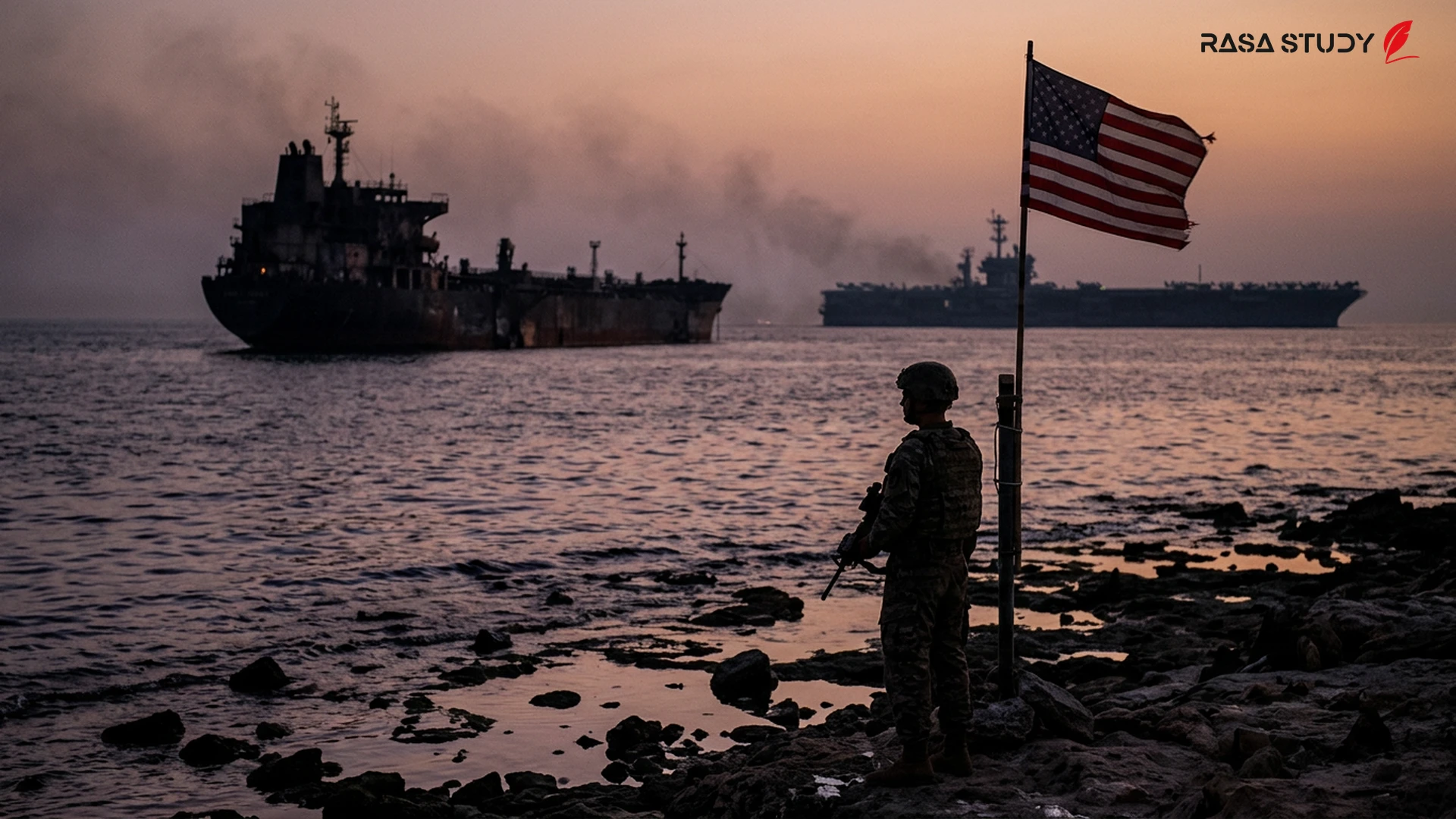
Following the signing of a peace memorandum between Tehran and Washington, security analyst Mete Yarar warned that the real winner of the 2026 Iran-US-Israel war will only be determined in the long term, and the region remains on high alert.
Today, June 26, 2026, as the Middle East attempts to rise from the rubble of months of heavy conflict, new analyses suggest that the peace established between the region's major powers is far more fragile than imagined. Mete Yarar, a prominent security and terrorism expert, warned in an analytical live broadcast that it is too early to judge the final victor of the battle between Iran, the US, and Israel, and the true consequences of this geopolitical confrontation will emerge years later [1].
Mete Yarar's Warning: Beyond Short-Term Results By posing the question "Who is the loser?", Mete Yarar emphasized that looking solely at short-term military results can be misleading. He believes that every strategic step taken by these three powers is part of a larger map whose dimensions will become clear in the future [1]. This warning comes as the 2026 war, which began with massive airstrikes on Tehran in March, has left heavy human and economic costs; including the deaths of over 3,300 Iranians and 13 American soldiers during the conflicts [2][3].
The Fragile Washington-Tehran Agreement On June 17, 2026, Donald Trump and Masoud Pezeshkian, the presidents of the United States and Iran, signed a Memorandum of Understanding (MoU) to officially end the conflicts [2][5]. This agreement, achieved through the mediation of Pakistan and Qatar, includes clauses for lifting some sanctions and releasing frozen Iranian assets [4]. However, reports indicate that this agreement has faced fierce opposition within both countries as well as from Israeli officials. US Secretary of State Marco Rubio emphasized that Washington will only accept an agreement that is "real and verifiable" [4].
Tension in Lebanon and the Strait of Hormuz Despite the ceasefire, the situation on the Lebanon-Israel borders remains critical. Israel Katz, the Israeli Defense Minister, explicitly stated that there is no request from the US for the withdrawal of Israeli forces from southern Lebanon, and the Israeli army continues its operations against Hezbollah positions [3][4]. Simultaneously, Iran's Revolutionary Guard has warned that any unauthorized passage through the Strait of Hormuz will be met with a decisive response. This strait, which was completely blocked during the war, has now become the main point of the "battle of wills" [2][3].
Economic and Geopolitical Outlook The 2026 war has dealt a fatal blow to the global economy. The World Bank has lowered its global economic growth forecast for 2026 to 2.5%, the lowest since the COVID-19 pandemic [2]. In domestic markets, the price of the dollar has reached the 46 Lira range (in the Turkish market) and gold has reached unprecedented levels [1]. Analysts believe that as long as US aircraft carriers do not leave the region and a final agreement on Iran's nuclear program is not reached, the risk of returning to full-scale war will continue to weigh heavily on the Middle East [3].
Geopolitical tensions in the Middle East continue despite the signing of a peace memorandum in June 2026.
linkSources
- ABD-İran-İsrail Savaşı İçin Kritik Uyarı! — Marmara Bölge Gazetesi (2026-06-25)
- Iran War of 2026: Ceasefire and Brinkmanship — Britannica (2026-06-25)
- Follow updates on the war in the Middle East — CBS News (2026-06-25)
- تفاهمنامه آمریکا و جمهوری اسلامی، مذاکرات اسرائیل و لبنان را پیچیده کرده است — Iran International (2026-06-25)
- متن یادداشت تفاهم خاتمه جنگ تحمیلی آمریکا-رژیم صهیونیستی — IRNA (2026-06-19)


