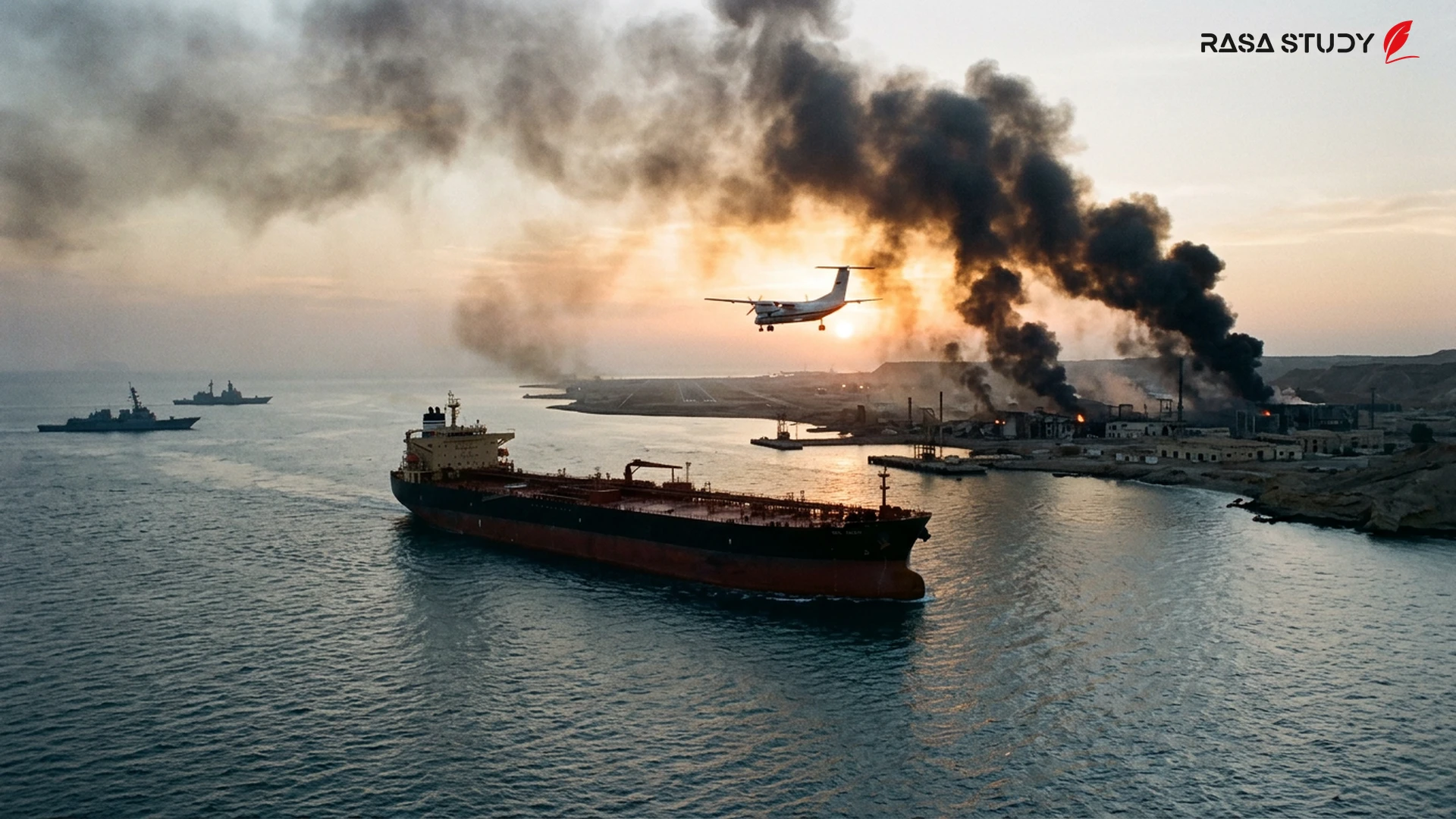
With rising sharp rhetoric and reciprocal military strikes between Washington and Tehran in July 2026, regional mediators including Qatar and Pakistan have redoubled diplomatic efforts to revive the shaky Memorandum of Understanding and prevent a wider conflict.
Fragile Situation in the Persian Gulf and Sea of Oman Today, July 10, 2026, the Middle East remains suspended between war and diplomacy. After U.S. President Donald Trump announced on July 8 that the Memorandum of Understanding (MoU) and ceasefire with Iran had ended, a wave of heavy airstrikes began against targets in southern Iran [2]. These attacks, covering more than 170 targets in areas such as Bandar Abbas, Bushehr, and Konarak, were met with Iranian missile and drone responses against U.S. bases in Kuwait, Bahrain, and Jordan [4]. However, field reports from Friday morning indicate an "unstable calm," with no new attacks reported by either side [3].
Regional Mediators Enter the Scene While mutual threats continue, senior diplomats from Qatar, Pakistan, Turkey, and Oman are engaged in intensive telephone and face-to-face consultations [1]. Qatari delegations in Tehran have exchanged messages to reduce tensions and return to the technical negotiations table. According to published reports, U.S. Vice President JD Vance, along with Jared Kushner and Steve Witkoff, are in constant contact with Qatari officials to find a way out of the current crisis [3]. The main goal of these efforts is to set a new date for the next round of technical team negotiations and prevent the complete collapse of the memorandum signed in mid-June [2].
Key Challenges: Strait of Hormuz and Lebanon One of the main points of contention leading to recent clashes is the issue of control over the Strait of Hormuz. Citing its sovereignty, Iran seeks to impose tariffs on commercial vessels, while the United States considers this action illegal and a threat to global energy security [5]. Additionally, Iranian Foreign Minister Abbas Araghchi has emphasized that any final agreement with Washington is conditional on Israel's complete withdrawal from southern Lebanon; a condition that has faced strong opposition from the other side [4].
War of Attrition or Armed Peace? Analysts believe the current situation resembles a "regional war of attrition" rather than a classic all-out war. Both sides are using military and economic tools to impose their interpretation of the memorandum [1]. While Washington emphasizes continued pressure, Tehran has also shown that it will respond to any attack on its infrastructure with counterattacks on regional bases. Eyes are now fixed on Doha and Islamabad to see if diplomacy can once again prevail over the drums of war [2].
The Strait of Hormuz remains the main focus of military tensions and diplomatic negotiations between Iran and the United States in July 2026.
linkSources
- ABD ile İran arasında karşılıklı tehditler sürüyor: Arabulucular gerilimi düşürmeye çalışıyor — Batman Rehber Gazetesi (2026-07-10)
- Regional mediators push to ease US-Iran tensions, revive nuclear talks — Caliber.Az (2026-07-10)
- Mediators push to get U.S.-Iran diplomacy back on track — CBS News (2026-07-10)
- Uneasy calm between US and Iran as mediators push for return to diplomacy — The National (2026-07-10)
- Strait of Hormuz Attacks Strain U.S.-Iran Peace Talks — TIME (2026-07-07)


