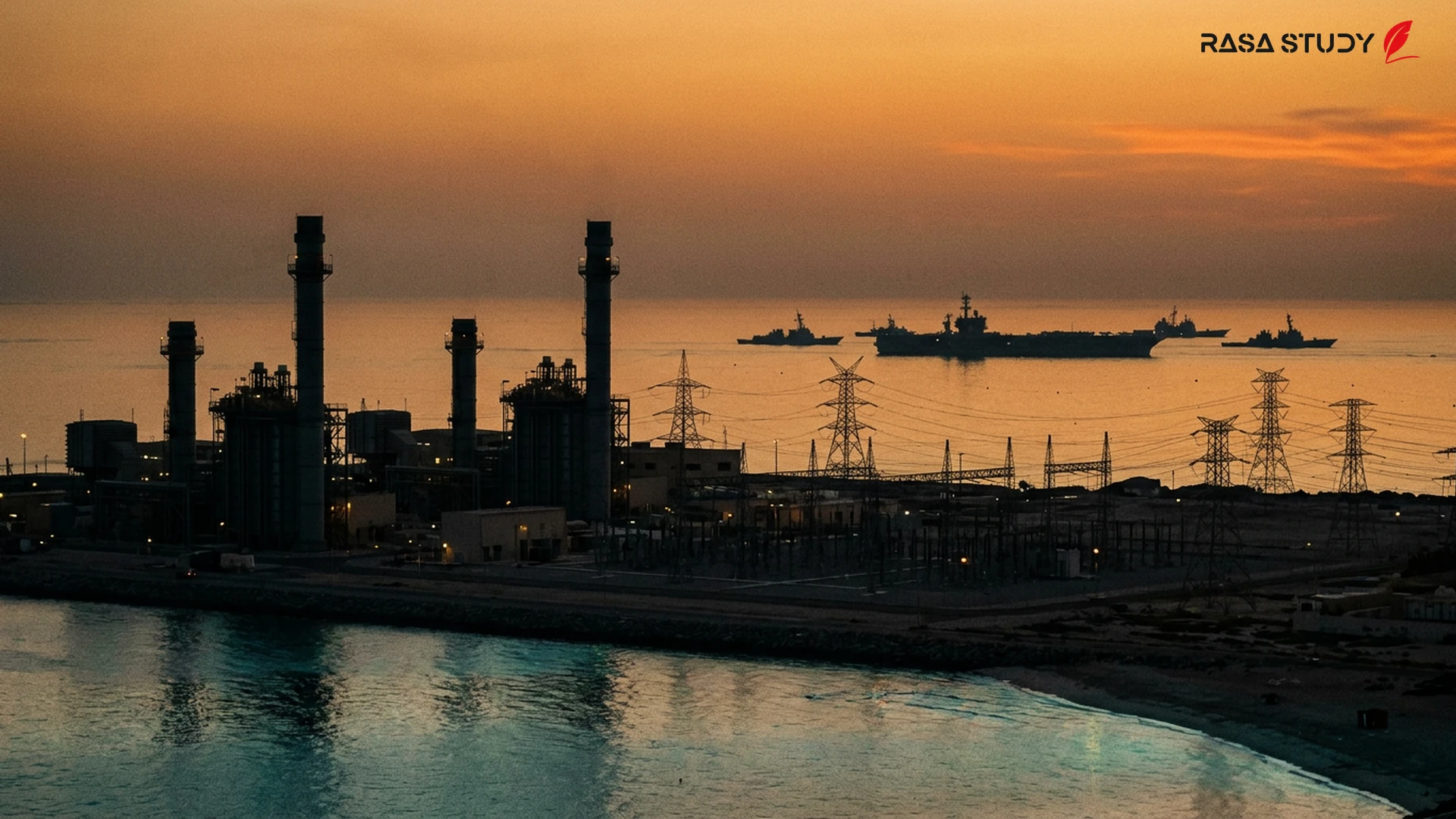
As military tensions escalate in the Persian Gulf, Iran has warned that any US attack on its critical infrastructure will be met with a devastating response against all remaining infrastructure across the region.
On July 16, 2026, tensions between Tehran and Washington reached a critical stage. Following recent threats by US President Donald Trump to target Iranian power plants and bridges if the country does not return to the negotiating table, military officials of the Islamic Republic of Iran issued a severe warning. Colonel Ebrahim Zolfaghari, spokesperson for the Khatam al-Anbiya Central Headquarters, announced that if the US damages Iranian infrastructure, Tehran will destroy all remaining infrastructure in the region with “steel strikes” [1][2].
Reciprocal Threat: Infrastructure for Infrastructure The Iranian military spokesperson described Trump’s threats as “hollow claims,” emphasizing that Iran’s strategic patience has ended. Zolfaghari warned that Iran’s reaction would not merely be a counter-strike, but a “superior, broader, and more destructive” blow that would leave no trace of enemy infrastructure in the region [2][3]. These statements come after Trump previously stated in an interview that if Iran does not accept a new agreement, the US military will target the country’s energy plants and bridges every night [4][5].
Diplomatic Deadlock and Continued CENTCOM Attacks Field reports indicate that the US Central Command (CENTCOM) has increased its attacks on military positions in southern Iran, including Bandar Abbas and Greater Tunb Island, in recent days [3]. Washington claims these attacks aim to weaken Iran’s ability to threaten shipping in the Strait of Hormuz. On the other hand, Iran has responded with drone attacks on US bases in Jordan, Kuwait, and Bahrain [4]. Analysts believe that the failure of last month’s memorandum (June 2026), which was drafted with Pakistani mediation, has placed the two countries in a dangerous military deadlock [5].
The Hormuz Red Line and Release of Dual-National Prisoner Iran has once again emphasized that the intervention of any extra-regional power in the Strait of Hormuz is the country’s “impassable red line” [1][2]. However, amidst this harsh rhetoric, signs of back-channel diplomacy are also visible. In a move Trump called a “gesture of good faith,” Iran released Dena Karari, an Iranian-American dual citizen who had been in detention since 2024 [3][5]. Nevertheless, the US Navy’s maritime blockade of Iranian ports continues, and Washington insists on maximum pressure to change Tehran’s behavior [5].
The spokesperson for Khatam al-Anbiya Central Headquarters warned that Iran's strikes against regional infrastructure would be “beyond a counter-strike.”
linkSources
- İran'dan ABD'ye: Altyapıyı vurursanız, bölgede ayakta kalan tüm altyapıyı vururuz — Doğruhaber (2026-07-16)
- Iran warns it will destroy regional infrastructure if US targets its infrastructure — Anadolu Agency (2026-07-16)
- Iran threatens Persian Gulf-nation infrastructure as U.S. continues attacks — The Washington Times (2026-07-16)
- Tehran threatens regional infrastructure if U.S. attacks Iran's — CBS News (2026-07-16)
- Iran says it would destroy 'all' regional infrastructure if Trump hits power plants — The Washington Post (2026-07-16)


